

Ignoring maintenance obligations, keeping incomplete records, and failing to disclose operational changes increase the risk of insurance cover being voided. And so, industrial clients must take practical steps to safeguard their cover.
By Jimmy Swira
Without a doubt, the common oversight and the root cause of claim disputes in Machinery Breakdown (MB) insurance is when clients neglect their maintenance obligations underlined in policies, yet expect to be covered after an incident, laments George Parrott, Commercial Partner at King Price Insurance, a leading South African insurer. “Insured parties frequently focus on the promised indemnity while neglecting the affirmative duties required in maintaining the contract’s validity.”
Overlooked issues
More often than not, in such cases, glaringly, the insured parties overlook the following issues:
- OEM Maintenance Intervals
Most policies require machinery to be maintained strictly according to Original Equipment Manufacturer (OEM) specifications. Hence, skipping service intervals creates “Maintenance Debt,” which can be a strong ground for a claim being denied under “gradual deterioration” exclusions.
- Detailed Documentation
The underwriter will demand detailed maintenance logs and service records during a claim. A lack of proof of care can allow the insurer to void coverage for failing to follow conditions precedent.
- Duty to Mitigate Loss
Continuing to operate damaged machinery is often viewed as gross negligence, making the resulting damage non-fortuitous.
- Disclosure of Risk Profile Changes
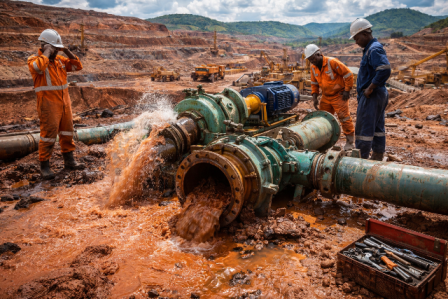
Insured parties often fail to notify their insurer of material changes in operation, such as increased workloads or operating in harsher environments (for instance higher dust or humidity levels in a mine).
Claim adjudication
At the end of the day, the claim adjudication is not swayed by emotions or sentiments but is based on terms and conditions of the respective policy. The decision-making process hinges on a forensic assessment of the incident to distinguish accidental events from predictable decay.
Parrott illustrates situations that determine when the insurer is obligated to pay:
“Claims are paid – at best – when evidence shows a sudden transition from a functional to a non-functional state due to an unforeseeable internal cause. Typical examples include sudden failure from power surges, mechanical fractures from detectable casting defects, or operator error, such as dropping a foreign object into a running machine.
Claims are declined when the failure is deemed a ‘business risk’. The primary reason is gradual deterioration (corrosion, erosion, or thermal softening), as established in the African Products precedent. Other reasons include pre-existing conditions, lack of maintenance, or failures covered under a manufacturer’s warranty.”
Advice for industrial clients
While a void is an unfortunate situation, the fortunate part is that it is avoidable only if clients stick to the terms and conditions of the respective policies.
For contractors in high-hazard fields like mine shaft construction, the insurance relationship is a critical strategic component. Thus, Parrott advises industry to take the following steps:
- Audit the Warranty-Insurance Nexus
Manufacturers’ warranties often exclude productivity loss or temporary relocation costs. Therefore, ensure your MBI policy fills these “warranty gaps”.
- Annual Valuation Reviews
Regularly update the Replacement Asset Value to reflect actual costs of sourcing and installing custom machinery in remote locations. This avoids the “Average Clause” penalties during a claim.
- Engage Specialist Expertise
Use brokers with engineering insurance-specific expertise to ensure policy nuances align with actual operational hazards like specialized equipment failures.. These brokers understand high-hazard industries like mining and manufacturing and how to mitigate exposure.
The Maintenance Obligation
Stressing that insurance should not be regarded as a maintenance budget, Parrott reminds organisations in heavy industry about their obligations. “The insured must act as if they were uninsured, which includes monitoring for unusual noises or vibrations and responding immediately, even if it means halting production.”
He adds: “Conveniently, latest technology has significantly improved predictive maintenance. With the advancement of technology, IoT-based monitoring for machinery uses specialised sensors to ‘listen’ and ‘feel’ for subtle changes that precede equipment failure. By shifting from reactive to predictive maintenance, these systems can reduce unplanned downtime by up to 50%,” he adds.
Risk Profile Factors for On-boarding Clients
Every potential industrial client is assessed according to their respective merits. Usually, underwriters carry out a technical assessment focused on the intersection of engineering and management. This process considers a number of factors, the critical ones being:
- Management and Safety Culture
Human factors account for over 40% of machinery breakdown claims. For this reason, underwriters evaluate crew training levels and fatigue management policies.
- Condition-Based Monitoring (CBM)
The use of predictive programs such as oil analysis, vibration testing, and infrared thermography is viewed highly favourably as it prevents catastrophic failures.
- Operational Environment
Equipment in remote locations or harsh conditions (corrosive dust, high humidity) carries a higher risk profile.
- Supply Chain Robustness
Underwriters assess whether the client keeps critical spare parts on-site, which directly impacts the potential severity of a Business Interruption claim.