

“Maintenance does not exist in a vacuum. It competes with other calls on capital and resource, often under significant pressure to demonstrate short-term financial discipline. In that environment, maintenance can struggle to assert itself, particularly when its benefits are preventative rather than immediate.“
By Lyndsay Quinn
No one disputes that unplanned downtime is expensive and highly disruptive. Yet despite this shared understanding, maintenance decisions are often made in ways that quietly increase risk rather than reduce it. The reasons are rarely technical. More often than not, they are structural.
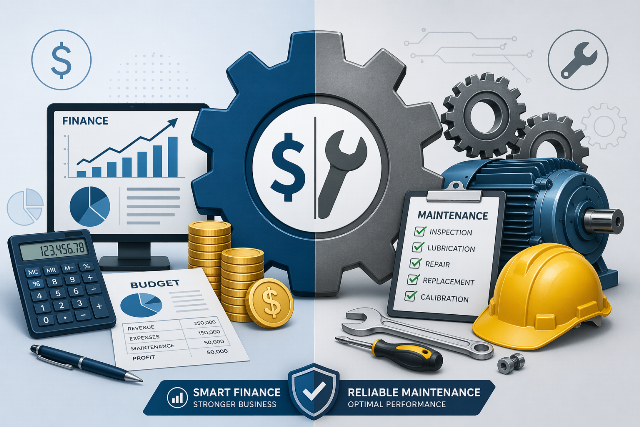
Across the sector, maintenance is still too often framed as an operational issue rather than a strategic one. Decisions about when to intervene, what level of redundancy to build in and how much risk is acceptable are frequently shaped by financial controls that prioritise immediate cost visibility over long-term resilience.
This is not about blame. Finance teams are doing what they are tasked to do: protect budgets, control expenditure and deliver predictability. The problem arises when those financial frameworks become the dominant lens through which maintenance is evaluated.
Maintenance decisions shaped by financial context
Maintenance does not exist in a vacuum. It competes with other calls on capital and resource, often under significant pressure to demonstrate short-term financial discipline. In that environment, maintenance can struggle to assert itself, particularly when its benefits are preventative rather than immediate.
Reactive maintenance can appear deceptively manageable. It requires no advance commitment and no capital approval. Costs only surface when a failure occurs, even if those costs are ultimately far higher than prevention would have been. By contrast, preventative and predictive approaches require upfront investment, planning and justification, making them more visible and, at times, more vulnerable during budget reviews. Over time, this dynamic encourages the deferral of decisions rather than the foresight to proactively implement them.
Maintenance does not exist in a vacuum. It competes with other calls on capital and resource, often under significant pressure to demonstrate short-term financial discipline. In that environment, maintenance can struggle to assert itself, particularly when its benefits are preventative rather than immediate.
Reactive maintenance can appear deceptively manageable. It requires no advance commitment and no capital approval. Costs only surface when a failure occurs, even if those costs are ultimately far higher than prevention would have been. By contrast, preventative and predictive approaches require upfront investment, planning and justification, making them more visible and, at times, more vulnerable during budget reviews. Over time, this dynamic encourages the deferral of decisions rather than the foresight to proactively implement them.
Where decision-making power now sits
Over time, responsibility for maintenance decisions has shifted. Engineers and maintenance teams may identify risks and propose solutions, but they increasingly lack authority over the budgets required to act.
Those decisions are often made further up the organisation, by teams focused on financial governance across multiple assets or sites. In that context, maintenance recommendations can be perceived as conservative or overly cautious, even when they are grounded in experience.
This is not a failure of understanding. It is a consequence of distance. The further decision-making moves from the plant floor, the harder it becomes to fully appreciate the operational implications of deferred maintenance.
Technology helps, but cultural issues remain
Remote monitoring, vibration analysis and predictive maintenance tools have transformed what is technically possible. They allow issues to be identified earlier and maintenance to be planned rather than reactive. However, technology does not, by itself, change behaviour.
Data still needs to be interpreted and acted upon. In organisations where maintenance investment is already viewed as a low priority, digital insights can simply add another layer of information without shifting outcomes. In some cases, the volume of data generated can make prioritisation harder rather than easier.
Predictive tools deliver the greatest value where there is already a commitment to proactive maintenance. Without that foundation, they risk reinforcing existing decision-making patterns.
Can AI change how maintenance risk is perceived?
Artificial intelligence introduces an additional dimension. By analysing large volumes of performance data across many assets, AI can highlight patterns and probabilities that are difficult to capture through traditional methods.
Crucially, AI-driven insights may be perceived as more neutral than individual recommendations. For organisations where maintenance proposals have historically struggled to gain traction, this could help reframe conversations around evidence, likelihood and consequence rather than opinion.
That said, trust remains central. AI is only as credible as the data behind it and the transparency with which conclusions are reached. Where insights are delivered through proprietary platforms, scepticism may persist. AI is not a replacement for experience, but it may help bridge the gap between operational expertise and financial scrutiny.
Rethinking how maintenance is valued
The question facing K manufacturers is not whether maintenance matters. It is whether current financial frameworks allow maintenance decisions to be made in the right context.
As long as maintenance is assessed primarily as a cost rather than a contributor to resilience, efficiency and competitiveness, proactive strategies will struggle to gain traction. Technology can support better decisions, but it cannot compensate for misaligned incentives.
Reframing maintenance as a strategic enabler requires a cultural shift. One that recognises asset reliability as fundamental to productivity, energy efficiency and long-term performance.
When that shift occurs, finance teams do not undermine maintenance operations. They help to strengthen them.
Lyndsay Quinn is Business Line Manager for Compressor Technique Service, Atlas Copco UK
This article was first published by Atlas Copco UK


