
In the curated world of AI, everyone feels that they have become an expert in just about everything, can comment on anything, and believe they can do just about everything without limits: the world is their oyster.
Truth be told, AI has given us the essential tools we need at the convenience of a simple prompt. It has availed information to everyone with access to a basic electronic device and internet connection, anywhere, anytime. And the information is current and constantly updated, something that libraries could not guarantee.
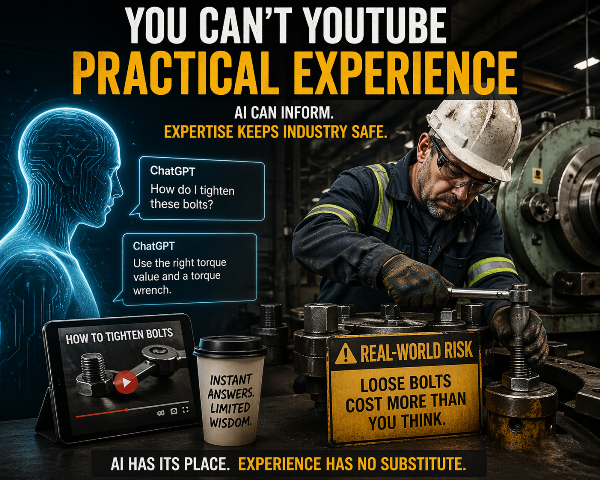
The downside is that it has bred an overconfidence syndrome that makes many of us believe we are experts in almost everything. So a company can ask a semi-skilled worker to YouTube or ChatGPT the procedure for handling a task that normally requires someone with specialised practical skill, honed by years of experience, to execute professionally.
While this stop-gap may somehow work in basic tasks, for heavy industry engineering – like bolting of critical components – it could be a miscalculated risk bound to backfire. And that’s no exaggeration, or alarmist.
As it so happened at one of the companies, a small outfit in Johannesburg’s old industrial site, we were privileged to witness a desperate attempt to fill a skills gap. And it didn’t work out. A bolt on a lathe machine loosened, causing vibration and affecting the quality of the fabricated product.
So much for cutting costs by engaging a specialist in the area to do scheduled maintenance, including bolt condition monitoring!
Eventually, a specialist organisation that supplies fasteners was engaged – something that could have been done earlier.
Moral of the story: let bolting specialists do what they do best. You can’t ChatGPT or YouTube practical experience.