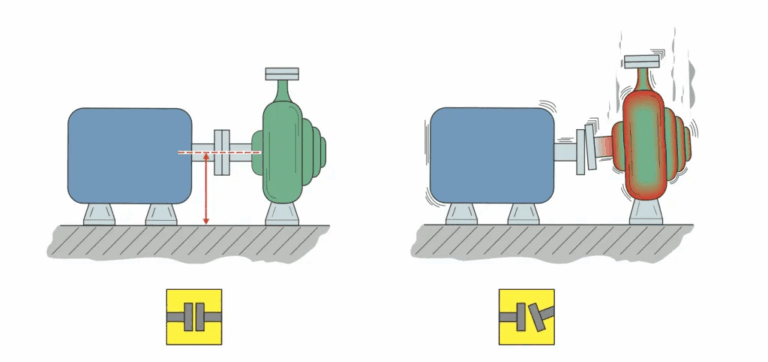



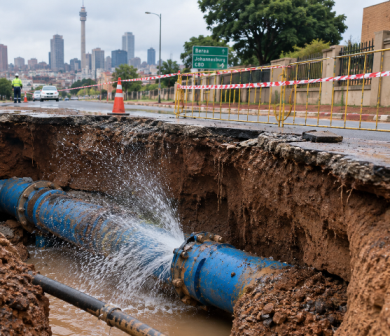
It is always surprising, or frustrating, for water consumers in municipalities that an interruption caused by a pipeline failure can sometimes be followed by another notice for an interruption caused by malfunctioning pumps and related equipment from the water authority. This is not an unusual correlation, notes Professor Kobus Du Plessis from the Department of Civil Engineering at Stellenbosch University.

Du Plessis has observed peculiar patterns in water pipe-related failures in municipalities, and, curiously, he adds: “I am sure I am yet to learn more.”
Sudden change in the pressure system
The most common problem is the sudden change in pressure in the water distribution pipe system. On how this occurs, Prof Du Plessis illustrates: “In many cases, water distribution pipe systems are driven by pumps. A sudden release of pressure in the pipes occasions a sudden change in the performance of the pumps. This becomes problematic as the pump system then needs to handle lower pressures than it was designed for. In contrast, when pipe systems are not filled correctly after maintained such as the replacement of burst pipes, the sudden pressure wave created by the sudden filling of a pipe system results into what normally is refer to as water hammer.”

There is a domino effect at play.
The sudden change in water velocity, such as when a valve closes rapidly or a pump starts or stops, causes the sudden pressure surge, which is called a water hammer. Subsequently, the wave travels through the pipe system and can place considerable stress on pipes, valves, pumps and associated equipment.
In fact, there is a principle behind the pipe failure-pump problem phenomenon, Du Plessis points out.
For all pump systems, there is a well-balanced relationship between flow rate and pressure, represented by the pump’s design curve. The design curve indicates the flow a pump can deliver at different pressures or heads and helps establish the conditions under which the pump is expected to operate effectively. This means delivery at the correct volume (flow rate) and correct pressure, which results in the most effective energy demand.
Normally, the pump system design accommodates changes in operating conditions and provide protection against excessive pressure fluctuations. Thus, a disruption can cause valves to operate inconsistently or pressure-control systems in the distribution network to malfunction.
“Any deviation from the design curve (relationship between flow and pressure) will impact the efficiency at which a particular pump operates,” says Du Plessis.
On how the ensuing pump failure occurs, he elaborates: “When pumps deliver water against a back pressure, the water flow rate is limited by the back pressure. However, when the back pressure drops (e.g. due to a pipe burst), the flow rate can increase substantially.”
Typically, back pressure is the resistance that the pump encounters from the downstream distribution system. It can be caused by factors such as pipe friction, elevation, valves and other restrictions in the network. Spontaneously, a change in this resistance can shift the pump away from its intended operating point on the design curve.
Impacting pump reliability
These changes in the pipe distribution system have a huge impact on pump reliability, particularly pump speed and power consumption.
Paradoxically, pumping the increased flow requires more electrical energy even though the back pressure is reduced, Du Plessis states. However, there is a caveat: the actual effect on power consumption and pump speed is dependent on the following factors – pump type, system characteristics and whether the pump is operating at a fixed or variable speed.
Beyond that, the combination of increased electrical current and associated heat generation causes thermal stress on the motor. This can cause degradation of the motor’s electrical insulation and, in extreme cases, failure due to overheating.
The problem only gets worse when dirt enters the pipe system once a failure occurs. “Air valves are installed to release air that can accumulate within a water distribution system, particularly at high points in the pipeline. The accumulation of dirt in the pipe system frequently results in air valves being blocked, unable to release trapped air. The resulting pressure fluctuations can cause failure,” Du Plessis explains, suggesting the need for proper preventative maintenance practices.
Proper reporting systems
Focusing on fixing pump problems caused by distribution pipe system failure, rather than addressing the root cause, is a futile exercise. This approach can fall short as the water authority can continuously incur considerable repair and replacement costs.
In view of this, Du Plessis calls for a suitable maintenance programme to ensure the integrity of the pipe distribution system. “There needs to be a proper reporting system for all pipe failures, which, among other issues, needs to include the date/time/location and pipe materials/diameter.”
As part of a comprehensive maintenance programme, remote monitoring systems and physical inspections to allow for predictive and preventative maintenance can be adopted. Through predictive maintenance, condition and performance data can be used to identify developing problems before failure occurs, while preventative maintenance can involve planned inspection, servicing and replacement of components before failure.
The information (data gathered) can be analysed to identify ageing infrastructure, recurring failures, leakage patterns or system pressure problems, advises Du Plessis.
“If the monitoring/reporting is done in a consistent way, significant input can be gained in providing guidance towards a pipe replacement programme, or incorrect management procedures. All I can say is: fix the pipeline to save the pump.”