

In a typical 20-year industrial asset cycle, the initial purchase price of a pump represents only a fraction of what it will cost to own, commonly cited around 10%, with energy and maintenance making up the rest.
In the thought leadership piece, Referro Systems MD Adrian van Wyk explains why the industry is finally moving past the spec sheet and what that means for every plant still buying on price alone.
For as long as the industrial pumps industry has been running, buying a process pump meant comparing motor power, flow curves and a purchase price. A consistent theme we have seen emerging in our market analysis is that the datasheet is no longer where pump value gets decided, but total cost of ownership, system-level performance and organisational readiness for digital maintenance are.
That shift matters for anyone specifying, operating, or maintaining process pumps in pulp and paper, chemicals, mining, metals or power generation. It’s worth unpacking what’s actually changing, and what it means for how plants should be thinking about their pumping assets.
The Purchase Price Was Always the Smallest Number
This is particularly relevant in South Africa, where energy-intensive industry is operating under sustained pressure to improve efficiency and productivity. Statistics South Africa reports that manufacturing accounted for more than 53% of all industrial end-use of energy products in 2022, while all industries other than transportation and storage recorded higher energy intensities than in 2021. For plant operators, efficiency is therefore not an abstract sustainability objective, it has a direct operational and financial dimension.
In a typical 20-year industrial asset cycle, the initial purchase price of a pump represents only a fraction of what it will cost to own, commonly cited around 10%, with energy and maintenance making up the rest. Some manufacturers report cases where a pump priced 30% cheaper upfront ended up costing double over five years once energy draw, failure frequency and unplanned downtime were factored in.
A South African National Energy Development Institute (SANEDI) cost-benefit analysis from 2024, commissioned in support of South Africa’s Minimum Energy Performance Standards (MEPS) work, identifies electric motors and pumps as a major industrial energy-efficiency opportunity and stresses the importance of improving overall system optimisation, rather than treating the motor as an isolated component. SANEDI has also developed capacity-building programmes specifically around Motor Systems Optimisation and Pumps Systems Optimisation.
This has taken on new urgency. National electricity rates have climbed, tightening the payback window for higher-efficiency equipment and regulatory pressure, including new efficiency mandates and motor standards such as IE4 and increasingly IE5, is pushing “high efficiency” from a selling point to a baseline requirement.
Efficiency Is Becoming a System Question
For this reason, I anticipate that procurement teams should be increasingly interested in validated performance across the actual operating range, rather than headline efficiency at one design condition. Over the next five years, I believe that lifecycle energy performance will become a much more important part of industrial equipment decisions in South Africa, particularly as energy efficiency remains a policy and productivity priority.
Perhaps the more interesting shift is in how “efficient” is being defined. Engineers who have watched pump specification evolve over the past two decades are increasingly sceptical of a single efficiency number on a spec sheet as a meaningful proxy for real-world performance. The more useful question is how a pump performs dynamically, under actual load and duty-cycle variation, over its full operating life, not how it performs at its single best-efficiency point in a test lab.
This reframing has practical consequences for pump selection. A platform that holds efficiency across a range of flow and head conditions, rather than only at one design point, has a genuine advantage in processes where demand fluctuates, which is most processes, most of the time. It also means procurement conversations are starting to ask manufacturers for transparent, validated performance data across operating ranges, not just headline numbers.
Predictive Maintenance Is Maturing
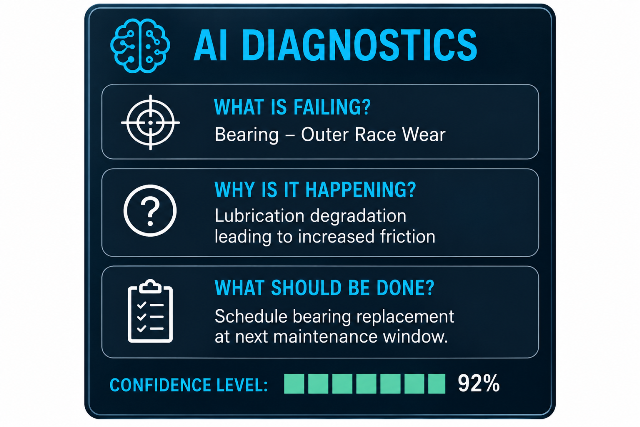
The other dominant conversation in pump reliability circles this year is condition monitoring and artificial intelligence-driven predictive maintenance. Vibration analysis in particular is now considered a mature technology: well-calibrated systems can detect developing bearing failures well in advance, with low false-positive rates when properly tuned to specific operating conditions.
But the more candid commentary from reliability engineers has also been a useful corrective to some of the hype. Sensors and algorithms are not, on their own, a maintenance strategy. Predictive maintenance programmes fail most often not because the technology doesn’t work, but because the surrounding systems have not changed with it. This includes your typical work order systems, spares inventories, and shift practices that stay locked to fixed calendar intervals, while a dashboard quietly flags problems nobody acts on. There’s also a growing, healthy debate about over-automation. When too much operating-parameter adjustment is delegated to a system without human sign-off on critical assets, the people who used to catch problems by instinct begin to lose this judgment over time.
The practical takeaway is that digital monitoring is a layer added on top of good mechanical design and maintenance discipline, not a replacement for it. A pump that’s hard to service, with poor parts commonality and inconvenient sealing arrangements, doesn’t become easier to maintain because it now has a vibration sensor attached to it.
The Practical Implication
Put together, the direction of pump specification is fairly clear, shifting from a one-time capital decision to an ongoing performance and reliability commitment, evaluated on lifecycle cost rather than invoice price. Efficiency is being judged across real operating ranges rather than at a single design point and digital maintenance tools are being recognised as genuinely useful, but only additive to, never a substitute for, sound mechanical design, material selection, and an operating environment that’s actually set up to act on the data it collects.
For plant engineers and procurement teams, this suggests a few concrete questions worth asking of any pump platform under consideration: What does efficiency look like across the actual operating range, not just at best-efficiency point? How much of the maintenance burden is designed out through modularity and serviceability, independent of any sensor package? And is the sealing strategy matched to the specific process liquid, rather than a generic default?
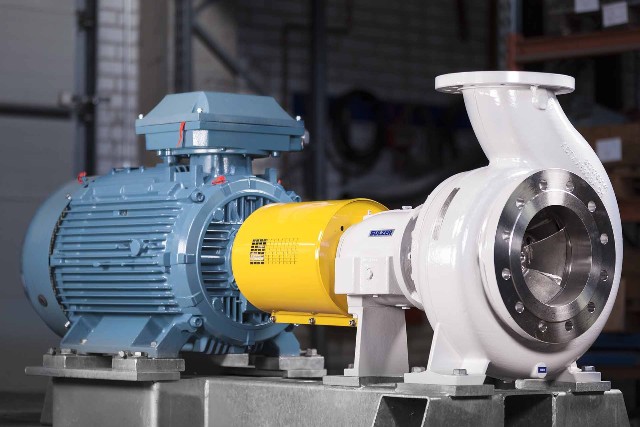
A platform designed around these principles is pump manufacturer Sulzer’s range that has a comprehensive field history across the sectors mentioned earlier, is one example built around this kind of thinking, with modular components, back pull-out servicing, and application-matched sealing options among its core design features.
Whether organisations ultimately choose Sulzer or another manufacturer, the question is no longer which pump has the lowest purchase price. It’s which pumping platform delivers the greatest operational value over its lifespan. At Referro Systems, we help clients evaluate and optimise these broader lifespan considerations.
Adrian van Wyk is MD at Referro Systems.
Referro Systems is a sales and distribution company for many of the world’s leading electrical, automation and global software and hardware brands across industrial and commercial sectors. The Level 2 BBBEE company supplies best-in-class industrial automation, electrical control and instrumentation fit-for-purpose and provides cost-effective solutions.