

The future of asset reliability does not lie in choosing between technology and human expertise, but in using both effectively. AI can process information, detect anomalies and prioritise attention, while condition monitoring technologies provide objective evidence about mechanical, lubricant, thermal and acoustic behaviour. Experienced reliability specialists then apply plant knowledge and engineering judgement to turn those findings into action.
There is relentless pressure on maintenance teams in today’s industrial environment to keep equipment running for longer, reduce unplanned downtime and make better use of limited maintenance resources. This has accelerated the shift away from reactive maintenance towards condition-based and proactive asset management, where developing problems are identified and addressed before they become costly failures.
WearCheck provides comprehensive condition monitoring and asset reliability services through its specialist laboratory operations and Asset Reliability Care (ARC) division. ARC specialises in machinery condition monitoring, advanced diagnostics and proactive maintenance solutions, helping industrial operations improve equipment reliability, availability and maintenance decision-making.
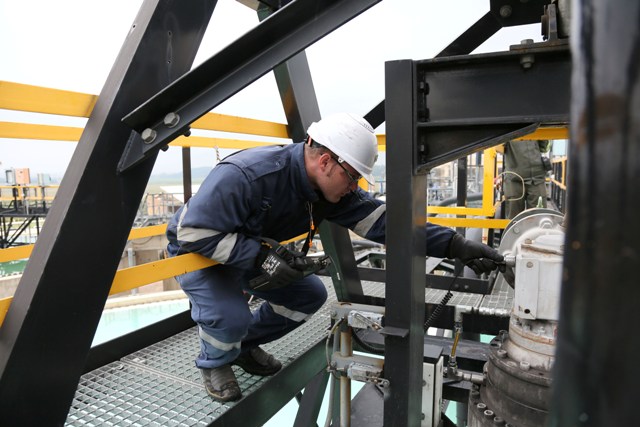
WearCheck ARC technician performing on-site condition monitoring
WearCheck’s ARC division manager, Annemie Willer, explains that combining condition monitoring technologies with specialist diagnostic expertise gives plant operators a more complete view of machine health and allows maintenance interventions to be planned according to actual condition rather than assumptions or fixed schedules.
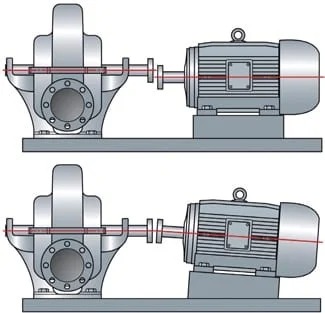
The ARC offering incorporates vibration analysis, thermography, ultrasonics, structural resonance testing, transient analysis and Operational Deflection Shape (ODS) analysis, together with proactive services such as laser alignment and in-situ balancing.
‘Increasingly, artificial intelligence (AI) is adding another layer to this process,’ says Willer. ‘It helps specialists work with growing volumes of condition data more efficiently. However, the greatest value comes not from allowing AI to make maintenance decisions independently, but from combining its analytical capabilities with engineering knowledge, plant history and human experience.’
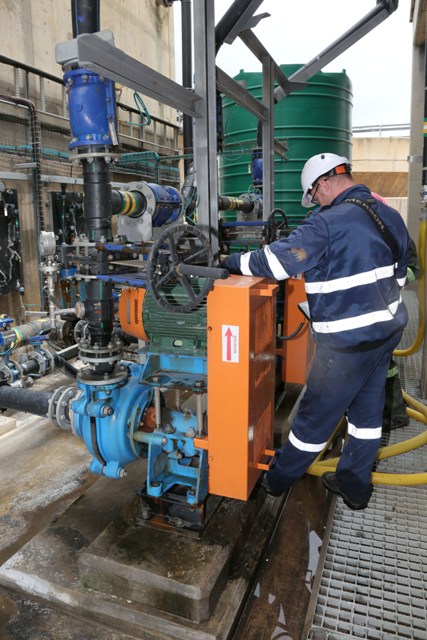
WearCheck ARC technician performs on-site condition monitoring on industrial machinery

Different technologies, different perspectives
An effective condition monitoring programme recognises that no single technology can provide every answer about an asset.

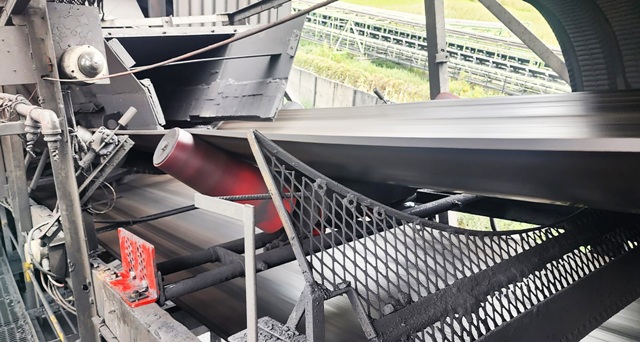
Vibration monitoring provides information about mechanical behaviour and can reveal problems such as imbalance, misalignment or bearing-related abnormalities. Oil analysis provides information about lubricant condition, contamination and the presence of wear-related particles, while vibration analysis provides direct insight into the mechanical behaviour of rotating equipment. Thermography identifies abnormal thermal patterns, particularly in electrical systems and industrial processes. Ultrasound and acoustic emission techniques complement these technologies by detecting phenomena such as compressed-air and gas leaks, electrical discharge and high-frequency acoustic activity associated with friction and other operating abnormalities.
WearCheck’s ARC approach uses the most appropriate monitoring technique for the machine and interprets the findings in the context of how that equipment actually operates. Effective monitoring can detect deterioration earlier, giving maintenance teams more opportunity to schedule corrective action rather than respond to an unexpected breakdown.
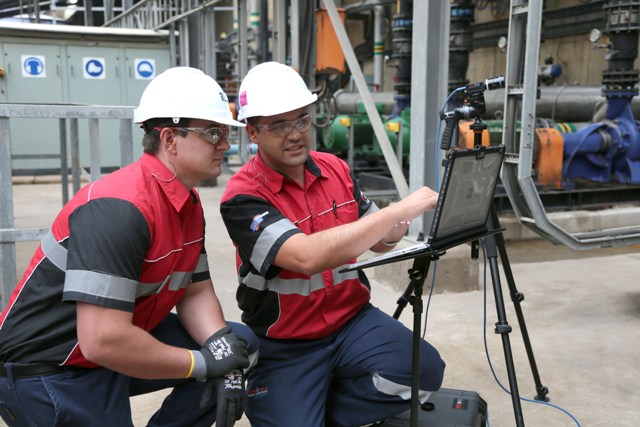
Wearcheck ARC technicians perform motion video amplification on machinery at a water reclamation plant
Predictive maintenance vs. proactive maintenance
Willer warns that asset reliability is not only about detecting faults. ‘Once a developing problem has been identified, the next question is why it occurred and what can be done to prevent it recurring. This is where proactive maintenance becomes particularly important.
‘For example, vibration analysis may identify excessive vibration, but further investigation might reveal that poor shaft alignment, imbalance or structural resonance is contributing to the problem. Corrective services such as laser alignment and in-situ balancing can then reduce the forces acting on rotating equipment rather than simply monitoring the symptoms.’
This creates an important bridge between predictive maintenance, which identifies an emerging failure, and proactive maintenance, which seeks to eliminate or control the factors causing premature deterioration.
Where AI adds value
As monitoring systems become more sophisticated, maintenance teams have access to unprecedented amounts of data. Sensors can collect machine information continuously, laboratory analysis produces detailed condition information, and historical databases reveal how parameters have changed over months or years.
AI is well suited to helping specialists manage this volume of information. Willer explains: ‘It can identify changes in large datasets, recognise patterns, rank areas of risk, filter noise and highlight anomalies that warrant closer investigation. Rather than expecting engineers to examine every piece of information with equal attention, AI can help direct their focus towards machines or parameters behaving differently from their established pattern.
‘Used appropriately, AI can make diagnostic processes faster and more scalable and help ensure that potentially important changes are not hidden among thousands of normal readings. However, there is an important distinction between identifying where to look and deciding what should be done.’
WearCheck cautions against assuming that feeding vibration, oil analysis, thermography, process sensor, ultrasound and acoustic-emission data into an AI platform will automatically produce a definitive diagnosis and corrective action.
Machines are not identical
Two apparently identical machines operating in the same plant do not necessarily deteriorate in the same way. Manufacturing tolerances, installation, operating history, previous maintenance work, lubrication practices and many small variations can influence how an individual asset behaves.
Human actions add another dimension. A technician may notice slight looseness during an inspection but fail to record it. The wrong lubricant might have been added during a hurried maintenance intervention. A machine may briefly have operated under unusual conditions that were never captured by the plant historian. Sensors cannot report events they were never designed to observe.
Willer emphasises that AI should therefore complement rather than replace experienced diagnosticians. The significance of the data still needs to be evaluated against the machine’s history, operating environment and the practical experience of those maintaining it.
AI can identify patterns and determine where closer investigation is required, but it cannot automatically provide the accumulated understanding of how a particular machine has behaved throughout its working life or the subtle contextual information that experienced technicians and engineers bring to a diagnosis.
Better information, better maintenance decisions
The future of asset reliability does not lie in choosing between technology and human expertise, but in using both effectively. AI can process information, detect anomalies and prioritise attention, while condition monitoring technologies provide objective evidence about mechanical, lubricant, thermal and acoustic behaviour. Experienced reliability specialists then apply plant knowledge and engineering judgement to turn those findings into action.
‘Ultimately, the purpose of Asset Reliability Care is not simply to generate more data. It is to turn the right data into useful maintenance intelligence,’ says Willer.
For plant operators seeking higher equipment reliability and availability, this combination offers earlier warning of deterioration, more confidence in maintenance planning and better opportunities to address root causes before failures affect production.
For 50 years, WearCheck has been proving that when machines start talking, it pays to listen. Please visit www.wearcheck.co.za. Alternatively, please contact WearCheck on marketing@wearcheck.co.za or call +27 (31) 700-5460.