

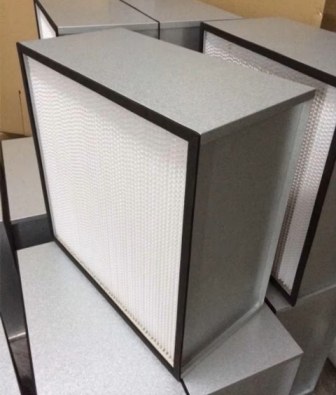

Specialised manufacturing, pharmaceutical, healthcare and engineering are just some industries where the demand for High Efficiency Particulate Air (HEPA) filtration is growing.
This is according to Alin Gomes, Director of Heating Ventilation and Air Conditioning (HVAC) specialist Industrial Climate Control (ICE), which provides comprehensive, turnkey solutions for these highly specialised environments.
“HEPA filtration technology evolved from a project to trap radioactive particulate contaminants during the Second World War, and has become the preferred method of HVAC air filtration today,” Gomes explains.
Utilising air filters with a very dense network of fibres, HEPA filtration captures 99.97% of airborne particles which can be as small as 0.3 microns, making it the perfect way to eliminate airborne viruses, bacteria, mould spores and dust.
Different degrees of clean
“Unlike in conventional HVAC systems, in sectors such as healthcare and pharmaceutical, the emphasis switches from occupancy and comfort to products and processes in cleanrooms, where HEPA filtration is required,” says Gomes.
The air standard is specified and measured according to stringent European ISO 14644-1 standard, right down to ISO 1 – the cleanest possible, with the most stringent particle concentration limits.
“The cleanrooms that ICE has done HVAC for have all been ISO 5-classified, which still represents a very high level of air cleanliness. These cleanrooms are used for the manufacture of everything from medicines to vaccines,” Gomes points out.

In the healthcare sector – such as hospitals and clinics – HEPA filtration remains essential, but the specifications are usually set by the healthcare facilities themselves. Gomes advises that although similarly strict standards apply to the likes of operating theatres and laboratories, because hospitals have the human factor (patients, medical staff and doctors) passing through it, they cannot be ISO-classified: “A very clean environment is still needed, but it is focused on the human rather than the product aspect. HEPA filtration remains a key filtration point, with the acceptable particle counts determined by different rooms or spaces. For example, there is a difference between an operating theatre and a dental facility. With open-heart surgery, for example, much cleaner air is required, compared to a dental surgery.”
Fit for purpose

Gomes continues: “A single cleanroom can be purpose-built. ICE does the HVAC installation and the construction. When it comes to hospitals, multiple contractors are involved – from builders to plumbers and flooring specialists – and they all have to meet specified standards and ensure that everything is sealed. For example, the brick work should not give off dust.”
A recent client project was a single room for the manufacture of cameras in the aerospace sector, and needed to meet ISO 7 standards to prevent particles sticking to highly sensitive lenses. A second project – a facility that manufactures vaccines for veterinary use – not only required ISO 5 filtration, but was spread across multiple rooms.
ICE helped to manage upgrading the building, starting with inserting panels inside rooms to contain the dust emitted by plaster and brickwork:
“We mounted cold room panels inside and contractors epoxied the floors to create a cleanroom environment. We also installed additional ducting networks. However, the biggest challenge was that the building had 12 different rooms. In terms of HEPA filtration, there was mix between ISO 5 and ISO 8. At the same time, each of these rooms required different pressure ratings: some positive, and some negative. The main reason for this is that, when dealing with a dangerous medication in a room kept under negative pressure, this substance will remain in the room and not transfer to a neighbouring room with a positive pressure.”
Strict design, installation standards and quality control are imperative. HEPA units must be completely sealed. Minor issues may include the need for gasket adjustments but, when incorrectly installed, these may need to be replaced, which can be extremely costly.
Each new HEPA filtration system completed by ICE undergoes a Dispersed Oil Particulate (DOP) test before handover to a client. An independent, third-party testing company releases gas behind each filter. Special equipment picks up any gas that passes through the filter. If this happens, the system fails the test.
Gomes observes that one of the chief challenges with HEPA filters is the massive resistance to airflow, requiring the selection of larger than normal fans to push air through the dense filter. Unfortunately, this has a negative effect on power consumption.
“However, the additional energy and equipment costs are justified by the reason for installing the HEPA filtration in the first place: the safe and effective removal of mould, dust, bacteria, viruses and other airborne allergens and pathogens,” he concedes.
Gomes says the use of HEPA filtration in a South African environment brings additional challenges. These differ regionally and include elevation, humidity and corrosion. The latter is a major challenge in coastal regions – while elevation and the related air density is a problem in Gauteng: “Elevation plays a major part. Air conditioning at sea level is much more efficient than in Johannesburg. When we select air conditioning units, we take the elevation into account so we can accommodate the loss of efficiency,” Gomes advises.
Different ambient temperatures and even the age of buildings also need to be factored in when designing a system, he notes.
Filtering into the future
Although HEPA filtration has not changed materially over the decades, changes in the requirements of manufacturing environments have certainly sparked growth in demand.
Additional technologies have also been introduced alongside HEPA filtration. These include pre-filtration and the use of ultraviolet germicidal irradiation (UVGI), including UV-C (ultraviolet C): ‘We install a UV-C filter in the airstream, to deactivate airborne micro-organisms, including certain bacteria, viruses and fungi.
However, the effectiveness of the UV-C filter depends on several factors: UV intensity, exposure duration, airflow velocity, lamp positioning and the susceptibility of the micro-organisms.
Another important point is that UV-C does not actually remove particles from the airstream. It deactivates susceptible micro-organisms by damaging their genetic material,” Gomes clarifies.
Furthermore, UV-C irradiation does not remove dust, microbial particles or other particulate matter from the air: “Even when micro-organisms have been deactivated, they remain in the airstream and can still be captured by the HEPA filter,” he adds.
In certain environments, ozone filtration may also be installed.
“However, although these may assist, HEPA filtration remains the ultimate ‘gold standard’, go-to filtration for highly sensitive, demanding environments such as those found in cleanroom, pharmaceutical and healthcare environments,” Gomes concludes.


