
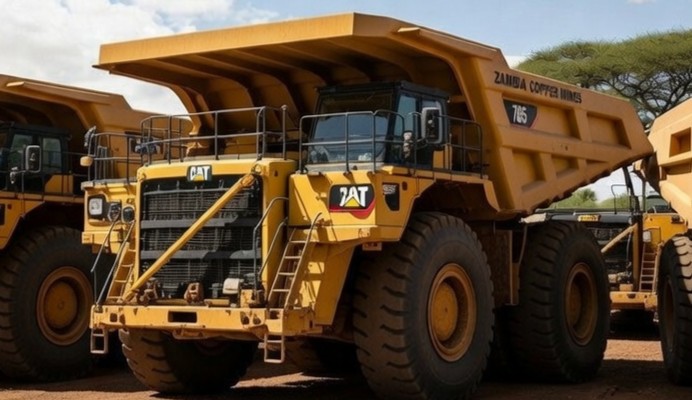

Truth be told, pre-owned heavy machinery cannot be in the same condition as a factory-fresh one. Of course, there would be one or two issues for the prospective owner to deal with.
However, it is a matter of the magnitude of the liability for lifecycle costs the new owner is willing to bear. And that’s where a thorough pre-delivery inspection of the pre-owned machinery matters. This ensures that an informed purchase is made.

Wolfgang Bühn, CEO of MEVAS – a consulting firm that provides inspection services for heavy equipment in Africa and other regions – advises fleet managers to engage reputable consulting companies to carry out this vital task.
By Jimmy Swira
In equipment procurement for heavy industry, the decisions made (or not made) directly determine the lifecycle costs. This is even more so when the equipment is pre-owned, which is considered an affordable option when it comes to upfront costs compared with ‘factory fresh’ options.
Thus, it is vital that, when making procurement decisions for pre-owned equipment, maintenance and reliability be considered as crucial factors from the onset, states Wolfgang Bühn, CEO of MEVAS. “Be thorough, don’t rush, don’t be desperate. You must ensure that you get real value for your hard-earned money. Otherwise, you can inherit a problem, and you will be sorry for yourself,” he states, as he underlines typical mistakes companies make and their impact on lifecycle costs. MEVAS is a consulting firm that renders inspection services for heavy equipment in Africa and other regions.
Mistakes of buying in ‘good faith’ or ‘OEM-inspected’ claims
Bühn has dealt with pre-owned earth moving equipment throughout Africa and other regions extensively. From the experience gathered, he has noticed the common error of buyers accepting “good condition” or based on”OEM-inspected” claims without a structured report or test results.
“Buyers often fail to verify service history, repair quality, or the plausibility of the hour meter. Many focus on fresh paint and aesthetics instead of assessing the true structural, hydraulic, and undercarriage condition,” Bühn notes.
Unavoidably, skipping an independent onsite inspection – due to distance, time pressure, or excessive trust in the dealer-frequently leads to costly surprises, he adds.
Impact on reliability, availability, and liabilities
The oversight has huge implications for equipment reliability and availability that, unfortunately, the company shoulders, Bühn points out, listing the following main ones:
- Hidden wear on key components often results in early failures and frequent breakdowns, severely affecting machine reliability.
- Availability drops because the equipment requires immediate unplanned repairs and parts sourcing.
- Lifecycle costs rise significantly through major repairs, increased fuel consumption, and additional maintenance needs.
- Safety and compliance risks also emerge, including issues with brakes, structural cracks, ROPS/FOPS integrity, and other critical safety systems.
Pre-procurement inspection
The procurement challenges can be forestalled as long as buyers insist on carrying out a thorough pre-purchase inspection covering the following areas in order:
- Begin with identification verification, confirming serial numbers, recorded hours, options, attachments, and matching documentation.
- Then examine structures such as the frame, boom, stick, slew ring, welds, pins and bushings, along with any signs of cracks or previous rewelds.
- The powertrain – including engine, transmission, axles/final drives – must be tested hot and under load.
- Hydraulics require checks on pumps, valves, cylinders, hoses, leaks, response times, and pressures.
- The undercarriage and running gear (chains, sprockets, rollers, tires or rims, brakes, suspension) need detailed evaluation.
- Finally, full functional testing covers all movements, travel, steering, braking, and work cycles.
Testing methods and technologies
Conveniently, advances in technology provide a wide range of methods for testing. Typically, the inspections combine visual and dimensional wear checks with full operational tests performed both cold and hot. Specifically, these entail:
- Hydraulic and system pressure checks, along with targeted flow or performance tests when required, provide deeper insights.
- Fluid analysis, including oil sampling for lab evaluation when justified, is essential.
- OEM electronic diagnostics help read fault codes, monitor parameters, and sometimes reveal usage profiles.
- Extensive photo and video documentation, supported by digital checklists, ensures a complete record.

Seasoned machinery professional key
Nonetheless, for all the convenience advanced technology provides, the competence of the personnel engaged is key and will always remain so, Bühn stresses. “In general, we place greater trust in the experience of a seasoned machinery professional than in modern technologies alone. No tool can replicate assessing the smell of exhaust, fumes, or coolant, nor can it judge the distinctive noises from an engine, transmission, or hydraulic pump.”
Wrong choice, high lifecycle costs
Given the significance of inspections, it is important to engage competent inspectors. Otherwise, using inspectors lacking deep heavy equipment or mining-specific experience is a frequent issue that leads to overlooked problems.
Bühn singles out some mistakes from incompetent inspectors or impostors as:
- Failing to cross-check hour meter plausibility against visible wear, ECU data, and service records allows discrepancies to go unnoticed.
- Vague reports with minimal photos and no clear, actionable recommendations reduce their value.
- Missing the specialised knowledge of where to look for issues on particular machine models further compounds risks and inflates long-term costs.
Choosing an inspection provider
All in all, to avoid the pitfalls of working with the wrong inspectors, an organisation has to undertake prudent steps, Bühn recommends.
“Select providers that demonstrate true independence. This means there should be no involvement in machinery trading and no commissions from sellers.
“Proven experience is key: look for those conducting many inspections annually, with a strong focus on mining and heavy equipment, backed by references and sample reports.
“A solid technical background is essential. Engage trained mechanics or engineers, ideally with prior OEM or dealer experience and up-to-date model training.
“Ensure they offer a clear scope and proper tools: comprehensive checklists, diagnostic computers, undercarriage measurement devices, thorough photos/video, and efficient, structured workflows.
“Finally, demand contract clarity that defines the scope, data access rights, deliverables, and how findings tie into purchase conditions or contingencies.”
Ultimately, the payoff for informed decisions in machinery procurement is equipment that is reliable and has low lifecycle costs: available as and when needed for deployment.


