

In mining operations, planned shutdowns are undertaken to achieve reliability and improve safety compliance. However, if not carefully managed, they can have the unintended consequence of costly, extended production downtime. And so, striking a balance is key.
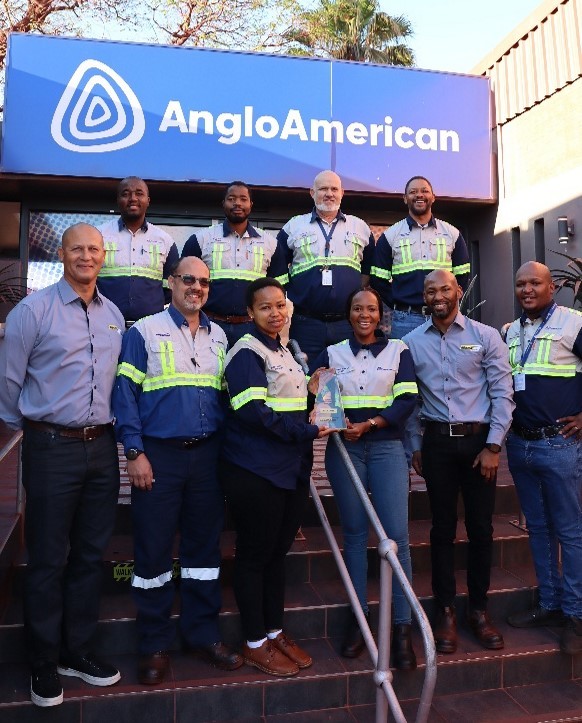
This is what Machinery Maintenance Matters learns from the Engineering and Maintenance Team at Anglo American’s Kumba Iron Ore operation in Kathu, Northern Cape, South Africa.
Every mining company must have an approach to reliability that best meets its requirements.
For the reliability team at Anglo American’s Kumba Iron Ore, it is about identifying potential pain points in operations from mine to mill, with huge implications for production, and tailoring an appropriate approach that addresses them. Of course, this is subject to change as and when required. And it is an ongoing practice.
One of the common challenges is unplanned stoppages, which have a huge impact on the reliability of critical equipment. In order to minimise unplanned stoppages, the Engineering and Maintenance Team at Kumba Iron Ore carries out planned shutdowns.
Unplanned Outages
With regard to unplanned stoppages, says the Asset Strategy and Reliability Principal at Kumba Iron Ore, the major contributors are mechanical issues; electrical issues, including cables and transformers; lubrication and fluid system issues, including grease and hydraulics; and major component wear, such as undercarriage components.
Usually, operating practices and maintenance strategy execution influence reliability. Therefore, the approach to implementing planned shutdowns is informed by identifying issues that contribute to downtime or failure and devising appropriate methods to mitigate them. These fall into two categories – Operating Factors (Behavioural Safety) and Maintenance Factors (Downtime).
Operating Factors (Behavioural Safety)
Operating factors include operator-induced stresses such as overdigging, poor loading angles and hoist overtravel; inconsistent dig-face conditions increasing mechanical load; and improper warm-up or shutdown procedures. These practices compromise safety and accelerate wear on key shovel components such as crowd gears, hoist ropes and swing machinery, explains the Asset Strategy and Reliability Principal.

Maintenance Factors (Downtime)
The Asset Strategy and Reliability Principal notes: “A trend of high-frequency, short-duration chronic stoppages, especially electrical/PLC faults, lubrication and hydraulic failures, is a cause for concern for any industrial business. Although short in duration, their high occurrence materially impacts Reliability and Availability. This is in addition to experiencing occasional major component downtime events (long MTTR) linked to structural or drivetrain components.”
The Necessity of Planned Shutdowns
Bearing this in mind, addressing failure modes early is important to maintaining equipment and is in line with the goal of Zero Harm, as part of the Fatal Risk Management Framework.
The Fatal Risk Management Framework helps identify and control the most critical risks in operations. Specifically, these risks, which include machinery-related risks, could lead to life-threatening incidents if not managed effectively. “By equipping employees with knowledge and tools to recognise and act on these risks, we create safer workplaces where lives are protected,” the A&R Principal states, pointing out that the interventions go beyond routine maintenance and contribute to reducing incidents.
Strategically Designed
Thus, the shutdowns are strategically designed to protect our people, maintain safe operation, reduce unplanned downtime, and maintain structural integrity to OEM requirements. They focus on Primary Fleet assets such as shovels, haul trucks, drills, and supporting fixed-plant critical assets. Across Heavy Mobile Equipment, particularly Electric Rope Shovels, shutdowns are primarily executed to ensure safety and that equipment remains in good condition.
Priority on Equipment Criticality
The priority is on equipment criticality. This encompasses the following areas: impact on total mining and processing rate; component age and operating hours relative to OEM and site life limits; condition-monitoring health indicators such as vibration, thermography, oil analysis and structural NDT; and consequence of failure, including production loss, long MTTR events and safety risk.
The Activities
The Asset Strategy and Reliability Principal indicates that this approach ensures activities are performed timeously, before failure curves accelerate. The activities involve re-roping and the replacement of major cylinders, bearings, bushings and structural pins.
Blended Maintenance
The Asset Strategy and Reliability Principal particularly mentions blended predictive maintenance as a vital step.
Kumba Iron Ore uses a blended predictive maintenance approach across mobile and fixed assets, including vibration analysis (periodic or real-time, depending on criticality); infrared thermography for electrical and mechanical hotspots; oil analysis for wear particles, contamination and lubricant condition; and Non-Destructive Testing (NDT) for structural fatigue and crack propagation. Real-time systems are deployed on high-criticality assets to detect deterioration before functional failure occurs.
Proactive Maintenance, Reliable Equipment
Through planned shutdowns, Kumba Iron Ore has ensured that maintenance is proactive, addresses identified risks to critical equipment before they escalate, cause costly downtime and significant production losses, or potentially result in accidents. In this way, critical equipment is not only available when needed but, most importantly, performs reliably to meet the set tonnage output.
Preventing Extended Downtime During Shutdown
Planned shutdowns are a necessity, but they can also become a liability when they cause extended production downtime.
At Kumba Iron Ore, with a production target of approximately 31–33 million tonnes per year (with Sishen as a major contributor), extended downtime has huge implications.
To prevent extended downtime during shutdowns, commissioning is executed in two phases: cold commissioning and hot commissioning.
Cold Commissioning
Cold commissioning is performed as work is completed. It includes setting, alignment checks, torque verification and electrical continuity testing. These activities ensure that the system is mechanically complete and safe to energise.
Hot Commissioning
Hot commissioning involves energising the asset, verifying control and interlock logic, functional testing of individual systems and full operational sequences. Where possible, the assets are run to confirm readiness.
Through this structured process, equipment can safely return to production without rework or delayed ramp-up. “We restructured our 2026 production to 31–33 million tonnes per year for operational efficiency,” explains the Manager.
Actions Taken to Boost Performance
It is not enough to carry out planned shutdowns on time and to the required standard to achieve reliability.
As an ongoing process, performance improvement sustains reliability. This is delivered through a combination of time-based component replacements in line with strategy, involving engines, cylinders and structural components. Furthermore, there are software upgrades via supplier Service Level Agreements; obsolescence programmes for long-life control and instrumentation systems; and Defect Elimination (DE) to identify chronic failures, analyse root causes and implement sustainable, long-term solutions.
Highlighting DE as the most critical intervention, the Asset Strategy and Reliability Principal elaborates: “DE remains one of our most effective processes for improving structural reliability and eliminating repeat failures. In addition, it reinforces our drive towards Zero Harm through engineering out hazards in addition to procedural controls.”