
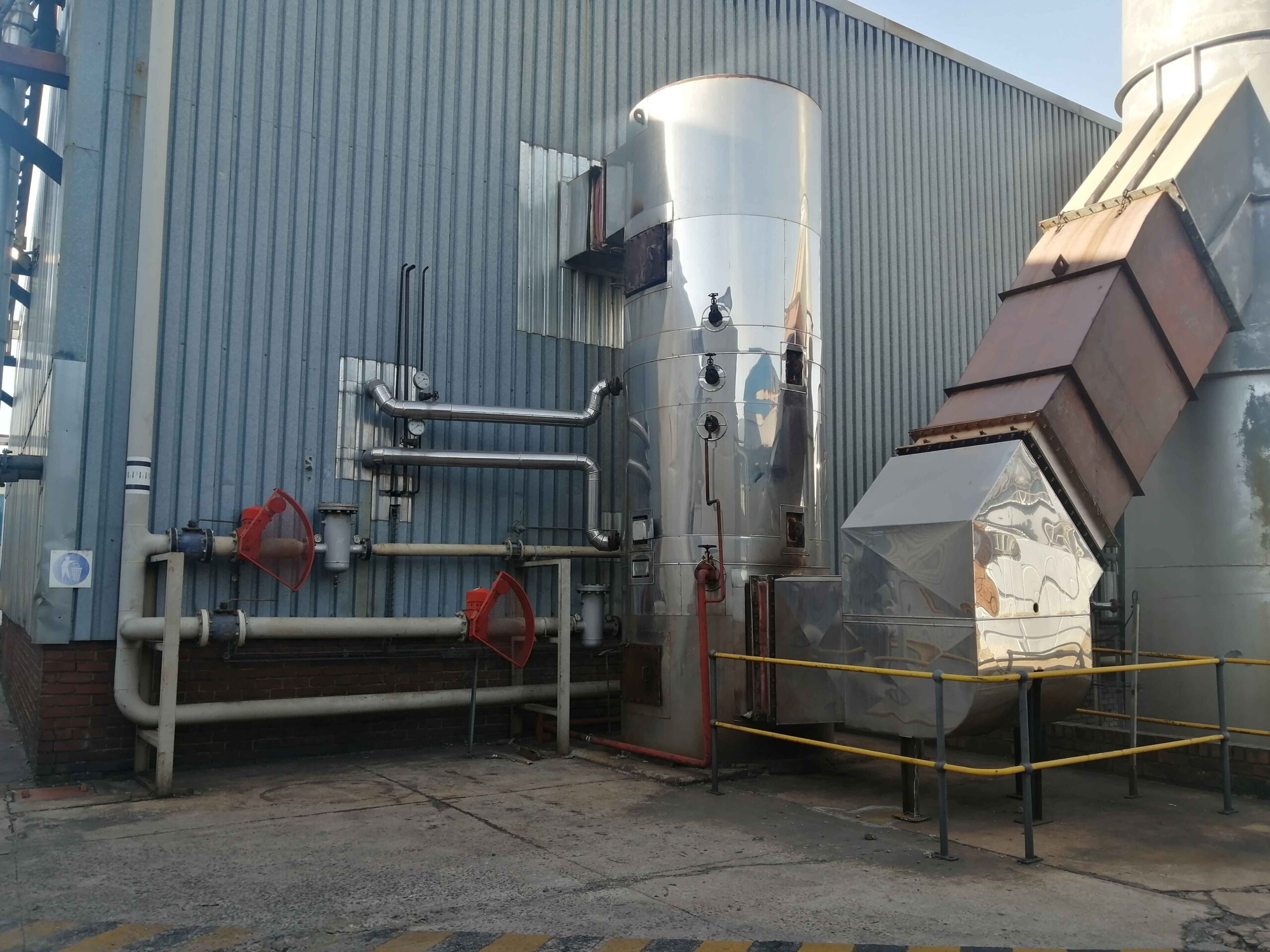
Advanced technology, specialist skills and strong partnerships are pivotal when operating and maintaining boilers in complex industrial environments, says Dennis Williams, Commercial Director of boiler operations and maintenance expert Associated Energy Services (AES).
Proactive maintenance is essential, and should be backed by constant monitoring of operations to identify and pre-empt potential problems, applying a dynamic blend of data and human experience to prevent downtime.
Keeping tabs on maintenance
“Consistently collecting and interpreting data is critical. Remote monitoring systems (RMS) are integral to ensuring effective management and safety,” agrees AES Projects Director, Gavin Evezard.
Referring to a project completed recently for a food manufacturer – involving the installation of a fully customised control and RMS solution with a web-based interface which enabled real-time monitoring, data analysis and performance tracking – Evezard says it is impossible to ignore the growing importance of data-driven decision-making.

He notes that RMS platforms allow operations management to monitor performance, investigate anomalies and conduct detailed root cause analyses: “We have all the relevant strategic data recorded on our RMS, and can go back to see exactly what happened. We can do proper root cause analysis and prevent any future incident or issue.”
Evezard furthermore emphasises that, in South Africa, customisation is essential: “Our large boiler fleet includes boilers between 30 and 60 years old. Original equipment manufacturers may no longer have the software available to diagnose or solve problems. At AES, our systems are in-house. We have the teams and skills – and the keys. We can diagnose and fix problems.”
Factoring in human skills
However, despite advances in automation and control technology to improve operational maintenance, both Williams and Evezard emphasise that human expertise remains indispensable -especially considering that coal is often the fuel source which still drives thermal energy at the majority of local manufacturers.
“A high degree of operator input is still needed. At the end of the day, a human needs to do checks and set up the boiler in line with production facility requirements,” Evezard observes.
Williams concurs, especially when it comes to safety: “If things are too hands-off, essential safety aspects may be overlooked. Consistent human oversight mitigates the risks associated with combustion and steam vessels under pressure.”
Long-term value centres on relationships which, in turn, hinge on AES’s ability to combine technology and people, Williams continues: “When you have a measurable objective, you can show the client what you see in their plant and explain how you can assist. This provides tremendous insight and ultimately builds a relationship.”
This successful approach is evident in the fact that AES’s long-standing contracts average at least 10 years. The company has concluded more than 50 outsourcing contracts (of which 28 are currently active) and has over 75 boilers under management.
Maintaining strong partnerships
As water treatment is a critical aspect of industrial boiler maintenance and management and potentially one of the greatest operational risks, AES prioritises close partnerships with trusted third-party specialists.
Good water treatment removes calcium and magnesium from municipal water to create boiler-friendly, soft water, prevents the deposition of hard calcium or magnesium scale which stops heat transfer, addresses high chlorine levels which degrade the ion exchange capability of resin beds treating hard water and guards against the development of hot spots on tubes, in corners, crevices and wells which may cause failures. Water treatment management also addresses organic contamination -especially in condensate returned for reuse and heat recovery.
Williams advises testing and closely monitoring boiler water quality, to pinpoint potential problems so that these can be mitigated before becoming catastrophic: “We engage with companies that stand behind their treatment programmes, check these are continuously working and – if any adjustments are needed – provide detailed technical information. They are the ‘eyes and ears’ of boiler water system health.”
Extending maintenance beyond boilers
Sustainability is increasing relevant to waste heat recovery economisers. These are pressure vessels retrofitted to recover lower-grade heat from boiler exhaust gases for inclusion in boiler feedwater – which have until now been examples of the consequences of poor maintenance.
Williams notes that poor water treatment and corrosion are the primary reasons for local economiser installations failing, and subsequently being bypassed to avoid costly repairs. Oxygen in untreated water can cause internal pitting of thin-walled tubes, while sulphur-related corrosion attacks external surfaces.
As pressure vessel equipment, economisers are subject to regulatory requirements which stipulate inspection and ongoing maintenance.
Williams believes that many installations failed because companies took a ‘plug-and-play’ approach – underestimating the maintenance and technical management required to sustain performance.
“As interest in waste heat recovery technology grows, AES is strongly positioned to turn a negative into a positive: combining hands-on operational expertise with RMS to ensure effective maintenance, and that critical parameters including temperature, pressures, flows and boiler loads remain within safe operating limits,” he concludes.