


The maintenance team did everything right: they shut down the motor, took precise shaft alignment measurements, and made the necessary adjustments. At room temperature, the numbers were perfect. But a few hours after startup, something was wrong.
Machine vibration was higher than expected. Bearings ran hotter than usual. Couplings showed signs of premature wear. Within weeks, the team troubleshoots again, wondering what they missed. Most technicians assume that if a machine is aligned at rest, it will stay that way. But once the system is up and running, heat changes everything.
Thermal expansion is the silent force that changes shaft alignment when temperatures rise. As rotating equipment heats up, metal components expand – sometimes by mere thousandths of an inch, sometimes by millimeters. High-temperature environments, such as power plants and refineries, are especially vulnerable to this thermal dynamic change.
Staying ahead of thermal growth can be the difference between smooth operation and frequent breakdowns. In this article, we’ll explain how to factor in heat expansion during alignment and account for changes as machines heat up.
The Invisible Shift: How Heat Changes Alignment
While most teams understand that heat causes expansion, they don’t realize how unpredictable it can be. Uneven heating, varying material properties, and different load weights mean thermal growth does not always happen the way you would expect. And because thermal expansion occurs in all directions, alignment changes are not always linear or even. One part of the machine may heat up faster than another, or one material may expand more than its nearby counterpart.
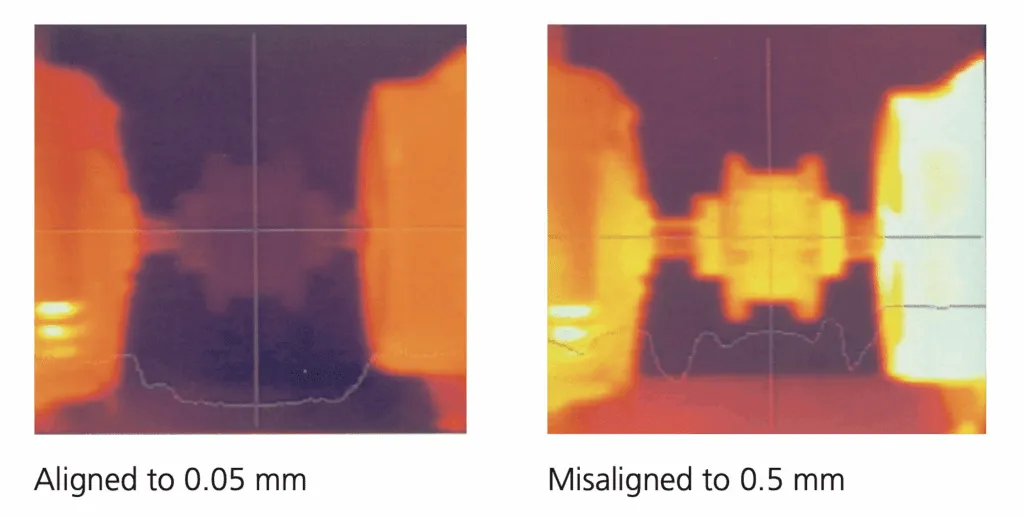
Therefore, alignment that looks perfect in the workshop seems to suddenly turn into misalignment in the field. This can lead to:
- Excessive vibration
- Increased energy consumption
- Premature bearing and seal failure
- Unplanned downtime
And shaft misalignment is not the only concern. If a machine runs hotter than expected, it could signal bearing wear, electrical inefficiencies, or other underlying issues. Even with proper lubrication, friction still generates heat. Motors and electrical components add to the load as resistance builds in their circuits.
Left unchecked, what starts as thermal expansion alignment issues can turn into a much bigger reliability problem – costing thousands in downtime, repairs, and lost production.
Thermal Growth in Different Asset Types
Thermal growth can have a significant impact on turbine shaft alignment, particularly in large industrial steam or gas turbines.

Because different parts of a machine heat at varying rates and amounts, they can expand unevenly. As a turbine heats up, the shaft and casing expand, which can shift the rotor centerline vertically and/or horizontally. This change misaligns the shaft relative to the driven equipment (e.g., generator, compressor), potentially leading to coupling strain, vibration, or even bearing damage.
But thermal expansion affects a wide range of rotating equipment, not just turbines – and each asset type reacts to heat differently.

Pumps, particularly vertical pumps, experience axial and radial expansion that can shift shaft position significantly. Their long shaft lengths and vertical orientation make them especially vulnerable to misalignment from bottom-to-top thermal gradients.
Electric motors heat unevenly depending on ventilation, mounting surfaces, and load conditions. Misalignment from thermal growth often appears as vibration spikes during startup or after long runs.
Compressors run under high pressures and fluctuating loads. This makes them prone to asymmetrical heating, especially if adjacent systems (e.g., piping or coolers) apply uneven stress. Shaft centerlines can shift in unexpected ways as temperature rises.
Gearboxes may see thermal expansion in both housings and shafts, leading to internal misalignment. Lubricant temperature also plays a role: as oil heats up, viscosity changes accelerate internal component wear if misalignment occurs.
Understanding the heating patterns unique to each machine type helps determine thermal alignment targets more accurately and supports early detection of misalignment-related faults.
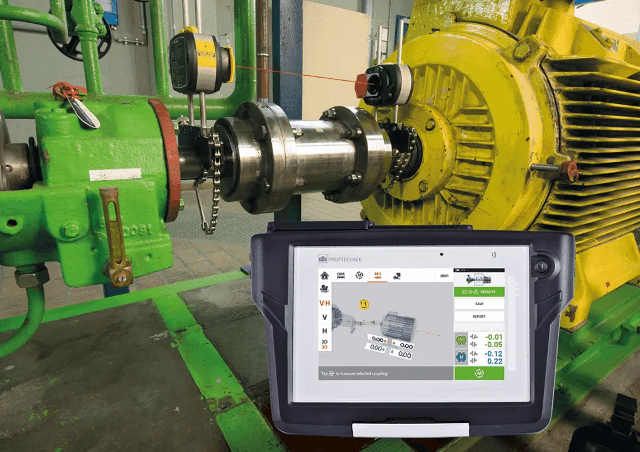
Pruftechnik‘s RotAlign Touch tracks how shafts move as the machine dynamically heats up
How Engineers Account for Thermal Growth
Design and maintenance engineers have long used concepts such as “cold alignment” and “hot alignment” to address thermal movement. But the key lies in knowing when and how to apply them.
Cold alignment involves intentionally offsetting components during shutdown, so they move into alignment once the machine reaches operating temperature. This strategy depends on accurately predicting how much each component will grow.
Hot alignment, in contrast, entails measuring machines while they’re hot, either during operation or after a controlled shutdown. This is useful when you want to know the “true” running position of a component.
Many original equipment manufacturers (OEMs) now provide thermal targets or offset values to assist with installation. These values help technicians know how far to shim or move components during initial alignment to account for growth.