


You are currently viewing Reducing the Risk of Flat-bed Lathe Fault Misdiagnosis

Reducing the Risk of Flat-bed Lathe Fault Misdiagnosis

Using different techniques together ensures a more reliable and accurate diagnosis of the health of flat-bed CNC lathe failure. Assumptions based on a single fault parameter can result in misagnosis and a waste of time and resources on wrong interventions.

By Jimmy Swira

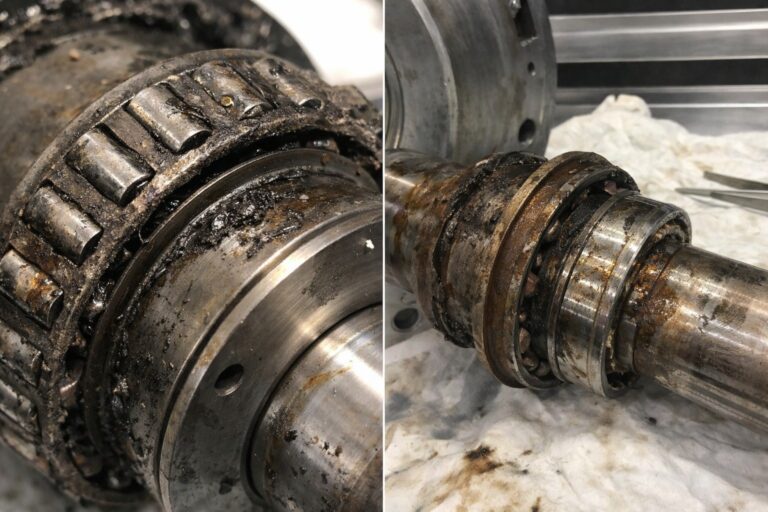
One of the most overlooked issues in the maintenance of flat-bed lathes is fault misdiagnosis. This is a situation where bearing wear and tear may be attributed to misalignment of a spindle. “Sometimes we encounter those cases, where a client (in component fabrication) would assume vibration is solely due to misalignment. On the contrary, our comprehensive testing would uncover some underlying issue that results in persistent vibration and misalignment,” James Fourie, Technical Sales Team Lead at KNUTH Machine Tools (KNUTH SA Pty Ltd), says, urging the use of multiple condition monitoring techniques alongside vibration analysis.

Complementing with other techniques

Complementing vibration with other monitoring techniques can greatly reduce the risk of misdiagnosis. These are:

  • Temperature checks can highlight abnormal heat from friction or lubrication issues.
  • Oil analysis can reveal contamination or early wear.
  • Monitoring motor current, servo loads, and drive loads helps identify increasing mechanical resistance.
  • Backlash, accuracy, and repeatability checks provide insight into mechanical wear.
  • Visual, physical, and audible inspections can quickly flag developing problems.

Using the abovementioned approach is best practice, says Fourie. “The more techniques used together, the more reliable and accurate the diagnosis of machine condition becomes.”

Don’t assume a fault with a flat-bed lathe machine is due to a single issue. It may not always be
bearing failure. For this reason, complementary testing techniques must be applied as comprehensively as possible.
Fault Diagnostic Tools

 Manufacturers are pulling out all the stops to release new brands of products for various fault detection applications. This gives fabricators a wide range of tools to utilise at their disposal. It is only a matter of making an informed choice on the most suitable product for their requirements.

Some among the most popular range of products include but may not be limited to:

a. Handheld tools (vibes testers)

Handheld tools (vibes testers) include vibration testers and infrared thermometers. Vibration testers are effective when it comes to establishing a baseline and for periodical checks such as during services, while infrared thermometers are for checking temperatures of bearings periodically.

b. Continuous Monitoring Systems

Continuous monitoring systems and/or sensors – wired and wireless – are tools that enable effective monitoring of vibration, temperature, motor currents, and other issues in real-time.

c. Hardware Components for Spindle Monitoring

Sensors are the primary data acquisition devices for monitoring parameters such as vibration, power/load, temperature, sound, rotational position and speed, just to cite a few. There are also data acquisition systems (DAQ) / IIoT devices.