


Manufacturing is often portrayed as an either-or equation: CNC or conventional, digital or manual, automation or craftmanship. However, this is a false divide. At KNUTH, we recognise that true competitive advantage lies not in replacement, but in integration. The truth is that CNC and manual machining don’t compete; they complement each other.
CNC machining has undeniably redefined industrial capability. With advanced digital controls, automation integration, and CAD/CAM compatibility, CNC systems deliver unmatched precision, repeatability, and scalability. They enable manufacturers to produce complex geometries at high volumes with consistent quality, meeting the demands of aerospace, automotive, medical, and high-performance engineering sectors. CNC represents speed, efficiency, and the data-driven intelligence of Industry 4.0.
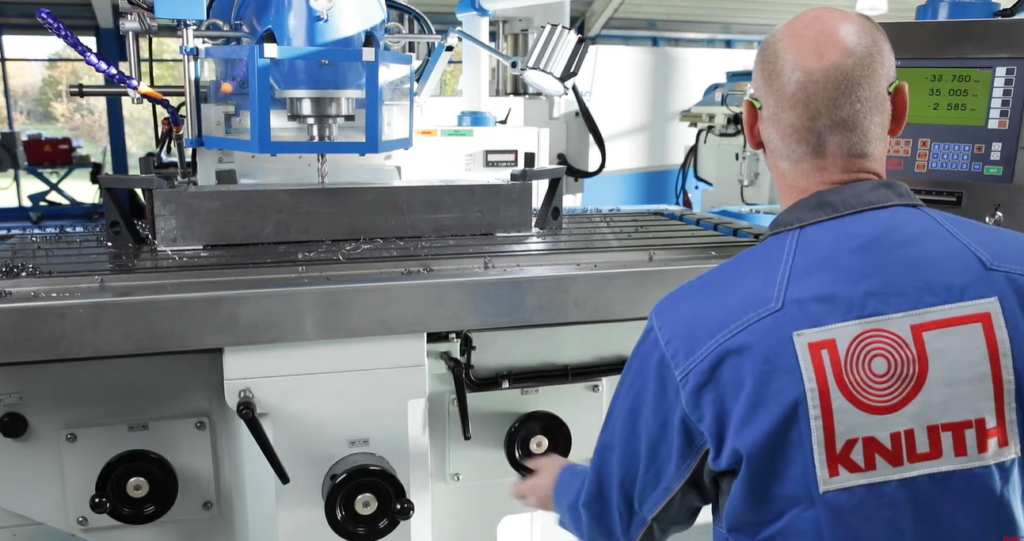
KNUTH Conventional Machine in operation

Yet conventional machining remains strategically essential to modern manufacturing. In workshops across the world, conventional machines provide the flexibility required for repairs, prototyping, small-batch production, and specialized custom work. They allow operators to adapt in real time, apply judgment, and respond to variables that no program can fully anticipate. More importantly, conventional machining builds the mechanical intuition that underpins true expertise. It teaches operators how materials behave, how tooling reacts under load, and how precision is achieved through experience and control – knowledge that cannot simply be programmed or automated. As the technical team at KNUTH emphasises, “Technology should enhance human skill, not replace it. The strongest machinists are those who understand both the machine and the material.”
The real challenge facing the industry today is the growing skills gap. As experienced machinists retire and fewer young professionals enter the trade, manufacturing risks losing decades of practical knowledge. The solution is not further polarisation between digital and traditional methods. It is integration. The next generation of machinists must be fluent in both manual foundations and digital systems – capable of programming CNC machines while understanding the mechanical principles that drive them.
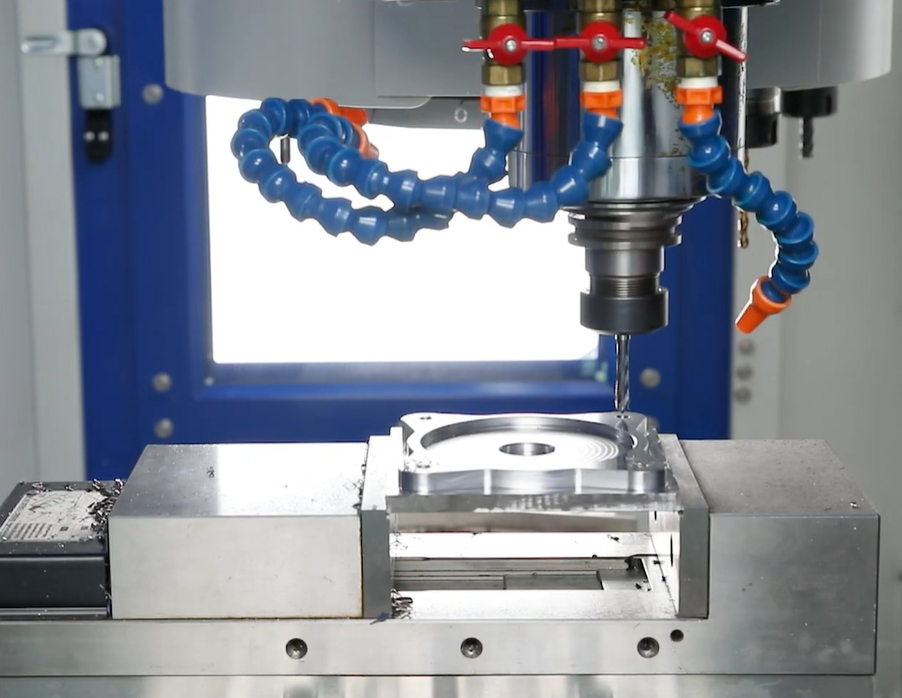
CNC Machining
Manufacturing is not becoming less human; it is becoming more sophisticated. CNC delivers precision and productivity. Conventional machining builds adaptability and mastery. Together, they secure the future of an industry that keeps economies moving.
As the Technical Sales Team at KNUTH states, “The conversation is no longer CNC versus conventional. The real question is how intelligently the two are integrated to strengthen operations. Each has a defined and valuable role in the market, and competitive advantage comes from playing to their respective strengths.”
Submitted by Knuth Machine Tools


