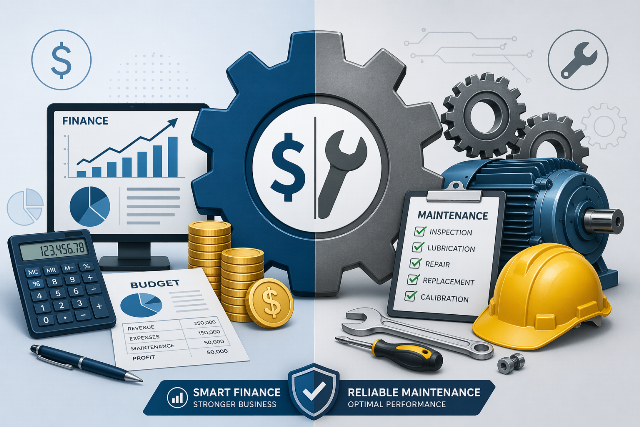



Underfunding maintenance can cost far more than it saves. It is one of the root causes of unscheduled breakdowns, a dreaded experience in heavy industry, but an inescapable reality nonetheless.
It’s inconceivable for the frugal finance departments – the custodians of company budgets – to expect the plant, the most invaluable asset, to be reliable and available on a shoestring budget and churn out millions in revenue. You can’t eat your cake and have it!
Allan Champion, the Director of Johannesburg-based Champion Asset Care & Supervision (CACS), is a veteran with more than 40 years of experience in plant reliability across industries in Sub-Saharan Africa. He urges companies to allocate realistic budgets for the maintenance of their mission-critical assets. This can forestall unscheduled shutdowns and reduce plant maintenance costs.
By Jimmy Swira
MMM: Do you believe heavy industry companies in the region, particularly in Sub-Saharan Africa, allocate sufficient financial resources towards maintenance per annum?
AC: This is a difficult question to answer with a definite yes or no. There are some companies that overbudget and others that underbudget for maintenance, depending on the financial position of the operation.
MMM: If not, where could there be conspicuous gaps?
AC: The biggest difficulty is that the people heading up maintenance in an operation, whether in mining or manufacturing, are often not able to quantify or justify the budget required. All too often, the maintenance budget is given as a number or percentage of the total budget and is then broken down into the different categories. This all looks great to the accountants until these budgets are overrun during the financial year. Bear in mind that many bonuses are dependent on sticking to a given budget.
MMM: What is the biggest gap?
AC: People not understanding the composition of a maintenance budget.
MMM: What could be the justification for smaller budgets (if any)?
AC: Strange as it may seem, yes, there are times when a smaller budget is warranted, depending on the age of a plant, the life expectancy of the plant, and the maintenance philosophy.
MMM: If you were to run your maintenance requirements on a relatively small budget, what considerations would be critical?
AC: I personally have been the Head of Maintenance & Engineering at an operation where the budget was cut to the bone due to financial constraints after the operation was put into provisional liquidation. The operation was kept producing and running until it was bought out and continued producing for many years after that.
In order to run on a smaller budget, one of the most critical aspects is to have the correct engineers and, particularly, foremen/supervisors who are innovative and experienced. The worst case is where there are relatively inexperienced people looking after maintenance who get dictated to by others outside the maintenance function.
MMM: Does this impact reliability significantly in any way?
AC: Smaller budgets will always impact reliability. Depending on where the budget has been reduced, the signs will often start with MTBF shortening. If artisans have been cut to below optimal levels, MTTR will increase, not always in the beginning, but as soon as there are stock-outs, waiting for spares becomes a problem.
Because of the pressure naturally placed on the maintenance teams, the quality of maintenance will go down. For example, component change-outs or lubrication will be neglected to save money and time. “Short-term gains, long-term pains.”
MMM: What would you advise companies regarding maintenance budgets?
AC: To get more accurate budgets, do a zero-based budget. Often, it is advisable to get an outside expert to assist with drawing up the budget, be it for the total plant or just for one section.
This does not have to be an expensive exercise, and a lot of this can be done remotely if the correct information is available.
Why do I say get an independent person to assist with the budget? There are no preconceived ideas or agendas involved; it is purely a scientifically developed budget.
MMM: What kind of information is required to do this effectively?
AC: The following is the list of information generally required:
• Equipment lists
• Criticality analysis
• Maintenance strategy (this should be derived from an unbiased criticality analysis)
• Manning requirements (these should be derived from the maintenance strategy)
• Critical spares requirements (these should be derived from an unbiased criticality analysis)
Last but certainly not least, from my own experience of over 40 years, I can offer the following unsolicited piece of advice:
“Do not use the OEM to determine your maintenance and spares requirements. They are in the business of selling spares and replacing equipment.”
MMM: Realistically, what percentage should the maintenance budget represent as part of OPEX?
AC: Dependent on the industry, I would estimate between 8% and 10%.
This can change significantly with asset age and the plant’s life-cycle stage.
Deferred maintenance has a rule-of-thumb figure that every cent saved will cost five cents to correct later.
MMM: What else can you advise companies about the importance of having sufficient budgets?
AC: I would always advise companies, whether greenfield or brownfield, to have a criticality assessment done every three to four years and, from that information, reassess their budgets. Specifically, consider the following:
• Emphasis on critical/insurance-spares requirements.
• Unplanned downtime costs in most industries dwarf the cost of a periodic assessment.
• Insurance spares tied to a criticality analysis also have a working-capital and risk-management dimension that resonates with CFOs, not just maintenance managers.
I always tell my clients this pithy punchline regarding maintenance budget allocations: Small Budgets, Big Liabilities.
Champion Asset Care & Supervision (CACS) is a Johannesburg-based maintenance management consultancy. Led by Allan Champion, a registered Professional Certificated Engineer (Pr.Cert.Eng), the firm partners with African businesses to reduce equipment downtime, improve maintenance practices, and align operations with ISO 55000 standards.