
The reliability of industrial assets in today’s high-tech world is ever more dependent on monitoring asset performance using a variety of techniques, such as fluid sampling and predictive analytics, online monitoring systems, advanced vibration instruments, balancing, thermography and sophisticated laboratory testing, among others.
And behind every successful reliability programme is a factor that cannot be overlooked – people.
The most sophisticated condition monitoring technologies in the world cannot deliver meaningful results if technicians, artisans, engineers and maintenance managers lack the knowledge and confidence to take samples correctly, interpret data, identify emerging problems and implement corrective action timeously. Reliability ultimately depends on people making informed decisions.
For this reason, skills development and training remain among the most powerful – and cost-effective – tools available to organisations seeking to improve operational reliability, reduce downtime and maximise asset life.
According to Steven Lumley, technical manager at WearCheck, reliability improvement begins with competence.
‘Many organisations invest heavily in equipment and monitoring technologies, but the true value of these investments can only be realised when maintenance teams understand how to use the information effectively. Training transforms data into action and action into measurable reliability improvements.’
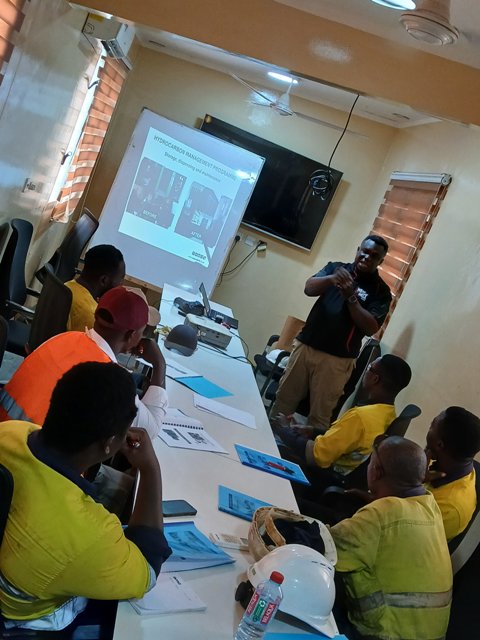
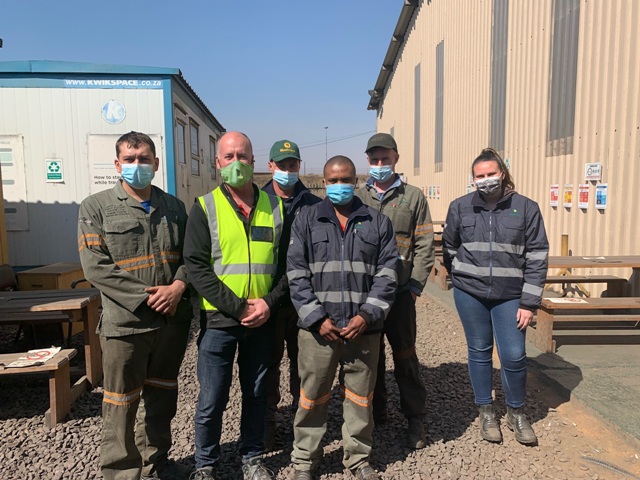
Daniel Boakye (standing) of WearCheck Ghana conducted oil analysis training for Drill Masters Africa in Tarkwa

The reliability challenge
Across sectors such as mining, manufacturing, power generation, and transport, maintenance teams face growing pressure to improve asset performance while simultaneously reducing operating costs.

In addition, experienced artisans and technicians are retiring, creating a skills gap that many organisations are struggling to fill. Younger personnel are often required to assume responsibility for increasingly complex assets at an earlier stage in their careers.
The result can be inconsistent maintenance practices, increased reliance on reactive maintenance and a higher risk of avoidable failures.
Lumley outlines some of the common challenges that clients face, such as incorrect lubrication practices, poor contamination control, inadequate oil sampling procedures, misalignment of rotating equipment, insufficient understanding of vibration data, failure to identify thermal anomalies and limited or incorrect interpretation of laboratory reports.
‘These issues may appear minor in isolation,’ she says, ‘but collectively, they can have a significant impact on reliability, asset life and production performance.’
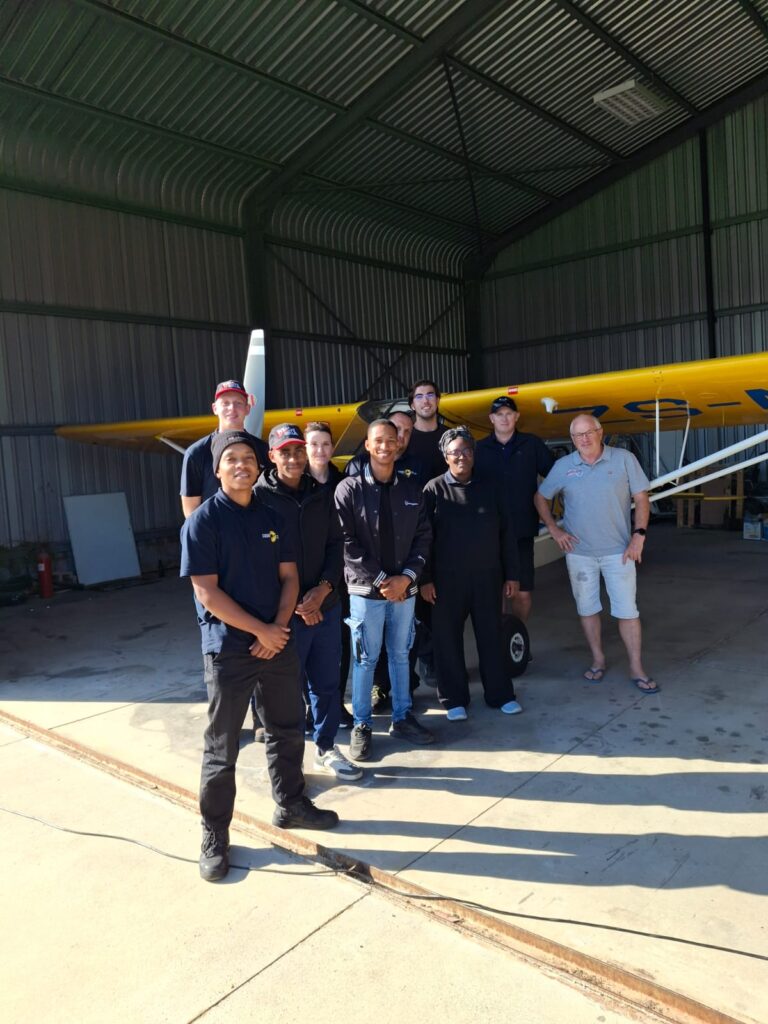
WearCheck consultant Daan Burger (right) conducted piston aircraft oil analysis training in Cape Town for Sideslip Aviation Worx, a company that does aircraft maintenance and repairs.
Training that delivers measurable outcomes
The most successful reliability programmes focus not only on technology, but also on developing the skills required to support long-term maintenance excellence.
WearCheck has spent decades providing practical, hands-on training to maintenance professionals throughout Africa. The company’s training programmes cover a broad range of condition monitoring and reliability disciplines, including oil analysis, transformer oil testing, thermography, vibration analysis, precision alignment and balancing, and internationally recognised Mobius reliability training.
Importantly, the focus is not simply on knowledge transfer. The objective is to equip delegates with skills they can apply immediately in the workplace.
Taking this philosophy a step further, WearCheck offers free monthly online Toolbox Training sessions, which are open to anyone. The popular 3-hour sessions include topics such as “How to Take an Accurate Oil Sample” and “How to Complete a Submission Form”.
‘When training is linked directly to operational objectives, organisations typically see improvements in equipment availability, contamination control, maintenance planning and fault detection,’ says Lumley.
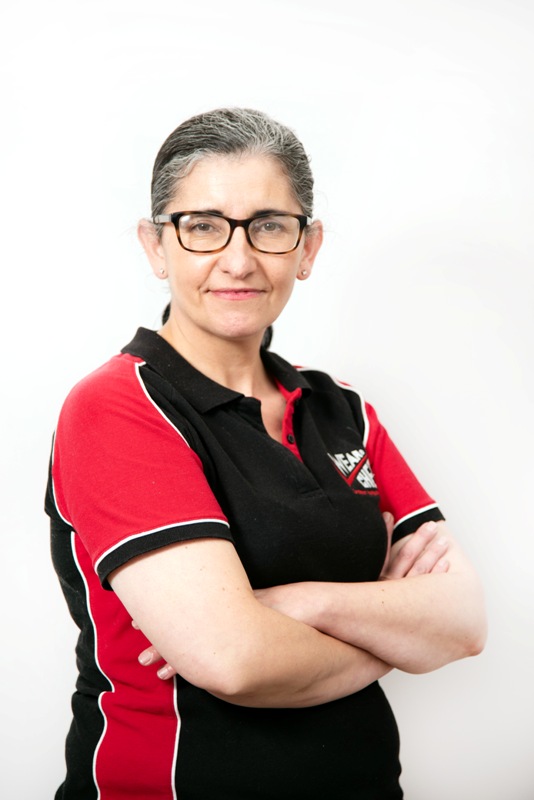
Steven Lumley, technical manager at WearCheck, reports that when maintenance skills training is linked directly to operational objectives, organisations typically see improvements in equipment availability, contamination control, maintenance planning and fault detection.’
Small improvements, significant gains
Reliability improvements are often achieved through relatively simple changes in maintenance behaviour.
For example, technicians who understand correct oil sampling techniques are able to obtain more representative samples, resulting in more accurate laboratory analysis and better maintenance decisions.
Similarly, maintenance personnel trained in contamination control frequently identify opportunities to reduce dirt and water ingress, extending lubricant life and reducing wear rates.
Precision alignment training can significantly reduce vibration levels, bearing failures and energy consumption, while thermography training enables maintenance teams to identify electrical faults and overheating components before they result in costly breakdowns.
‘The cumulative impact of these improvements can be substantial, and translate directly into savings on the bottom line,’ says Lumley. ’Benefits include reduced unplanned downtime, lower maintenance costs, improved equipment availability, extended component life. improved safety, better utilisation of maintenance resources and more effective use of condition monitoring data’
Creating a reliability culture
While individual courses provide valuable technical knowledge, the greatest long-term benefit often comes from the development of a reliability-focused culture.
Organisations that invest consistently in training create teams that are more proactive, analytical and disciplined in their maintenance approach.
Instead of reacting to failures, maintenance personnel learn to identify failure mechanisms, understand asset behaviour and intervene before problems escalate.
This shift from reactive to proactive maintenance is one of the defining characteristics of world-class reliability organisations.
Training also helps to standardise maintenance practices across teams and sites, reducing variability and ensuring that critical knowledge is retained within the organisation.
Supporting professional development
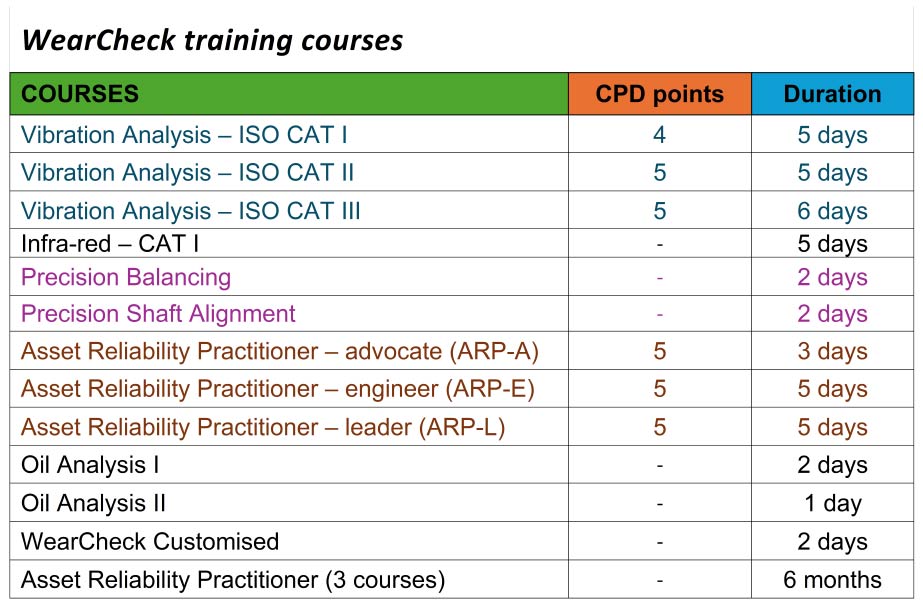
Many of WearCheck’s courses include competency assessments and continuing professional development (CPD) recognition, providing formal acknowledgement of the skills acquired. The company’s training programme includes more than 15 specialised courses presented by experienced practitioners and subject-matter experts.
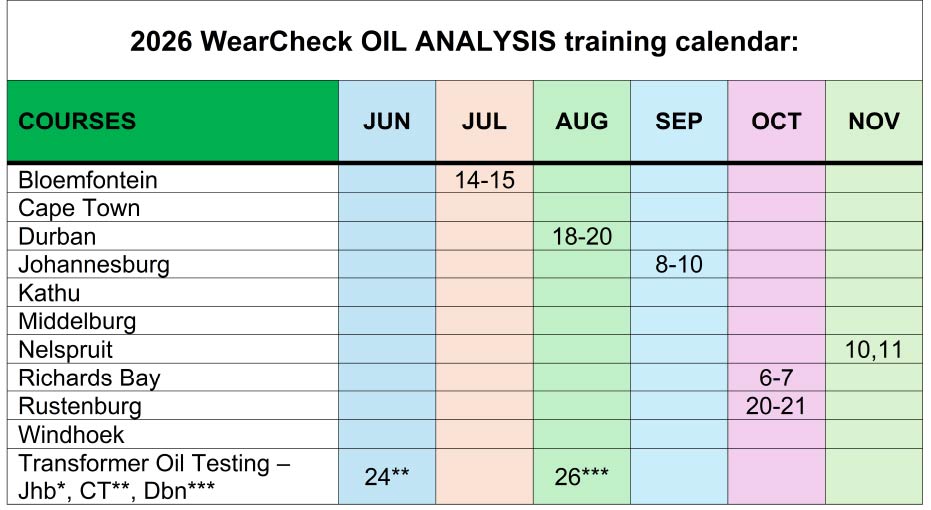
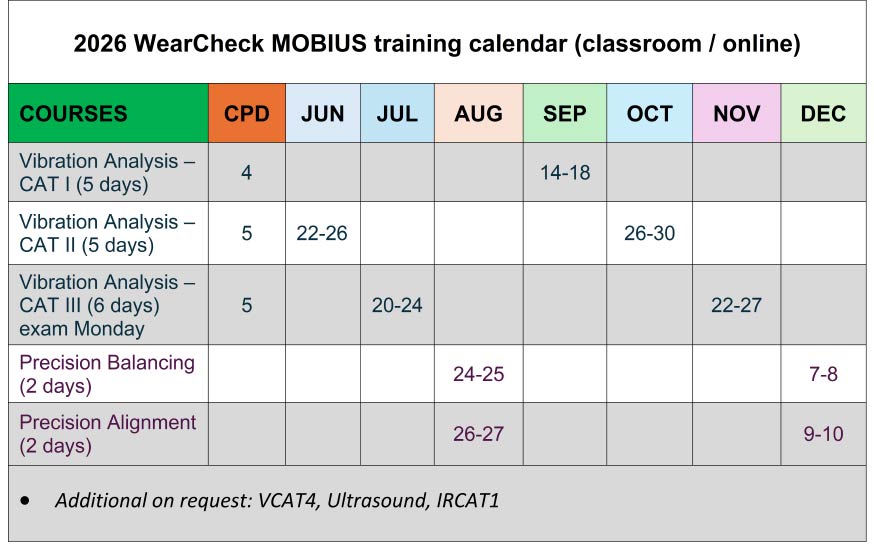
The 2026 training calendar includes oil analysis courses in major centres throughout Southern Africa, together with specialised transformer oil testing programmes and a comprehensive range of Mobius vibration analysis and asset reliability practitioner courses.
This structured approach enables organisations to build competence progressively across multiple maintenance disciplines.
Investing in reliability through people
As industrial assets become more complex and performance expectations continue to rise, the organisations that achieve the highest levels of reliability will not necessarily be those with the most advanced technology. Rather, they will be those that combine technology with well-trained, capable and empowered people.
Reliability is not created by instruments alone. It is built through knowledge, discipline and the ability to make informed maintenance decisions every day.
In an environment where every hour of downtime carries a cost, investment in skills development is no longer simply a training initiative – it is a strategic reliability decision.
To book a training course
To register for a Mobius course, contact Louis Peacock: louis@wearcheckrs.com or +27 82 494 9461. Visit https://www.wearcheck.co.za/training/mobius-training.html
To book an oil analysis course, contact Michelle van Dyk on training@wearcheck.co.za or call 082 381-3321. Visit https://www.wearcheck.co.za/training/wearcheck-training.html
This year, WearCheck is celebrating 50 years of turning condition monitoring data into better maintenance decisions, longer asset life and more reliable operations. For further information, please visit www.wearcheck.co.za, email marketing@wearcheck.co.za, or call WearCheck on +27 (31) 700-5460.
Free Toolbox Training
These online sessions enable course attendees to log in remotely from anywhere. Each session begins at 9:00 AM and typically lasts about three hours, depending on the Q&A.
- 26th June
- 29th July
- 28th August
- 25th September
- 28th October
- 25th November
To register, please email toolboxtraining@wearcheck.co.za