
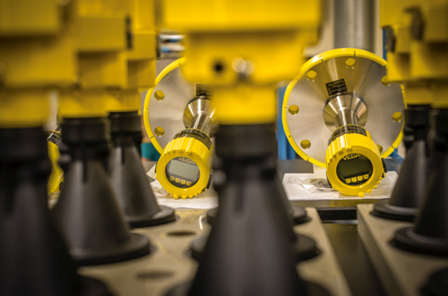

Clients in the mining sector need correct sensors for level measurement applications in their respective water and wastewater treatment plants. This determines whether the sensor types needed are non-contact radar, guided radar, or another option.
As a result, the selection process requires thorough evaluation, leaving no margin for error, as accurate water level measurement is central to plant reliability.
There is no catalogue to guide a supplier in finding the correct level measurement sensor for the client’s application at a water and wastewater treatment plant in a mining project. The reality is that every operation’s need is unique and should always be treated as such.
Consultative process
VEGA Regional Marketing Manager, Miguel Petersen, shares this nugget of sensor selection wisdom, informed by experience gained from attending to scores of client orders, each with distinct requirements.
“Supplying is a consultative process that begins with a thorough understanding of the application before any product recommendation is made,” Petersen explains, as he outlines the two critical steps followed meticulously.
a. Application assessment first
“When processing a sensor application, we start with a detailed discussion of the specific measurement point. We ensure that no stone is left unturned, as far as possible. The vital elements include, but may not be limited to, the medium being measured, vessel geometry, process temperature and pressure ranges, the presence of dust, vapour, foam or turbulence, and any chemical compatibility requirements,” Petersen explains the approach.
He adds: “What makes the process in mining water and wastewater treatment quite demanding is that it also includes understanding flow conditions, the nature of the wastewater, and any solids content that may affect measurement.”
b. Site conditions and environmental factors
Above and beyond the process, the VEGA team considers the installation environment (whether the application is underground or surface-based), the degree of exposure to dust and moisture, ambient temperature ranges, and any hazardous area classification requirements. These factors directly influence sensor selection, housing specifications, and process connection choice, Petersen stresses.
Selecting the right technology and configuration
Now comes the equally critical part.
With a clear picture of the application, the suitable technology is identified from the following options – non-contact radar, guided radar, or other VEGA sensing technology – along with the correct frequency, antenna type, process connection, and materials of construction. Petersen has one vital piece of advice, though: “No single sensor suits every application, and getting this match right is central to long-term performance.”
Support through commissioning
VEGA does not simply supply the correct sensor and leave the client to their own devices.
The company ensures that technical support is available through commissioning to ensure sensors are correctly installed, configured, and verified against actual process conditions. This reduces the risk of early-life issues and ensures that the client gets full value from the instrument from day one.
Ongoing partnership
This is normal in mining: operations evolve, processes change, infrastructure is expanded, and new measurement challenges emerge. This must be accepted as inevitable.
Consequently, says Petersen, VEGA maintains an ongoing relationship with clients to ensure instrumentation continues to meet operational needs as they develop. “The underlying principle is straightforward: the right sensor, correctly applied, reliably maintained. Getting there requires expertise and engagement, not just selling a product.” Certainly, this approach applies to any other product used in heavy industry relating to accurate level measurement for plant reliability: No margin for error.