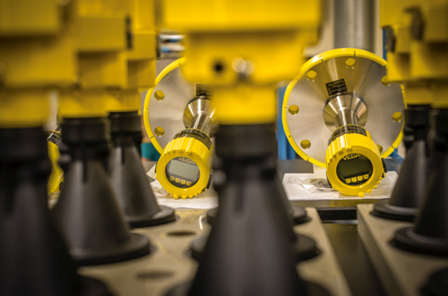



On the African continent, mining companies are realising the compound benefits of adopting digital level sensors for improved water and wastewater treatment plant reliability over the operational lifetime. This is the trend VEGA has identified from customer preferences in projects.
Organisations in other sectors eagerly jump on the new technology bandwagon. However, in their approach, mining companies tend to be intentional, only adopting when there is proven evidence of real value to their operations.
They first seek concrete answers to the following question: Will this help us improve safety, efficiency, cost containment, and environmental compliance from pit to port? Conclusively, decisions are only made after confirming that the technology ticks all the vital boxes.
Embracing sensor digitisation
VEGA Regional Marketing Manager, Miguel Petersen, has observed that, increasingly, on the African continent, mining companies are embracing sensor digitisation in level measurement applications of their respective water and wastewater treatment plants. He says this trend indicates growing awareness of the value digitisation provides.
From single-purpose measurement to plant intelligence
“Digitisation is fundamentally changing what a level sensor can offer. It is moving a sensor from a single-purpose measurement device to an active contributor to plant intelligence,” states Petersen.
Referencing both industry trends and insights gathered from client experiences, he says the value digitisation adds to maintenance and plant reliability is tangible, evident in several areas.
a. From measurement to diagnostic data
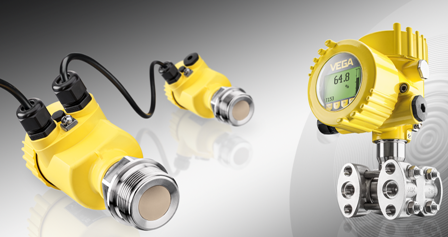
Typically, traditional analogue sensors are designed to deliver one output: a process value. On the other hand, digital sensors – particularly those communicating via protocols such as HART, Profibus, Modbus, or IO-Link – offer more by transmitting a far richer dataset.
Beyond level measurement, digital sensors continuously report diagnostic information, such as signal quality, echo curve status, temperature at the sensor, device health indicators, among others. This information provides plant operators and maintenance teams with visibility into both process status and instrument performance.
b. Predictive rather than reactive maintenance
Doubtless, digitisation delivers some of its most tangible value in facilitating the shift from reactive to predictive maintenance. “A sensor can report that its signal strength is gradually declining, or that internal temperature is trending towards an operating limit. Using this information, maintenance teams can schedule intervention before a failure occurs,” Petersen demonstrates.
The benefits that the increased scope of the digital sensor brings to maintenance are invaluable.
In a mining water and wastewater treatment context, a failed level sensor on a sump pump or reagent tank can trigger a cascade of process disruptions. So, the shift from reactive to predictive maintenance has a direct impact on uptime and operating cost.
c. Remote monitoring and reduced site visits
Digital sensors bring a different approach to physical inspection: remote monitoring. VEGA’s digital ecosystem includes the VEGA Cloud and connectivity solutions such as VEGAMET and VEGACONNECT, which offer this capability. Through these provisions, sensor data can be accessed remotely via PC, tablet, or smartphone.
For mining operations where instrumentation is spread across large, sometimes remote sites, this is very handy, Petersen points out. “The capability reduces the frequency of physical inspection rounds and enables issues to be identified and diagnosed without personnel needing to travel to the instrument. Clients report meaningful reductions in maintenance labour costs as a result.”
d. Integration into plant-wide control and reporting systems
Digital sensors integrate seamlessly into SCADA, DCS, and asset management platforms. This makes measurement data immediately available across the plant as and when needed. This capability improves coordination between process control, maintenance scheduling, and management reporting, states Petersen. Vitally, it ensures that level and pressure data feeds accurately into the broader operational picture rather than existing in isolation, he adds.
e. Audit trails and compliance documentation
In regulated environments, mining water management carries significant regulatory obligations, specifically relating to environmental discharge, water use, and tailings management. This is where digitisation supports automatic logging of measurement data over time, Petersen underlines. “By creating a defensible, time-stamped record, digitisation simplifies compliance reporting and provides documentation in the event of an incident or inspection.”
f. Faster commissioning and configuration management
Last but not least, digital communication allows sensors to be configured, verified, and updated remotely or via tools such as VEGA’s VEGA PACTware software and the VEGA Tools app. “Configuration data can be saved, copied, and restored. This is particularly valuable when replacing a sensor, since settings can be transferred directly to the new device without manual re-entry. In the end, commissioning time and the risk of configuration errors are reduced.”
Real-time monitoring compounds benefits
All told, sensor digitisation has transformed plant reliability as a critical area that should be monitored and actively managed through predictive maintenance. In contrast, with reactive maintenance, the significance of reliability is only noticed after a costly failure occurs, by which time carrying out interventions would be costly.
Petersen sums up the dividends of digitisation: “When sensors are intelligent, connected, and communicative, the entire instrumentation layer becomes a real-time health monitoring system. This has compounding benefits for plant efficiency, safety, and longevity.”