

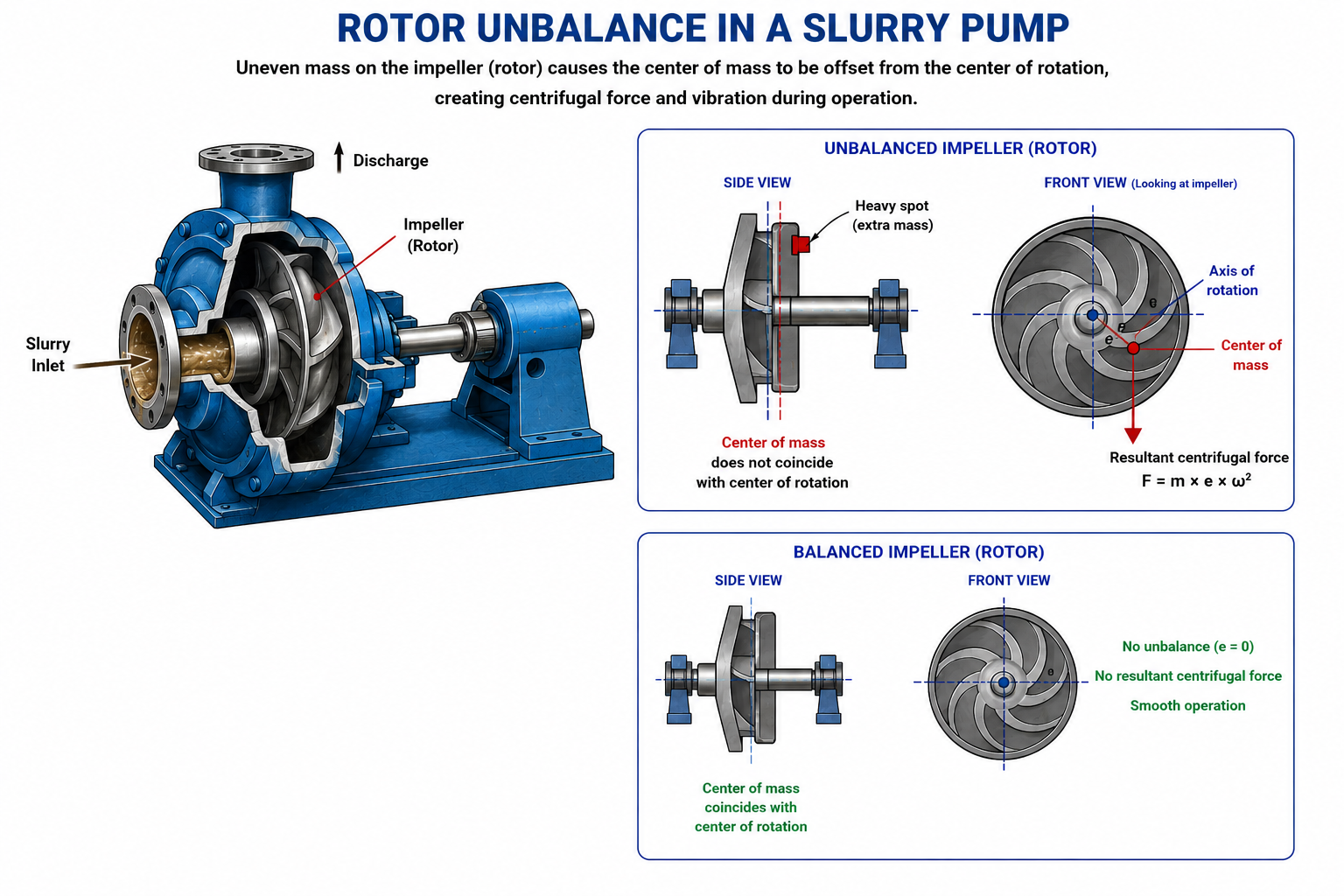

MMM: Someone at a pump conference I attended years ago remarked: “In a slurry pump, effective rotor balancing is not only a vibration control issue but also an energy-efficiency issue.” Under what circumstances would this assertion be true?
Kutsi Jaka: From a reliability engineering perspective, rotor balancing is traditionally associated with reducing vibration, protecting bearings, and improving machine life. However, there is a direct and measurable energy component as well.
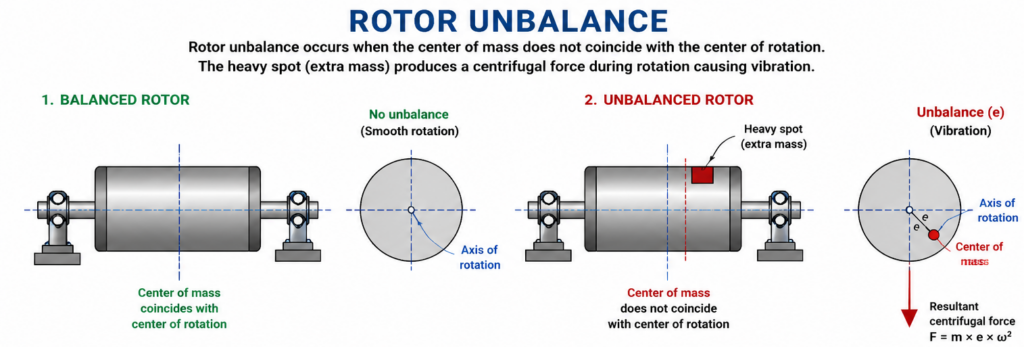
What happens when a rotor, such as a slurry pump impeller, is unbalanced is this: the rotating mass generates centrifugal forces proportional to the magnitude of the unbalance and the square of the rotational speed. These forces create increased vibration, higher bearing loads, shaft deflection, additional friction losses, and structural excitation.
Remember, the motor must continuously supply energy to overcome these parasitic losses. Instead of converting all the electrical power into useful work, part of the energy is wasted through vibration, heat generation, and mechanical stress.

That is why SKF views rotor balancing as both a reliability initiative and an energy-efficiency initiative.

The long and the short of it is this: a balanced rotor is vital to pump performance. Not only does it minimise vibration and extend equipment life, but it also reduces the energy wasted through excessive dynamic forces, friction, and mechanical losses, resulting in lower operating costs and improved asset performance.
MMM: Why would an energy-efficient slurry pump with an unbalanced rotor draw more power to deliver the required flow and head when it is designed to offset energy losses? Could you explain the principle behind this?
Kutsi Jaka: An energy-efficient slurry pump with an unbalanced rotor will draw more power because part of the motor’s energy is diverted from useful hydraulic work into overcoming vibration-induced mechanical losses. This makes rotor balancing both a reliability and an energy-efficiency requirement.
Let us not forget that a slurry pump may be designed as an energy-efficient pump. This means that its hydraulic components, such as the impeller, volute, suction design, and clearances, are optimised to convert shaft power into flow and head with minimal hydraulic losses.
However, if the rotor becomes unbalanced, a new source of energy loss is introduced that the original design was never intended to compensate for. This illustrates the difference between hydraulic efficiency and mechanical efficiency.
MMM: Could you illustrate the total energy consumption in simple terms?
Kutsi Jaka: Considering the pump’s energy balance, the power supplied by the motor can be simplified as:
Input Power = Useful Hydraulic Power + Losses
The useful hydraulic power produces the required flow and discharge pressure, while the losses, where the additional power is consumed, include hydraulic losses, mechanical losses, heat generation, and structural damping losses. An energy-efficient pump minimises the normal hydraulic losses, but rotor unbalance increases the mechanical losses.
An unbalanced rotor creates a rotating centrifugal force. This force increases with rotor mass eccentricity and the square of the rotor speed (N²). This relationship is demonstrated by the formula:
F = 0.01 × W × R × (RPM/1000)²
where:
- F = Centrifugal force (kgf)
- W = Unbalance weight (kg)
- R = Unbalance radius (cm)
- RPM = Rotor operating speed
As the rotor spins, this force continuously pulls the shaft away from its centre of rotation, generating vibration. The motor must now provide additional energy not only to move the slurry through the pump but also to overcome the dynamic forces created by the unbalance.
The hydraulic duty remains unchanged, but the total required input power increases. The slurry pump flow and head may remain unchanged, but the motor draws more power.
MMM: What are the often-overlooked root causes of rotor unbalance?
Kutsi Jaka: In slurry pumps, what are often regarded as the obvious causes of unbalance, such as a damaged impeller or a missing balance weight, are frequently not the real problem. The root causes are usually process-related.
As slurry pumps operate in highly abrasive and variable environments, the balance condition can deteriorate rapidly after installation.
Generally, based on slurry pump industry experience, the most frequently overlooked causes include uneven impeller wear (the number one hidden cause), material build-up and scaling, chronic cavitation damage (when the pump operating point is far from the Best Efficiency Point (BEP), slurry density fluctuates, or suction strainers become blocked), and poor slurry distribution.
MMM: What is the tried-and-tested approach to restoring rotor balance in an energy-efficient slurry pump?
Kutsi Jaka: Good question.
The tried-and-tested approach is not simply to add or remove a balance weight or perform field balancing. In slurry pumps, the most successful long-term strategy is to address the root cause by identifying and eliminating the mechanism that created the unbalance, then restoring the rotor to an acceptable balance quality grade through repair, replacement, and verification.
Let me stress that this distinction is important because a slurry pump impeller that has become unbalanced due to erosion, cavitation, or material build-up will often become unbalanced again shortly after balancing if the root cause is left untreated.
The objective, therefore, is not merely to balance the rotor but to restore and maintain the pump’s original hydraulic and mechanical symmetry. It is critical to ensure that the impeller is clean, geometrically correct, operating under proper hydraulic conditions, and balanced to the appropriate ISO 1940 balance quality grade for rigid rotors. Once this has been achieved, the pump can again deliver its designed flow and head with minimum vibration, minimum power loss, and maximum reliability.
MMM: What are the recommended outcomes? In other words, what boxes must be ticked?
Kutsi Jaka: For mining, mineral processing, and cement plants, where slurry pumps are widely used, the boxes to tick should extend well beyond simply achieving reduced vibration. The outcomes should demonstrate measurable value across energy efficiency, reliability, maintenance, production, and sustainability.
Effective rotor balancing is not merely a vibration-reduction activity. More importantly, it is a business improvement initiative that simultaneously improves energy efficiency, reliability, maintenance performance, asset availability, and total cost of ownership.


