
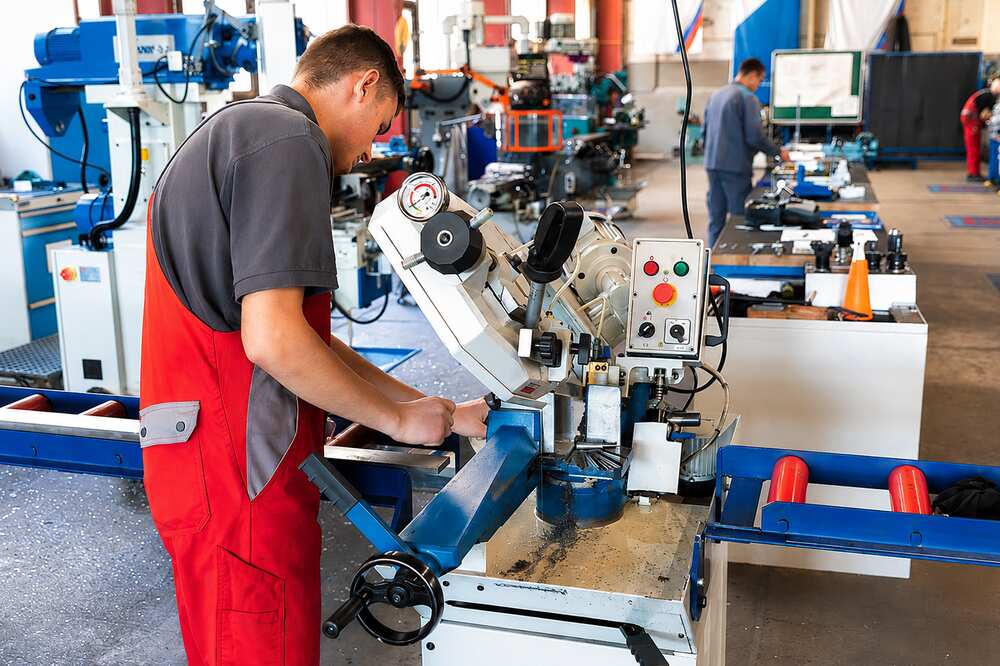

Machine spot-checks do not need to be complicated or time-consuming. Visual inspections are a good starting point. Look for fluid leaks, damaged hoses, loose components, excessive chip build-up and visible wear. Coolant and lubrication levels should also be checked regularly to ensure that the relevant systems are functioning correctly.
By KNUTH Machine Tools South Africa
Machine breakdown can bring an entire production line to a standstill, often when you least expect it. But what if you could spot a potential problem before it turns into a costly repair or hours of downtime?
While not every fault can be avoided, many machines show early signs when something isn’t quite right. Making regular machine spot-checks part of your workshop routine can help you stay ahead of potential issues, protect your equipment and keep production running smoothly.
After all, prevention is always better than a breakdown.
What Should Operators Look Out For?
Machine spot-checks do not need to be complicated or time-consuming. By incorporating a few basic observations into daily workshop routines, operators can monitor the overall condition of their machines and identify potential concerns before they escalate.
Visual inspections are a good starting point. Look for fluid leaks, damaged hoses, loose components, excessive chip build-up and visible wear. Coolant and lubrication levels should also be checked regularly to ensure that the relevant systems are functioning correctly.

Operators should pay attention to how their machines sound and perform. Unusual grinding, knocking or rattling noises, excessive vibration and unexpected heat can all indicate that something requires further investigation.
Machining quality is another important indicator. Changes in finished component dimensions, poor surface finishes, chatter marks or unexpected burrs may point to issues with tooling, machine condition or positioning accuracy.

The control panel should also form part of routine checks. Warning messages, active alarms and recurring error codes should never be ignored. Recording these occurrences can help identify recurring problems and assist technicians when diagnosing faults.
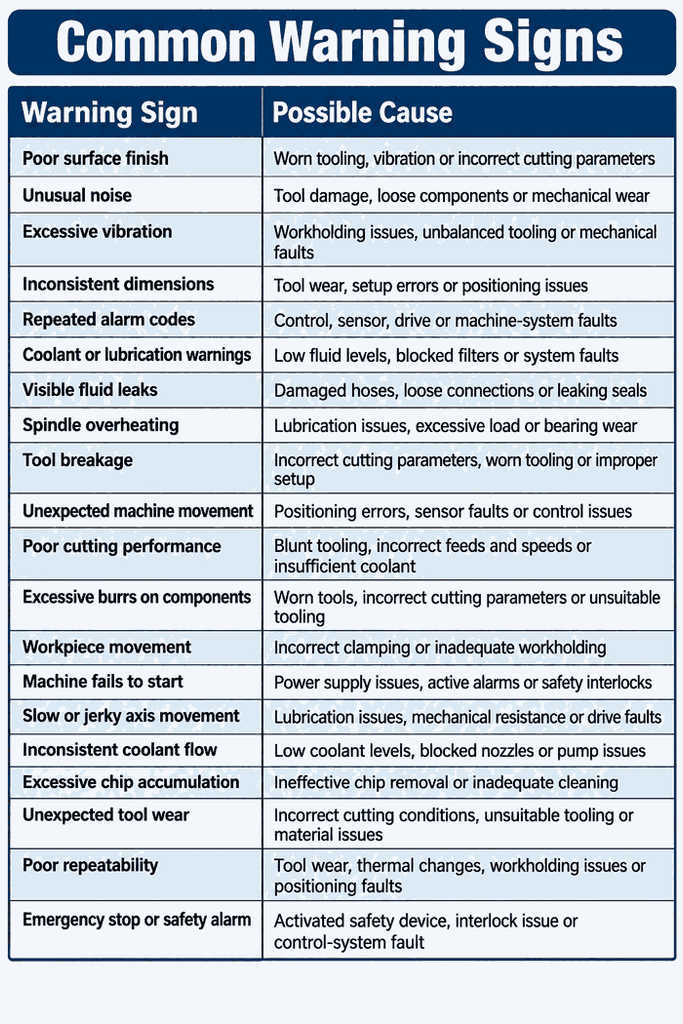
Note: Possible causes are indicative only. Always consult the machine manual and a qualified technician when investigating faults.
Recognising an unusual condition is only half the job. Knowing how to respond can prevent further damage and help ensure operator safety.
If a machine displays signs of a serious fault or presents a safety risk, it should be stopped safely in accordance with the manufacturer’s instructions and workplace procedures. Operators should record any relevant error codes, warning messages and operating conditions before consulting the machine manual for troubleshooting guidance.
It is important to avoid guesswork or unauthorised adjustments. Safety systems should never be bypassed, and faults that persist or require specialist attention should be referred to a qualified service technician.
James Fourie, Technical Sales Team Lead at KNUTH SA, draws a comparison with everyday vehicle maintenance:
“A machine is much like a car. You wouldn’t wait for your car to break down before giving it attention, so why treat your machine tools any differently? Regular servicing and routine checks help identify potential problems before they become bigger issues. The more familiar operators are with their machines, the easier it becomes to recognise when something isn’t right. Taking care of your equipment is not just about preventing breakdowns; it is about protecting your investment and ensuring your workshop can continue operating efficiently.”
Making Machine Checks Part of Your Routine
Regular spot-checks work best when they become part of everyday workshop operations. Combined with scheduled preventative maintenance, proper cleaning, lubrication and servicing, they help identify wear and potential faults before they develop into more serious problems.
A few minutes spent checking a machine can help protect its accuracy, extend the lifespan of its components and reduce the risk of unexpected downtime. More importantly, it allows businesses to plan maintenance more effectively rather than reacting to costly emergencies.
Don’t wait for a breakdown. Make regular machine checks part of your maintenance routine.
Submitted by KNUTH Machine Tools South Africa