


Fighting Corrosion Under Insulation (CUI) is the bane of plant engineers in the oil & gas sectors, and generally other heavy industries. In the interview below, Hempel’s Business Development Manager for CUI and High Heat coatings, Simon Daly, dissects the implications of the ISO 19277 standard for testing protective coatings in addressing the challenge of CUI.
Will the standard simplify the complexity of testing the effectiveness of coatings in delaying or preventing CUI?
In a nutshell, Daly believes it will provide coherent testing criteria and, importantly, improve the coating selection process in the future.
Q: Can you explain what Corrosion Under Insulation (CUI) is?
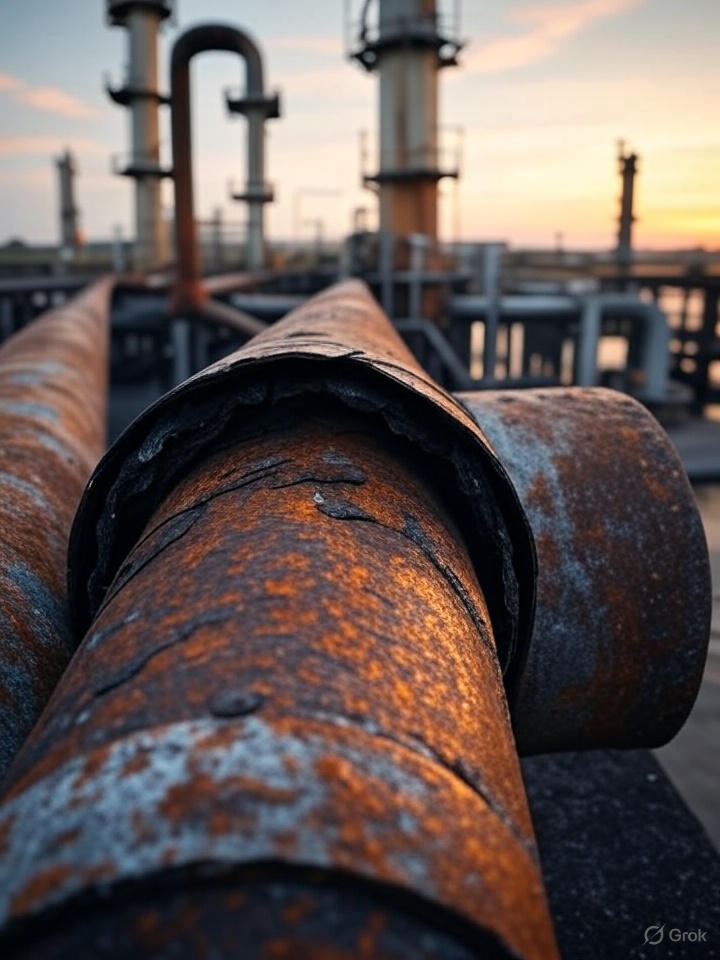
SD: It is well known that CUI is a relentless form of corrosion, localised within insulated, low alloy and carbon steel equipment. It occurs wherever water makes its way under layers of insulation and is unable to evaporate and, over time, the trapped water vapour causes the equipment to corrode and lose structural integrity.
Normally, CUI is found in the insulation layers of operating parts, process equipment, valves and refining assets. Unfortunately, it has become well known amongst operators in the process industries, causing loss of revenue due to maintenance, downtime and the replacement of corroded components.
Q: Why can CUI be more problematic than other forms of corrosion?
SD: Within the interior layers of insulation, corrosion can go unseen and is difficult to test for in a way that won’t delay the daily operations of oil and gas assets. Over time, this can lead to significant corrosion of crucial infrastructure, which can be costly to repair or replace, and sometimes hazardous to leave unattended. Additionally, the removal and disposal of insulation materials needed to inspect and repair has a significant environmental impact.
Here is where the right protective coating can play a significant part. However, choosing a protective coating to fight corrosion under insulation is not straightforward, given the sheer number of products on the market today.
Q: What should be considered when choosing the correct coating to protect against CUI?
SD: Protective coatings should not be used in isolation, but as part of a CUI methodology that sets out inspection, detection, installation and design practices that will limit the damage corrosion can cause. Poor application of a coating, or issues with its manufacture and storage, can all lead to the eventual failure of a coating product, independent of the coating’s inherent characteristics.

An additional major challenge lies in ensuring that the right product is specified for the right application, given the complexity of many coating specifications that are expected to work in both CUI and exposed high-temperature areas.
Q: Is there any guidance available to help customers make the correct choice of coating?
SD: At present, there are many documents and standards intended for fighting CUI. Additionally, many coating suppliers have, by necessity, developed ad hoc testing programmes with very little comparable data.

ISO 19277 is a relatively recent introduction to address this issue, but has only seen limited take-up amongst operators. This standard, described in full as ISO 19277:2018 “Petroleum, Petrochemical and Natural Gas Industries – Qualification testing and acceptance criteria for protective coating systems under insulation”, seeks to address the testing of various factors that help determine the suitability of a coating for use under insulation.
Even though advancements in technology in recent years have provided a wide range of protective coatings, the importance of proper testing has not diminished. Money and time can both be saved when the right tests are performed to determine an appropriate coating for a given situation.
Q: What do you believe the future holds for testing of coatings to protect against CUI?
SD: Although this standard is a very positive start in prescribing a documented and reproducible CUI coating test methodology, the CUI testing element faces significant pushback from the industry.
With many test programmes active in this area, it seems probable that the standard will be refined as time passes. Moreover, with a handful of key oil and gas standards, such as NORSOK M-501, currently due for revision, it seems likely that there will be continued activity in this important area.
The performance of protective coatings under a wide range of CUI conditions is important. That is why such a plethora of testing methods exists to help avoid choosing the wrong coating specification.
The process of testing the effectiveness of coatings in their ability to prevent or delay CUI is complex, although necessary. Combining these test methods into a coherent standard with clear acceptance criteria is what ISO 19277 seeks to do. Further refinements to this document, as improved test methods for CUI become available, will allow even better coating selection decisions to be made in the future.
Hempel is a world-leading coatings supplier specialisingin protective, marine, and decorative paint solutions. Their advanced coatings are used globally to protect valuable assets, such as bridges, wind turbines, oil rigs, and ships, from corrosion and other harsh environmental conditions.
Interview courtesy of Hempel