
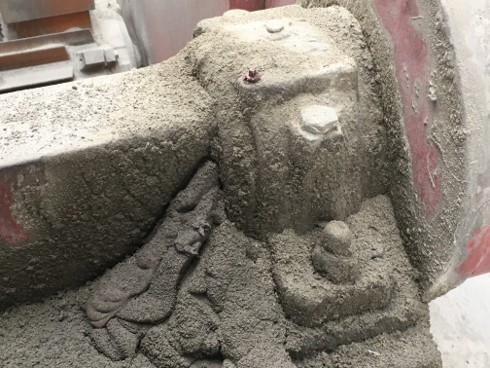

Friction-related downtime is a persistent occurrence in machinery. With mining, oil, and gas companies ramping up production, these issues could potentially escalate. Observing this, the Southern African Institute of Tribology (SAIT) suggests it is high time for industry to include tribology in their maintenance budgets.
By Jimmy Swira
In contemporary industrial operations, there is a tendency — sometimes bordering on an obsession — to categorise expenses in order of priority. In this atmosphere, cost-cutting is the watchword.
Paltry maintenance budget
While this exercise is implemented with good intentions, inexplicably, the area of machinery maintenance is among the lowest in the pecking order. So, it receives minimal OPEX (operational expenditure) allocation.
Worse still, even from the paltry maintenance budget, little — if any — is committed to tribology. This is despite the long-term savings and efficiency improvements that tribology provides.
Penny wise, pound foolish?
However, what ‘prudent’ people from the finance department overlook is how machinery downtime from friction-related issues could be indirectly affecting their company’s revenue. Typically, downtime causes loss of production, which translates into potential loss of revenue. Penny wise, pound foolish?

Lack of awareness
Martin Van Rooyen, senior committee member at the Southern African Institute of Tribology (SAIT), attributes this mindset to lack of awareness about the importance of tribology. “Many organisations view tribology as a background discipline rather than a direct contributor to profitability. Furthermore, lubrication is often seen as a dirty business because lubricators often get their hands dirty. As a result, lubrication responsibility is often passed down to the least competent employee or contractor.”

Compounding matters, he adds, maintenance budgets are frequently reactive rather than proactive. As a result, tribology is often overlooked until catastrophic failures occur. Isn’t this the familiar folly of doing things the same way and expecting different results?
Common awareness gaps
Specifically, the SAIT has identified common awareness gaps in the following areas:
- Lubricant selection for specific applications;
- Contamination control and storage practices;
- The impact of viscosity on equipment performance;
- The importance of condition monitoring and predictive maintenance; and
- Compatibility of lubricants in mixed-fleet environments.
Friction-related failures
Unavoidably, as a result of lack of awareness about tribology, industries experience avoidable friction-related asset failures. Mainly, the following are practical examples:
- High energy consumption
Tribology is the science of friction and wear. Friction consumes energy, and wear consumes machine parts. By ignoring the importance of tribology, users will consume more energy and will shorten the life of their equipment.
- Bearing Failures
In mining and heavy industrial applications, improper lubrication can lead to premature bearing wear and eventual failure, causing costly downtime.
- Gearbox Failures
Using incorrect viscosity or contaminated lubricants in large industrial gearboxes can lead to excessive wear, foaming, overheating, and breakdowns.
- Hydraulic System Failures
Lack of knowledge on lubricant contamination control leads to valve sticking, sludge buildup, system inefficiencies, and reduced equipment lifespan.
- Piston Scuffing in Engines
Incorrect lubricant selection or inadequate lubrication leads to excessive wear, resulting in costly engine overhauls.
Rethinking maintenance
For this reason, Van Rooyen is advising plant managers and lead engineers to rethink their approach to maintenance by prioritising tribology. On its part, SAIT facilitates change.
The organisation actively engages in industry awareness campaigns, technical workshops, and training programmes to emphasise the importance of tribology in asset reliability. It collaborates with industry stakeholders to drive a proactive approach to lubrication management and predictive maintenance strategies.
Education and awareness initiatives
In essence, SAIT’s education and awareness initiatives are geared towards addressing the skills gap. These cover:
i. SAIT Lubrication Engineering Courses – Cover fundamentals of lubrication, failure analysis, and advanced tribology principles;
ii. Workshops & Webinars – Focused on best practices in lubrication and maintenance strategies;
iii. Industry Conferences – Bringing together experts to discuss the latest developments in lubrication science and application; and
iv. Technical Publications – Providing case studies and technical papers to educate industry professionals.
Industry standards
In its quest to raise awareness about tribology, SAIT recognises the importance of adherence to standards. Locally and regionally, SAIT-approved lubrication engineering certification programmes apply. In addition, lubrication engineering activities are benchmarked on international standards from reputable bodies. These include:
- ACEA and API engine lubricant standards;
- ISO 6743 (Lubricants, industrial oils, and related products);
- ASTM D5185 (Multi-element analysis of used lubricants);
- DIN 51524 (Hydraulic fluids standard); and
- NLGI consistency classifications for grease, to name a few.
Synergies or partnerships
Above and beyond, SAIT has established synergies or partnerships with engineering bodies and technical training institutions aimed at enhancing capacity building in the following areas:
- Collaboration with universities to integrate tribology into engineering curricula;
- Partnerships with industry associations to conduct workshops; and
- Engagement with OEMs for hands-on lubrication training.
The onus on industries
While SAIT is steering change, the onus is on organisations to take charge. So, Van Rooyen is urging companies to take ownership of education and awareness programmes to achieve meaningful outcomes — from management down through all technical levels:
- Implement structured lubrication training programmes for technical staff;
- Integrate tribology into senior management, maintenance strategies, and KPIs;
- Adopt data-driven lubrication management using condition monitoring tools;
- Encourage collaboration between procurement and engineering teams to select optimal lubricants; and
- Encourage production to consider the energy-saving potential of tribology.
On the whole, SAIT’s message to industry is unequivocal: Don’t Ignore Friction, It Costs More.




Pingback: The Cardinal Rule: No More, No Less – Machinery Maintenance Matters