

“In Africa, the supply of haul truck spare parts presents challenges for companies’ preventative maintenance programs and contributions to haul truck uptime.”
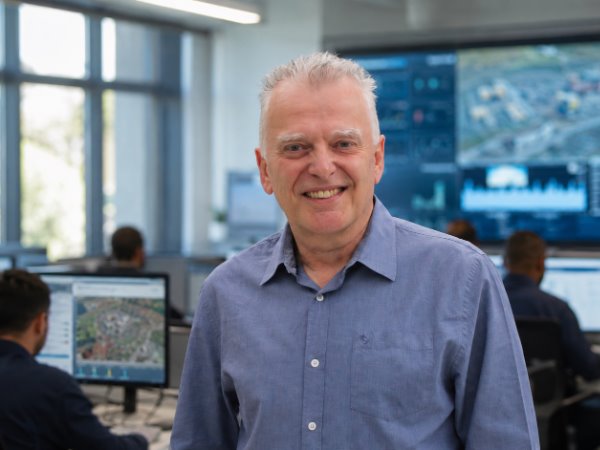
Paul Culliford, Rokbak regional sales manager EMEA , fields questions on the topic from Machinery Maintenance Matters and explains how Rokbak customers in Africa can be reassured of supply and support.
Headquartered in Motherwell, Scotland, UK, Rokbak is a manufacturer of off-highway articulated haulers (also known as articulated dump trucks) that are used in mining, quarrying, and construction applications around the world. The company is a subsidiary of the Volvo Group.
By Jimmy Swira
MMM: There is a recent development in Africa: some clients of reputable brands are facing challenges with turnaround times for the supply of spare parts (a senior industry figure mentioned that some orders can take three months or more). What do you believe could be the root cause of this problem?
PC: Mainly, the challenges surrounding spare parts availability in Africa stem from three factors: supply chain disruptions, extended transit times, and limited regional stockholding by some manufacturers.
MMM: What are some of the assumptions that OEMs make when approaching the African market, given its unique challenges?
PC: Some OEMs might assume that service models from developed markets can be replicated in Africa, overlooking the unique logistical hurdles, infrastructure gaps, and demanding operating environments – not to mention the sheer size of the continent!

MMM: How is Rokbak ensuring that customers of its articulated haulers are not as affected by the general spare parts shortage as owners of competitor brands?
PC: To address these issues, Rokbak has established a robust support system through dealers such as HMD, maintaining comprehensive stock levels to ensure seamless operations for customers across the continent.
In particular, what distinguishes Rokbak is its practical approach to dealer partnerships, including a favourable return policy for unused spare parts after a specified period. This innovative policy significantly reduces dealers’ investment risks, which allows them to maintain broader inventory levels without the burden of excess stock costs.
In a nutshell, these measures underscore Rokbak’s commitment to minimising equipment downtime and supporting its African customer base with readily available parts whenever they are needed most.
MMM: Specifically, does Rokbak meet the unique customer needs in the region?
PC: Rokbak recognises the realities and has adapted its approach to meet them head-on. By focusing on building strong local partnerships, enhancing on-the-ground support, and tailoring solutions to the scale of mining and construction projects, Rokbak is prioritising uptime.
This commitment to understanding and addressing the African market’s specific needs – and the specific markets within Africa – is allowing Rokbak to help deliver reliable performance and long-term value to its customers.
MMM: Specifically, how does Rokbak ensure that its customers do not experience delays, which are, sadly, becoming the norm in the region?
PC: Rokbak works closely with its regional dealer network to ensure that aftersales support is strong, and parts and machine availability are high.
MMM: How does Rokbak address the specific needs of clients in the region?
PC: We take a partnership-led approach. Our dealer network is deeply embedded in local markets, with service teams trained to anticipate customer needs and provide rapid response support.
Rokbak trucks are engineered in Scotland with durability and simplicity in mind, which suits the challenging operating conditions across Africa – from mines the size of small towns to the remotest, harshest deserts. Moreover, we have training initiatives to empower customers’ own teams with the skills required for first-line support.
MMM: Tell us more about your training programme.
PC: Rokbak’s commitment to regional excellence is exemplified by its comprehensive training initiatives. The company regularly deploys engineers for intensive two-week programmes, working directly with dealers and customers to reinforce operational best practices, safety protocols, cost-efficiency measures and advanced technical skills in inspection, repair and maintenance.
In addition, Rokbak invests in bringing its dealer partners to its facilities in Scotland for immersive training experiences. These sessions provide first-hand insight into Rokbak’s manufacturing processes and technical standards.
This dual approach – delivering expertise to Africa and welcoming African partners to Scotland – fosters a mutual understanding of both Rokbak’s products and the unique operating conditions within the region.
MMM: What is the scope of Rokbak’s maintenance solutions to ensure long-term fleet reliability?
PC: Rokbak offers a full spectrum of maintenance solutions, from genuine spare parts and preventative maintenance kits to comprehensive service agreements and extended warranties. Our predictive maintenance support, combined with regular health checks, helps customers plan interventions before failures occur. This approach can help maximise machine availability, lower lifecycle costs and ensure long-term reliability of the fleet.
MMM: Change is the only constant: customer requirements are continually evolving in response to operational demands. How does Rokbak ensure its aftermarket service keeps up?
PC: We continually gather feedback from customers and dealers to align our aftermarket offering with changing needs. Whether it’s expanding training programmes, updating digital service platforms or adapting maintenance packages, we are customer – and uptime-focused. By monitoring trends in sectors such as mining, quarrying and construction, we see our service support evolving in step with operational demands.
MMM: How is Rokbak employing the latest technology to maximise equipment uptime and minimise downtime?
PC: Rokbak trucks are equipped with Haul Track telematics, an advanced system that provides customers with real-time insights into machine health, fuel efficiency and operating performance. By enabling predictive maintenance and early issue detection, Haul Track helps maximise uptime and minimise unplanned downtime.
MMM: Are there any brand-agnostic features in your equipment that allow integration with third-party platforms (interoperability)?
PC: Designed with flexibility in mind, Haul Track also integrates seamlessly with third-party fleet management platforms, allowing operators to monitor mixed fleets through a single interface. This interoperability is particularly valuable in Africa, where contractors often run multi-brand fleets.
Ultimately, this means that Rokbak equipment supports both productivity and uptime.
MMM: Lastly, what is the latest information you can share on asset reliability?
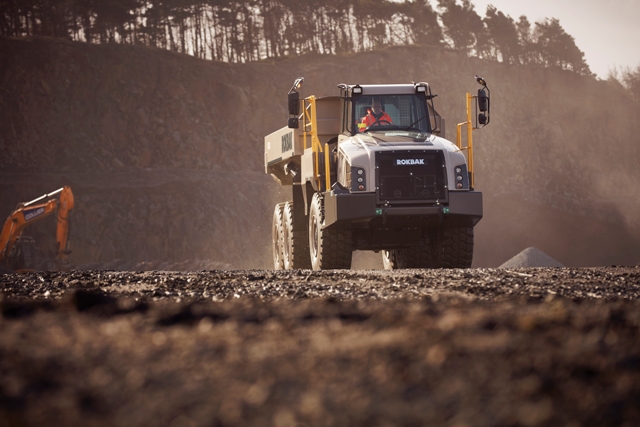
PC: Rokbak’s RA30 and RA40 ADTs are consistently proving their reliability in tough African applications. The robust trucks are simple to operate and maintain, delivering high uptime and low total cost of ownership. Our customer feedback from across the globe confirms that Rokbak trucks are exceeding performance expectations, with strong durability. Continuous product development and our responsive aftermarket service further ensure that machine reliability remains a key strength of the Rokbak brand.
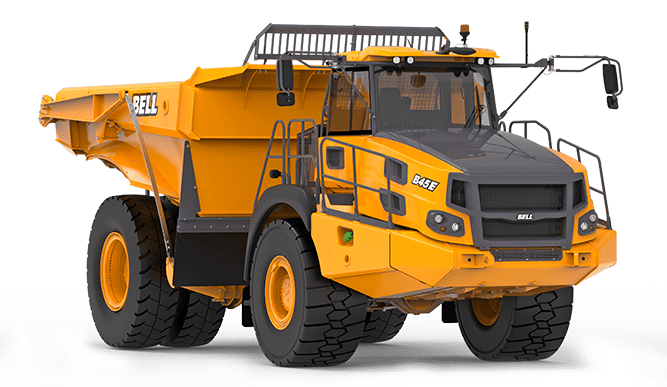
Rokbak has two models of articulated haulers, the RA30, which has a 28 tonne (30.9 US ton) maximum payload, and the 38 tonne (41.9 US-ton) capacity RA40 truck.