


In South Africa, through the Renewable Energy Independent Power Producer Procurement Programme (REIPPP), the addition of more than 30 utility-scale wind farms to the electricity grid has increased generation capacity to meet demand.
As of December 2025, South Africa had nearly 4 GW of installed wind capacity, making effective operations and maintenance increasingly important as the operating fleet grows and matures.
As South Africa’s operating wind fleet grows and matures, maintaining high levels of technical availability while controlling lifecycle cost becomes increasingly important. This requires effective operations and maintenance (O&M) strategies, states Mamoso May, Asset Management Standing Committee Chairperson at the South African Wind Energy Association (SAWEA).
What happens when a wind turbine fails?
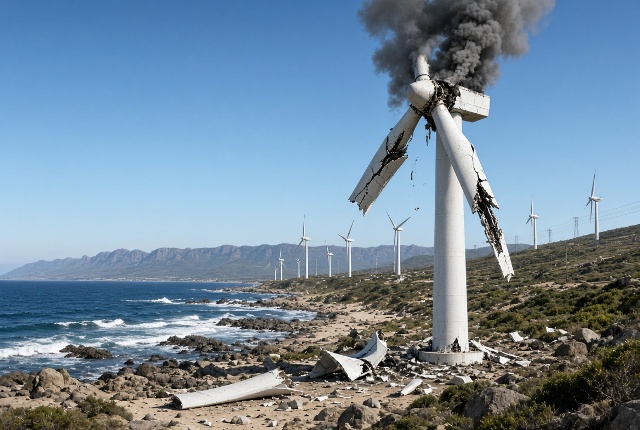
To get a sharper perspective on the significance of effective O&M strategies, one has to consider the impact of turbine failure: lost energy generation and the potentially high cost of restoration.

i. GWh of lost energy generation
May demonstrates the impact of lost generation: “On average, a turbine experiencing a major component failure may be offline for around 40 days. This results in approximately 1.1 GWh of lost energy generation for a 3 MW turbine and an estimated revenue loss of approximately R2 million, assuming an electricity tariff of R1.75/kWh.”
The situation can get worse, she adds: “Where a component has to be imported or a suitable crane is not immediately available, the outage can extend considerably beyond this. For instance, a 90-day outage, using the same assumptions, would mean roughly 2.5 GWh of foregone generation and R4.4 million in lost revenue.”

ii. The cost of restoration
Beyond the loss of generation, there is the cost of the actual repair, component replacement, specialist labour or crane mobilisation, just to cite the main issues.
These impacts reinforce why O&M decisions should be made with clear understanding of production exposure, component criticality and remaining life of the asset.
Developing an effective O&M strategy
At the outset, there is a misconception that there is some kind of one-size-fits-all manual that can be universally adopted and implemented for O&M strategies for wind turbines in South Africa.
On the contrary, the country does not have one type of wind farm operating under one set of conditions, May clarifies. Actually, the same applies across the international wind industry. Thus, the development of O&M strategies for individual wind farms should be approached from this perspective.
This becomes clear when the factors affecting the reliability and availability of individual assets are considered.
Factors vital in developing a relevant O&M strategy
Specifically, May brings up the following factors that are vital in developing an O&M strategy: different environmental conditions that wind assets are exposed to, asset age, and supply-chain considerations, particularly component sourcing.
a. The environment
A wind turbine at a coastal site, for example, may have to deal with high exposure to corrosion, salt and moisture that would not necessarily be encountered at an inland site. Other sites have dust, temperature extremes, lightning or difficult weather conditions that affect when maintenance can actually be carried out.
b. Age
Then, there is the issue of the age and technology of the fleet. For instance, some of the earlier REIPPPP wind farms are now well into their operating lives, while much newer turbine platforms are entering the market. These differences mean that O&M strategies have to evolve according to the age, technology and operating history of each asset.
May remarks: “You cannot maintain a ten-year-old turbine in exactly the same way you approached it when it was new. By that stage, its history matters. You know which components have been problematic, which faults keep returning and where the asset is beginning to show its age.”
c. The supply chain
In one way or another, supply-chain risk has an impact on wind turbine maintenance. While the exposure varies between countries, in South Africa it has a huge impact, due to the fact that the country still imports many specialist components.
So, sometimes the repair itself may not be the biggest problem, May argues, indicating where the real challenge could lie: “The problem can be getting the part into the country, getting the right specialist to site, or securing a crane when you need one. As a result, a wind turbine can remain out of service for significantly longer than the technical repair itself requires.”
Understanding root causes of lost production
Once lost production has been identified, the next step is to determine its root cause and direct resources accordingly, advises May. “We need a more accurate understanding of what is driving lost production. This is because turbine downtime, grid outages and curtailment have different causes and require different interventions.”
Understanding the different causes is important because not all lost production can be addressed through maintenance. The bottom line is: if all lost energy is treated as a single issue, maintenance resources may be directed towards the wrong problem.
Diagnosing the root cause of failure
May cautions that South African turbines do not necessarily experience unique failure modes. What often differs is the environment around the failure and establish how quickly the turbine can be returned to service.
Particularly, she points out, it is important to pay attention to blades and leading-edge damage, lightning protection systems, pitch and yaw systems, gearboxes, bearings, generators, converters, hydraulics, cooling systems, transformers, drive trains, and various sensors and control components.
In the end, these checks provide the basis for determining whether a developing fault can be addressed through early intervention or whether a more extensive repair is required.
Importance of early intervention
May highlights the importance of early intervention. “A minor defect can often be repaired relatively easily when detected early. If left unattended, however, it can develop into a significant structural problem requiring more complex and costly repairs.”
For instance, detecting changes in vibration, oil condition, temperature trends and other indicators can provide early indications of deterioration before a component fails.
Another point worth mentioning is that the component that fails most frequently is not necessarily the one that presents the greatest operational risk, notes May. “A sensor may fail regularly but can usually be replaced quickly. On the other hand, a gearbox or generator may fail less often, but a single failure could result in months of lost production if replacement parts must be sourced internationally, primarily from Europe, and specialist labour and a large crane are required.”
This means that maintenance priorities should not be based simply on failure frequency. The potential consequence of a failure also needs to be considered.
Effectiveness of a maintenance programme
At the end of the day, the effectiveness of a maintenance programme depends on whether warning signs are detected, correctly interpreted and acted upon in time.