


The Technical Team at TOMRA is contented to see their data-driven maintenance strategies improve the availability of the company’s flagship high-capacity sensor-based sorting systems in challenging-recovery applications in diamond mining. Buoyed, they vow to make more milestones.
By Jimmy Swira
TOMRA’s high-capacity sensor-based sorting systems have enabled diamond mining companies in Africa to make record-breaking stone recoveries. With the significant investment the company is making in R&D, more milestones are certainly on the horizon.
Behind the publicity that every milestone creates, what is often overlooked, though, is the extensive work that goes into asset reliability programmes to keep the sorting equipment in optimal operating condition at all times.
Typically, every sorting machine comes with an asset reliability programme anchored on a comprehensive maintenance approach. This ensures the optimal level of availability during production – maximising uptime and minimising downtime – is sustained as much as possible.
TOMRA’s approach to maintenance is designed to identify early signs of potential equipment failure and address them promptly before they escalate and impact performance. Two asset reliability specialists from TOMRA explain how this is applied: Ines Hartwig, Director Product Management, TOMRA Mining, and Christian Korsten, Product Manager Digital, TOMRA Mining.
Early Signs of Potential Failure
Hartwig draws attention to early signs of potential failure in high-capacity sensor-based sorting systems, which can affect both sorting performance and equipment reliability.

“Identifying signs of failure early is crucial to maintaining optimal efficiency and minimising unplanned downtime,” she notes, citing the following common issues experienced by customers:
Sorting Efficiency Indicators
The first sign of potential failure is sorting inefficiency, with three indicators usually standing out:

- Customers often detect a decline in product purity or recovery rates through regular quality control checks or material assays of both the product and waste streams.
- Inconsistent sorting behaviour, such as fluctuations in ejection rates or misclassification of material, may signal input material changes or dust and dirt within the detection area.
- Changes in particle size distribution may indicate upstream equipment issues affecting the feed material.
Equipment Health Indicators
Unusual sensor readings can indicate potential problems with equipment health. Deviations in air pressure, belt speed, water flow, or temperature can suggest mechanical or pneumatic issues. Frequent system alerts may point to sensor degradation or hardware failures.
Generally, missed or delayed maintenance to address the root causes of these issues can lead to accelerated wear and reduced system reliability. Preventive maintenance is therefore central.

Christian Korsten, Product Manager Digital at TOMRA Mining
TOMRA’s Two-Pronged Approach
To enable predictive maintenance of high-capacity sensor-based sorting systems and sustain optimal performance, TOMRA has introduced a two-pronged approach to enhance data-driven decision-making in mining operations.
“This approach enables faster responses to changes in conditions or even the anticipation of potential breakdowns,” explains Korsten. “On one side, additional sensors and specialised software features have been integrated into our equipment to capture valuable operational data. On the other, we’ve launched TOMRA Insight, a cloud-based platform for data collection and analysis.”
Intelligent Eyes of the Processing Plant
The sensor-based ore sorters act as the intelligent eyes of the processing plant. They analyse every individual particle, capturing detailed information about its properties. With the added sensors, the system also gathers critical machine health data.
“All the information collected is transmitted to the TOMRA Insight customer portal, where it is processed and visualised. This gives customers real-time insights into material characteristics, equipment condition, and even the performance of upstream material handling systems,” states Korsten.
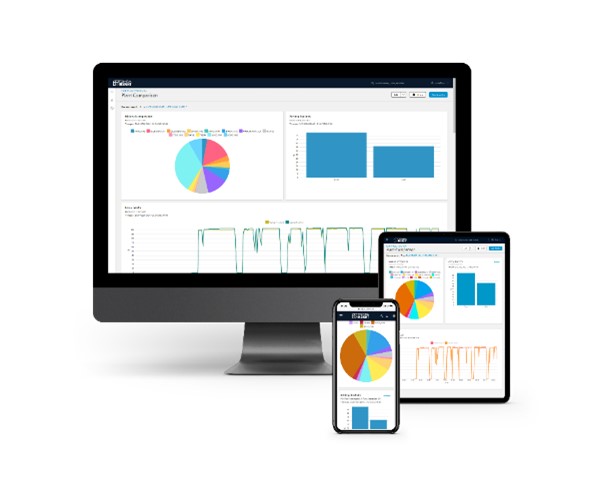
TOMRA Insight, a cloud-based platform for data collection and analysis.
Preventive Maintenance During Peak Times
To maintain peak performance, TOMRA recommends preventive maintenance during scheduled downtimes. For example, cleaning the detection area is crucial, as dust and dirt can interfere with sorting accuracy.
When undertaking this task, TOMRA Insight becomes particularly handy. It helps determine the best timing for maintenance activities by providing actionable insights based on real-time data.
Direct Feedback on Actual System Performance
Ultimately, TOMRA’s two-pronged approach provides customers with direct feedback on the actual performance of the sorting system.
“Key metrics such as material composition, ejection rates, and belt occupancy help guide customers in configuring the sorter to meet their specific needs. Real-time data on critical parameters, such as belt speed, incoming and sorting air pressure, and temperatures, offers immediate insight into the machine’s operational health,” Korsten elaborates.
The collected data also includes indicators of upstream equipment performance, such as crushers, screens, and material splitters. Changes in particle size distribution detected by the sorter can signal shifts in crushing or screening efficiency, allowing for timely adjustments.
Uneven material feed may reveal blockages in the feeding system or transitions within the plant. With automated alerts for out-of-spec values, customers can respond quickly and make informed, data-driven decisions to optimise their processes.
Continuous Exploration
The needs of mining companies are constantly evolving, and so are the challenges they face. Through its investment in R&D, TOMRA strives to keep abreast, says Korsten. “We are continuously exploring new technologies that deliver valuable insights to help our customers optimise their operations. A key focus area is monitoring the lifespan of critical components and analysing wear patterns to anticipate potential failures, in this way minimising unplanned downtime.”
Supplying critical components as and when needed will always be a top priority, adds Korsten. “Since many mining sites are located in remote areas, ensuring the availability of the right spare parts on-site is essential. That’s why efficient inventory tracking and timely delivery are integral to our predictive maintenance strategy.”
Furthermore, TOMRA is investing in enhanced remote service capabilities to provide faster, more effective support without the need for on-site visits.
Looking ahead, Hartwig is upbeat: “We are committed to continuously helping industry deliver milestone recoveries through data-driven maintenance strategies.”