

Hansie Coetzee, the National Sales Manager of Kiloton South Africa, has encountered (and continues to encounter) both extremes of end-users’ experience with hydraulic torque wrenches: success and failure, frustration and satisfaction. And he is likely to experience more of the same as operations ramp up production in the second half of 2026.
Drawing from his engagement with reliability professionals across various industries, he tells Machinery Maintenance Matters that a thorough analysis in most cases reveals a consistent pattern: hydraulic torque performance depends on the approach the client (end-user) followed.
Singling out common causes of wrench failure, Coetzee stresses the importance of following the right approach.
Common causes of wrench failure
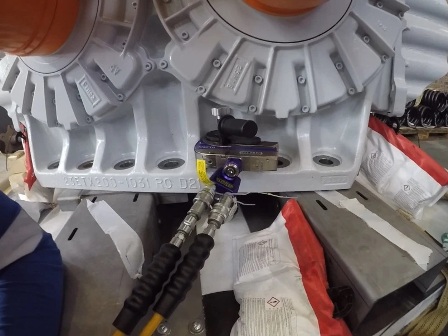
“From what we have observed, common causes of hydraulic torque wrench failure or underperformance include incorrect tool selection, worn seals, contaminated hydraulic oil, damaged hoses or couplers, pressure loss, poor lubrication, incorrect pump settings, uncalibrated gauges, and misuse on site,” he states.

Furthermore, underperformance is often linked to poor reaction setup, worn sockets or links, incomplete tool cycling, and operating the wrench outside its rated capacity, he adds.
There are also ‘peculiar’ cases where end-users experience inaccurate or inconsistent torque from their hydraulic wrenches. When this happens, it is usually due to a combination of tool, operator, and joint-condition issues, he points out.

“Inaccurate or inconsistent torque may result from incorrect pressure settings, uncalibrated tools or gauges, inconsistent lubrication, dirty or damaged threads, worn nuts or washers, poor flange alignment, incorrect tightening sequence, skipped torque passes, and technicians not allowing the tool to complete its full stroke.”
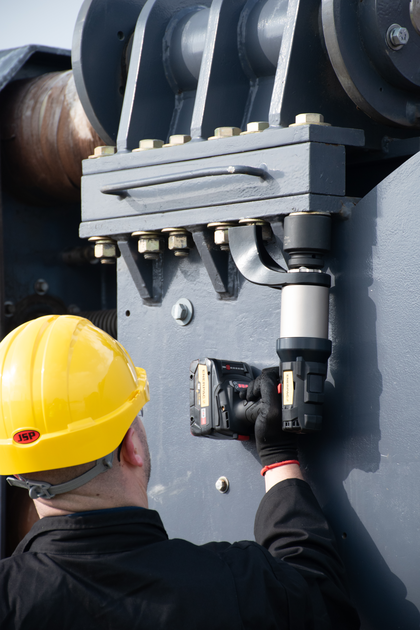
A battery torque wrench (Pic: Kiloton South Africa)
The right approach
The problems of failure or underperformance can be forestalled by following the right approach in hydraulic torque wrench selection and application best practice.
Usually, accurate bolting depends on the entire system, which encompasses the tool, pump, gauge, hose, operator, lubricant, fastener condition, and procedure, Coetzee explains.
Using high-quality torque wrenches
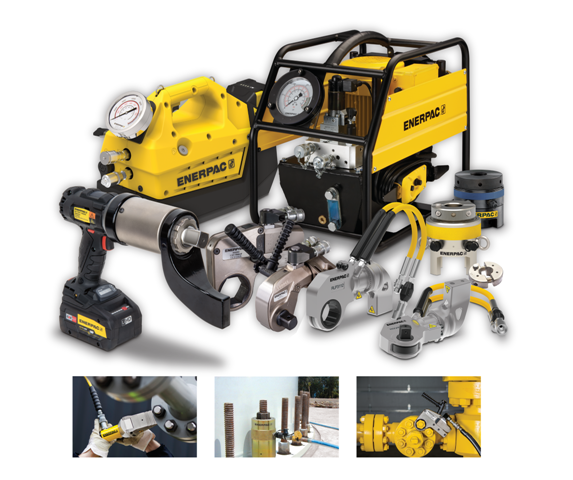
“In terms of tooling, by using high-quality hydraulic torque wrenches in critical bolting tasks, you are assured of optimal output. The torque wrenches deliver controlled, repeatable torque when paired with the correct pump, gauge, hose set, and calibration certificate,” he illustrates.
In applications where precise preload is required, the tool must offer reliable torque output, robust construction, accurate pressure-to-torque conversion, safe reaction control, and traceable calibration.
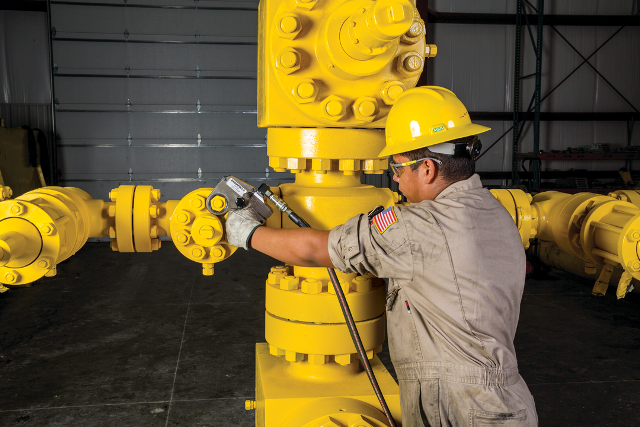
A technician bolting
Precision in wrench selection
Underlying the importance of precision in torque wrench selection, he lists the following as key considerations: the required torque, available access, nut size, stud protrusion, reaction point, flange layout, operating environment, pump compatibility, calibration status, and whether a square-drive or low-profile cassette wrench is best suited.
“It is important to seek technical advice,” he explains. “Where possible, customers should involve a technical supplier early. A proper site assessment helps ensure safer operation, the correct tool selection, and improved lifecycle performance.”
Best practices for wrench performance
Once the correct equipment has been selected, several critical steps should be followed.
Firstly, operators should inspect tools before use, confirm calibration validity, use the correct torque chart, check hoses and couplers, apply the specified lubricant, and follow the correct tightening sequence.
Highlighting calibration as the most vital process, which is usually one of the main causes of torque failure or poor performance, Coetzee says the procedure should be treated as a critical safety and quality requirement.
“The best approach is to calibrate the complete system where possible: torque wrench, pump, gauge, and hose configuration. Moreover, calibration must be traceable, documented, and matched to the correct serial number.”
“Most importantly, tools should be calibrated at planned intervals, after repairs, after heavy use, after suspected overload, or before critical bolting work,” he adds.
Secondly, they must ensure the reaction arm is safely positioned, keep hands clear of pinch points, complete each tool cycle correctly, and avoid modifying accessories on site.
After use, tools should be cleaned, inspected, capped, and stored correctly. Regular maintenance and operator training reduce misuse, improve safety, and help maximise uptime.
“By and large, accurate bolting depends on the full system: tool, pump, gauge, hose, operator competence, lubricant, fastener condition, and procedure,” reiterates Coetzee.
Significant gains
Overall, the importance of precision in torquing to achieve reliability in bolting should not be underestimated. In high-risk industries such as mining and construction, the gains are significant: safety, compliance, operational continuity, and reduced downtime.