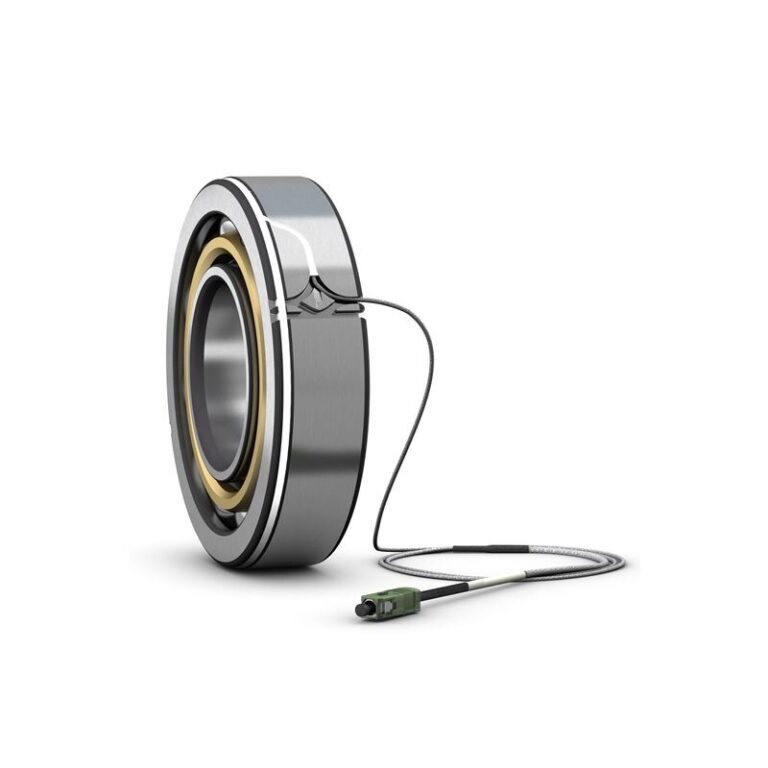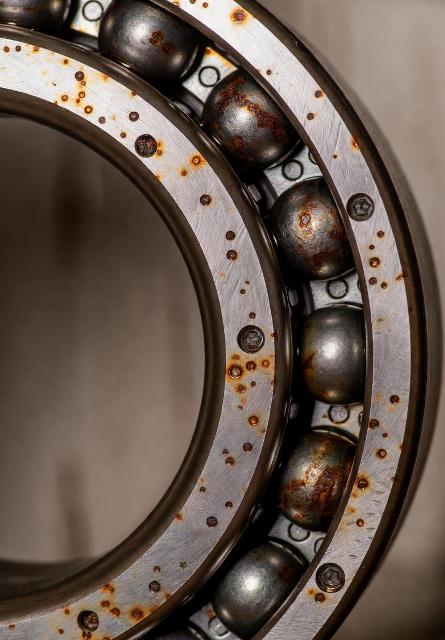

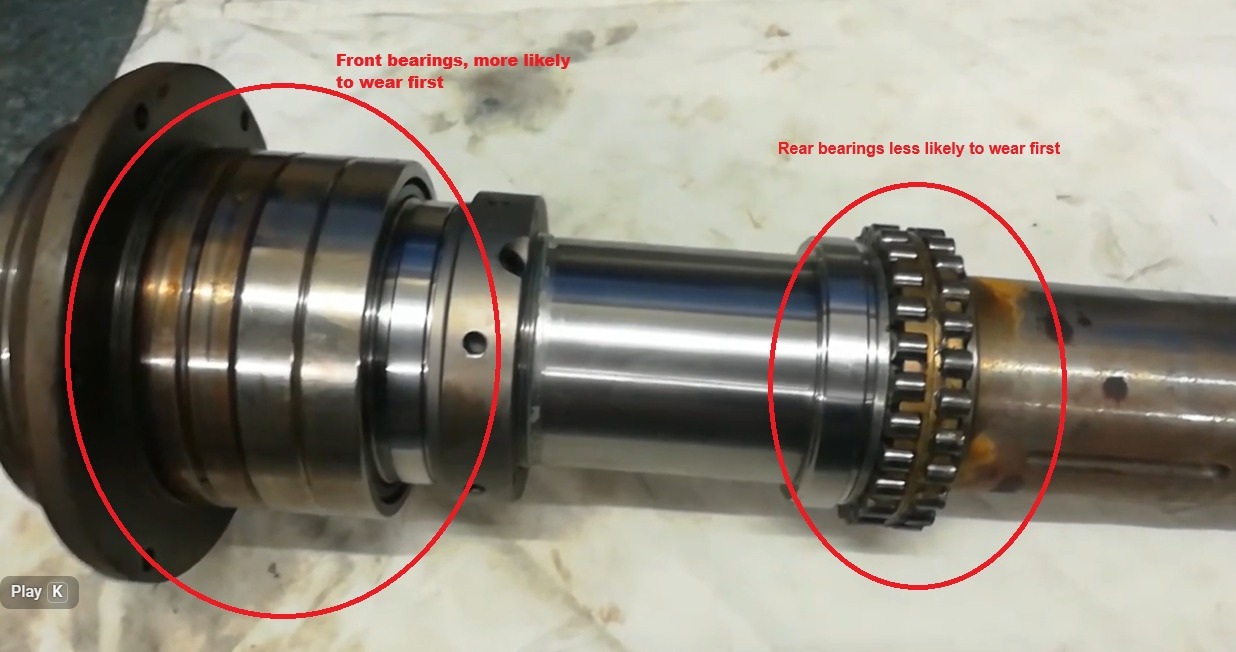

Bearing-related problems can unexpectedly halt the running of a flat-bed lathe in a component manufacturing plant. Thus far, the sure-fire way to avert this is by keeping a close eye on machine health, performing regular maintenance, and acting before small issues become major failures. Otherwise, postponing this task leads to the inevitable: a sudden failure occurring when least expected, at an unbearable cost.
By Jimmy Swira
“Better to bear the burden of bearing maintenance, and ensure uptime for your flat-bed lathe, than face downtime when you need your component manufacturing plant the most,” James Fourie, Technical Sales Team Lead at KNUTH Machine Tools (KNUTH SA Pty Ltd), stresses.
This advice cannot just be casually dismissed as alarmist. Truth be told, statistics of bearing-related failure don’t lie.
High prevalence

Fourie relates what he has observed from engaging with clients: “Bearing failures and related issues are highly prevalent as a cause of reduced efficiency in flat-bed CNC lathe machines. Generally, they are widely regarded as one of the top three mechanical contributors to machine failure.”

Early degradation unnoticeable
The most challenging aspect about bearing issues, though, is that degradation is progressive.
Rather than failing suddenly, bearings typically deteriorate gradually over time. Often, this makes it unnoticeable in the early stages. All the while, they would be eroding machining efficiency, quality, and overall equipment reliability.
Inevitably, it would be only a matter of time before a complete breakdown occurs, with consequences too ghastly to contemplate, at a high cost to bear.
Only if they are detected early through effective monitoring can the issues be addressed proactively. However, typical of human nature, the industry tends to be reactive, facing the effects.
The Impact
Otherwise, if left unattended, the impact of bearing failure on lathe availability and reliability can be quite significant, Fourie notes, with the effects manifesting in the following ways:
-
Productivity
Machines often need to operate at reduced speeds and feeds to avoid vibration or alarms. This directly impacts productivity.
-
Vital machine part wear and strain
Excessive wear and strain on vital machine parts: for instance, electrical motors must work harder, with excessive load and wear on guideways and ball screws.
-
Spindle runout and overheating
Spindle runout, overheating, and thermal expansion can also cause damage to the assembly and the draw tube, if fitted.
-
Poor quality of fabricated components
Issues such as wear, misalignment, loss of preload, and thermal expansion can cause quality problems such as size drift, poor repeatability, and spindle runout. Furthermore, offsets are no longer accurate. Ultimately, this results in poor surface finish or damage to fabricated components.
-
High energy consumption
Increased friction causes motors to draw higher electrical current to perform a task. In addition, machines run at reduced speeds and feeds, causing longer machining cycles. In the end, both issues increase energy consumption.
Expected but mitigable
In all fairness, these bearing failure-related problems are to be expected. This is especially in cases where flat-bed lathes are overexerted as production teams work under pressure to meet a huge volume of client orders.
Fortunately, Fourie affirms, the problems can be mitigated – or at the very least, their impact minimised – if teams adopt and apply proactive inspection and maintenance practices like effective vibration monitoring. In the end, this approach would enable early diagnosis of bearing failure.
Effective vibration monitoring
The most effective deployment of vibration analysis tools for early bearing failure diagnosis relies on correct sensor placement and consistent measurement practices, states Fourie.
-
Correct sensor placement
In terms of correct placement, the sensors should be positioned as close to the front of the spindle as possible, and mounted directly on bearing housings or other rigid, solid machine structures. They should never be installed on covers, guards, or plates, as these components can dampen or distort vibration signals and lead to inaccurate readings.
If followed and applied meticulously, proper mounting ensures that the data captured accurately reflects the true condition of the bearings rather than secondary vibrations from surrounding components.
-
Consistent measurement practices (reliable baseline)
Equally important, as part of consistent measurement practices, is the establishment of a reliable baseline while the bearings are known to be in good condition. “Vibration measurements should only be taken once the machine has reached normal operating temperatures, as thermal expansion and lubrication behaviour can significantly affect results,” advises Fourie.
Moreover, subsequent analyses must be conducted under the same operating conditions for meaningful comparisons to be carried out. Particularly, these are cases where the machine is running under load or no load, and at the same spindle speeds and feed rates.
All things considered, consistency in these conditions enables subtle changes in vibration patterns to be identified early. In this way, potential bearing degradation can be detected well before it impacts machine performance.
Measuring and maintaining continuously
In the main, Fourie’s advice to owners of flat-bed lathe machines on mitigating bearing-related failures is unequivocal: “Measure and maintain continuously, control failure. Keep a close eye on machine health, perform regular maintenance, and act before small issues become major failures.”