
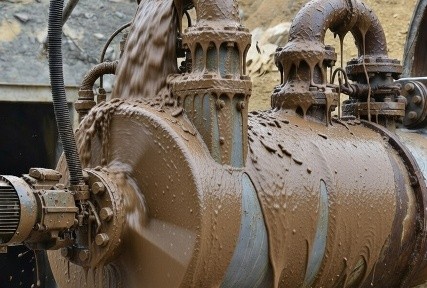

No one has a crystal ball to foretell the future, but there are experiences that are likely to be encountered. In the sphere of mining, one of them is bearing the high lifecycle costs of abrasive slurry pumps.
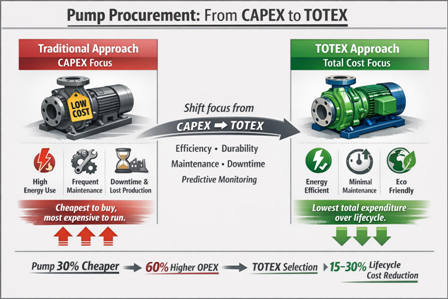
Sometimes, this is the reality that is lost (or seems to be overlooked) when mining companies are planning to procure pumps for their respective abrasive slurry applications. This is due to sticking to the traditional approach of solely basing decisions on the narrow parameter of low capital expenditure (CAPEX).
Peculiar Procurement Oversight
Dandre Fourie, External Sales Representative at Schurco Slurry has noticed this peculiar procurement oversight among some organisations in mining and other heavy industries. He attributes the significant pump failures these organisations experience to this.

“By confining their decisions to CAPEX they overlook operating costs (OPEX) incurred when the pump is running. In the process, they miss the big picture of the total expenditure (TOTEX). In this context, CAPEX entails initial procurement, installation, and commissioning costs.”
“When mining companies base their decisions on this, belatedly, they would be in total shock on realising the OPEX of a pump they thought was a bargain buy is astronomical, beyond their budget,” laments Fourie.
The Cheapest Pump Often the Most Expensive
However, the rude awakening clients experience with costs is not entirely surprising, acknowledges the team leader. “Usually, in abrasive slurry pumping, the cheapest product turns out to be the most expensive, as OPEX often exceeds CAPEX over the lifecycle.
Unfortunately, unbeknownst to mining companies, lower upfront costs often lead to high OPEX. This is due to frequent wet-end replacements, higher energy consumption, increased losses due to unplanned downtime, frequent maintenance requirements (repairs and spare parts), just to cite the main ones. More often than not, mines learn this the hard way.
Rethinking Pump Procurement
And so, noticing the impact this oversight has on pump lifecycle costs, Fourie urges mining companies to rethink their approach to pump procurement. “Before purchasing, think twice, think long-term. Focus on real-world mining scenarios, bearing in mind that, generally, wear life, efficiency, and downtime directly impact total expenditure (TOTEX). Consider the whole cost of ownership (COO) beyond CAPEX.”
Single Metric
Typically, to provide the real total value of an asset, TOTEX combines Capital Expenditure (CAPEX) and Operational Expenditure (OPEX) into a single metric. More or less, this provides a real picture of the lifecycle costs through the pump.
Some of the critical elements that are accommodated include but may not be limited to: energy efficiency ratings, durability of material in harsh conditions (abrasive fluids), and compatibility with predictive maintenance technologies. Moreover, it facilitates collaboration between teams involved in procurement, engineering, and maintenance from the start.
Significant Gains
If planned meticulously and applied thoroughly, there are significant gains to be had from the TOTEX approach, essentially in the following ways:
i. Cost Savings
Do the maths.
A lower efficiency pump may save on CAPEX, but hit hard on OPEX, mainly in the area of energy costs, due to high power draw. For instance, a mining company may buy a pump 30 percent less than the normal price, but end up paying 60 percent more on OPEX due to high energy consumption.
Underlining the impact of efficiency, Fourie demonstrates: “Even a 5–10% efficiency loss can significantly increase power costs over time. In contrast, TOTEX can reduce overall expenditure by 15–30%.”
ii. Maintenance Needs
Selection of pumps with features that cut maintenance requirements would be convenient. These features may include but not be limited to self-priming designs, variable speed drives, and even modular components to allow for quick repairs.
Above and beyond, ease of integration with technologies that enable preventive and predictive maintenance, such as IoT sensors for condition monitoring. Eventually, this helps maintenance teams to identify inefficiencies and reduce downtime.
All in all, by selecting reliable pumps, maintenance intervals extend, minimising production losses.
iii. Environmental Compliance and Sustainability
With environmental compliance obligatory for businesses (heavy industry in particular), energy-efficient pumps (for example IE4/IE5 motors) are a top priority.
Compelling Business Case
All told, correct pump selection in procurement translates into lower TOTEX by enabling mining companies to shift in their pump lifecycle management from “cheapest pump to buy” to “cheapest to own and operate”.
Based on results from mining projects in South Africa and beyond, the Technical Lead sees a compelling business case for the adoption and application of the TOTEX approach. In fact, recent results from mining projects in the region corroborate this.


