


A common challenge in Africa’s freight rail sector is that some operators have relatively small and ageing locomotive fleets, yet demand for their services is high. Faced with this situation, and with limited resources, they find it difficult to carry out maintenance as recommended.
Yet sound maintenance mitigates the risk of failure (downtime), which helps to ensure that locomotives are available to customers when needed. This creates a proverbial chicken-and-egg situation.
Rail company Alstom illustrates how proactive planning, condition monitoring and predictive maintenance help operators with smaller fleets improve locomotive availability and contain lifecycle costs.
By Jimmy Swira
Typically, freight electric locomotives are designed to operate reliably over several decades. However, sustaining high levels of availability throughout that lifecycle requires a proactive approach to dealing with common maintenance challenges.
In parts of the Sub-Saharan African freight rail sector, locomotive availability remains a challenge, with a number of locomotives grounded and few remaining operational.
Maintenance Shortcomings
Alstom has observed that, in some cases, the root cause is poor maintenance. This is based on the company’s experience in the region as an original equipment manufacturer (OEM) and a long-term services provider to locomotive fleet owners across the region.
Common Challenges
Alstom’s technical team has identified common maintenance challenges. These can be categorised into three areas.

The first is component wear, ageing electronic systems and the obsolescence of certain parts.
The second is the demanding operating conditions and high utilisation rates of locomotives. These place additional stress on critical systems such as traction equipment, braking systems and auxiliary components.

Third, exposure to environmental conditions such as dust, humidity, heat and temperature fluctuations accelerates component wear.
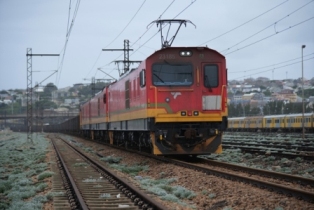
Some operators have relatively small, ageing fleets, limited maintenance resources and a shortage of spare parts. These factors can make it difficult to carry out the necessary maintenance (Pic credits: Alstom).
The Challenges Facing Small Fleets
These challenges can be particularly difficult to manage for operators with relatively small, ageing fleets and limited maintenance resources and spare parts. This situation could tempt operators to defer maintenance to keep locomotives in service. However, postponing necessary work can increase the risk of unexpected failures and unplanned downtime.
Yet when avoidable downtime occurs, the implications can be significant. Tristan le Masne, Alstom Southern Africa Managing Director explains: “Where fleets are relatively small, the loss of even one locomotive can have a significant effect on available hauling capacity and freight operations.”
A Compelling Case for Proactive Maintenance
Given these challenges, there is a compelling business case for African rail freight operators to adopt and implement proactive maintenance planning to maximise the performance of their existing assets, le Masne points out.
The Outcomes
The first question should be: “What are we aiming to achieve?”
le Masne says that maintenance should not be measured by the amount of work performed, but by the outcomes delivered. “The main objective in maintenance planning is to maximise locomotive availability, maintain safety and reliability, and control lifecycle costs. Achieving these requires a combination of engineering expertise, digital technologies and data-driven maintenance strategies.”
“Availability is often the most critical metric of all, given the relatively small fleets,” le Masne adds, highlighting how digital technologies facilitate condition-based and predictive maintenance approaches to improve locomotive availability.
Condition-Based and Predictive Maintenance
To mitigate the risks of locomotive downtime effectively, fleet operators can identify signs of deterioration earlier and plan interventions accordingly. Monitoring the condition of individual components can help maintenance teams determine whether repairs, refurbishment or replacement are needed. This can help operators reduce unplanned downtime, extend asset life and optimise lifecycle costs.
“By identifying developing problems earlier, operators can plan maintenance around the condition of their locomotives rather than relying solely on fixed maintenance intervals. For smaller fleets, this can help make better use of limited maintenance resources while reducing the risk of unexpected downtime,” le Masne says.


