


Prevention is always better than trying to find a cure. This is especially true when it comes to avoiding failures in expensive and hardworking machinery – and is why regular oil analysis should be an integral part of any maintenance programme.
Oil analysis is critical for understanding how well a lubrication programme is working, and where and how to tweak it when needed.
Gary Wentzel from Lubrication Engineers (LE) South Africa says, “The reason we recommend our clients do oil analysis is because otherwise it’s difficult to really know what is happening inside a piece of machinery or what the oil status is. With oil sampling you can keep up to date with your addictive packages as you can see what is happening, such as if there is a drop in viscosity and how much dirt there is, or the extent of the wear and tear that is taking place.”
Even when using top quality lubrication products and following correct storage and usage programmes, a lubrication solution can fall flat without consistent, accurate monitoring of the condition of the oil. Many plants have oil breathers and oil level monitors, but not all of these tools are reliable, and they can easily get blocked up or are situated in hard-to-reach places where they aren’t regularly checked. “I have had clients with oil level monitors on their gearboxes, but when the gearboxes failed, they found out that actually the oil was finished,” says Wentzel. “This is why oil analysis shouldn’t be skipped.”
What are the benefits of oil analysis?
With regular oil analysis, “you always know what is happening in each part of your equipment,” says Wentzel. Collecting this level of information helps to create a database for maintenance requirements across a site and the reports allow operational teams to see when an oil needs to be replaced. “It’s a core preventative maintenance practice,” he adds.
When oil is changed in time, it reduces the risk of machinery breaking down, and prevents spillage and downtime, along with all the other associated risks and costs of those things happening.
How does oil analysis work?
A technical expert will first inspect the plant to find an appropriate sampling point. There are different methods for taking a sample (such as through suction or using a drain port), but the samples should be taken at a the same point each time.
“The sample point should be before a filtration system, not after, so it gives you a true indication of the state of the gears,” says Wentzel.
In the same vein, samples for oil analysis should also always be taken at around the same time of day and with consideration for the weather, as a hot day can affect the sample. Environment, such as doing it in a dusty area, is also important. It is often better to take a sample when a machine is running is because the movement of the machinery agitates the oil, meaning any particles that need to be identified in the analysis are dispersed in the oil and can be picked up.
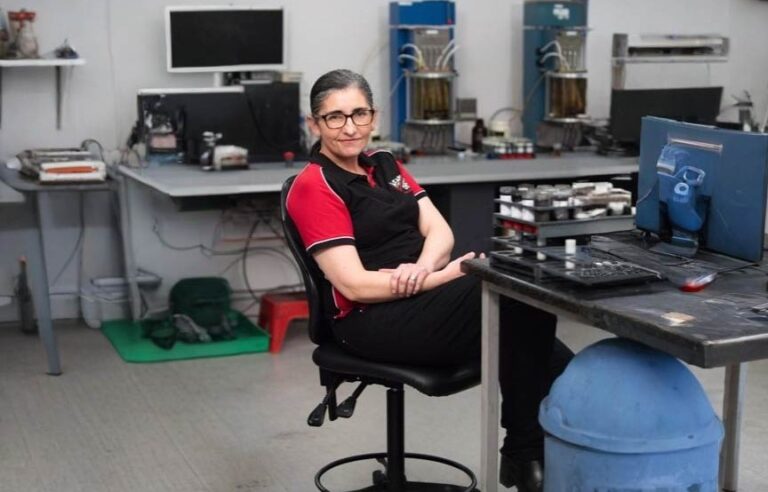
After it has been taken, the sample gets sent to a lab that produces a full report with the analysis. “We then share the report with the client and propose solutions where any issues are detected,” explains Wentzel.
In an oil analysis, wear and tear can be identified through shavings or dust particles that are detected in the oil, especially if there is an ineffective breather (or there is no breather). This is because friction heats up the gearbox during use, and the hotter it gets the more the viscosity drops and the thinner the oil in the system gets, which is where the breakdown happens. Once an oil is no longer working optimally, the machinery is affected and small shavings or particles begin to move around the system, and they are picked up by the oil. Identifying these in an oil analysis can paint a picture of what is happening in the machinery components and where lubrication adjustments need to be made to halt any issues.
How often should oil analysis be done?
When beginning the oil analysis process, Wentzel recommends doing one each month. “If you’ve never done one before,” he adds “the results can be shocking.” But this starting point allows a lubrication expert to show maintenance teams why they are getting such results and formulate a plan to correct the issues that the report has identified. The monthly reports then allow them to track the progress of the interventions.
Once you get a good reading you can begin to space the tests out to three months apart, and then ultimately do them a minimum of once every six months. Wentzel says it’s not recommended to leave longer gaps than that because in some instances, oil breathers and gauges are difficult to reach and see, so the analysis process gives a better indication of the true state of the inside of the gears.
“If your oil is staying clean, you’re not losing oil or it’s not running dry, it will prolong your product,” he adds. The lifespan of the machinery will also then be prolonged, leading to overall cost savings and better efficiencies. These results are at the core of why oil analysis is so critical for correct lubrication and should be a key part of maintenance, concludes Wentzel.