

It may be akin to listening to a popular hit song so overplayed on the radio that it has lost its novelty. Nevertheless, it is important to consistently emphasise best practices in torquing during bolt installation, particularly as industries in Africa strive to maximise equipment availability and reliability
By Jimmy Swira
As you read this, rotating equipment is working optimally at a mine or a petrochemical plant somewhere in Africa. One of the reasons could be that parts of the mission-critical equipment are properly secured, joined by bolts or fasteners, notwithstanding various levels of force and stress.
However, the same cannot be said about a coal-fired power plant where loose bolts have caused conveyor failure, power plant downtime, and a blackout in the whole city. And there are huge economic implications. Doesn’t this sound familiar?
Without a doubt, these two cases demonstrate that bolts are critical components in a broad range of mechanical and structural applications.
When installed properly, in accordance with the correct torque application, they contribute to safe, secure, and reliable machines.
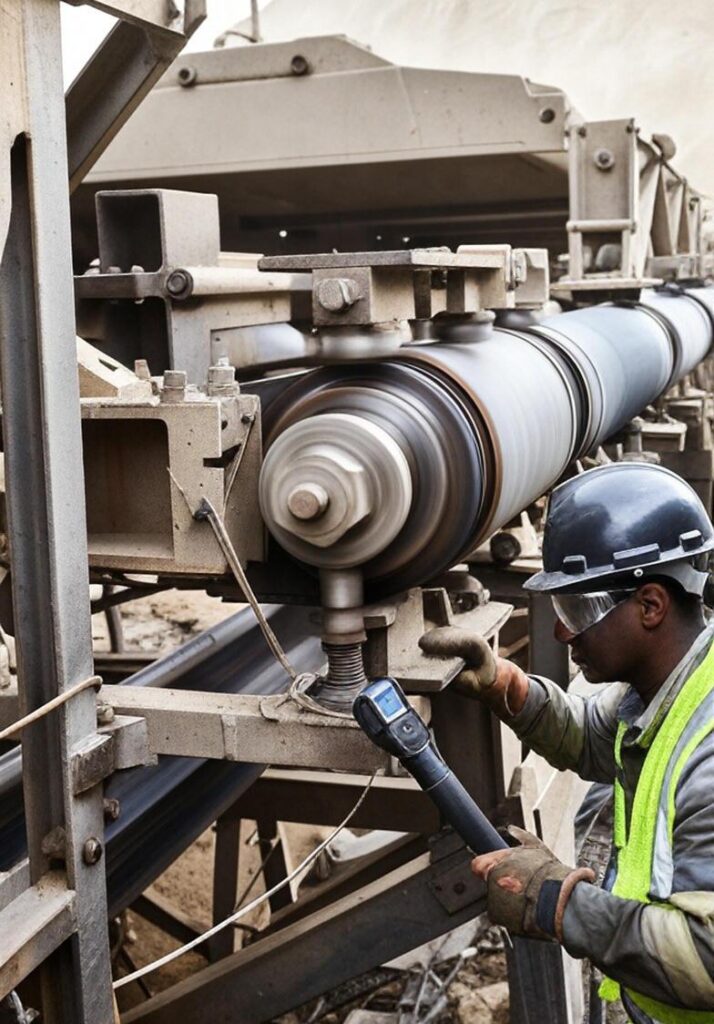
A technician using a digital torque wrench
On its website, Relines South Africa, a company that provides bolt tensioning as one of the services to different industries, sheds more light on the importance of correct torque application: “It’s the slight stretching of a properly tightened bolt which provides the ‘clamping force’ or tension that holds the bolted parts together. For a bolt to do its job, the clamping force must exceed the opposing force that is trying to pull the parts away from each other.”

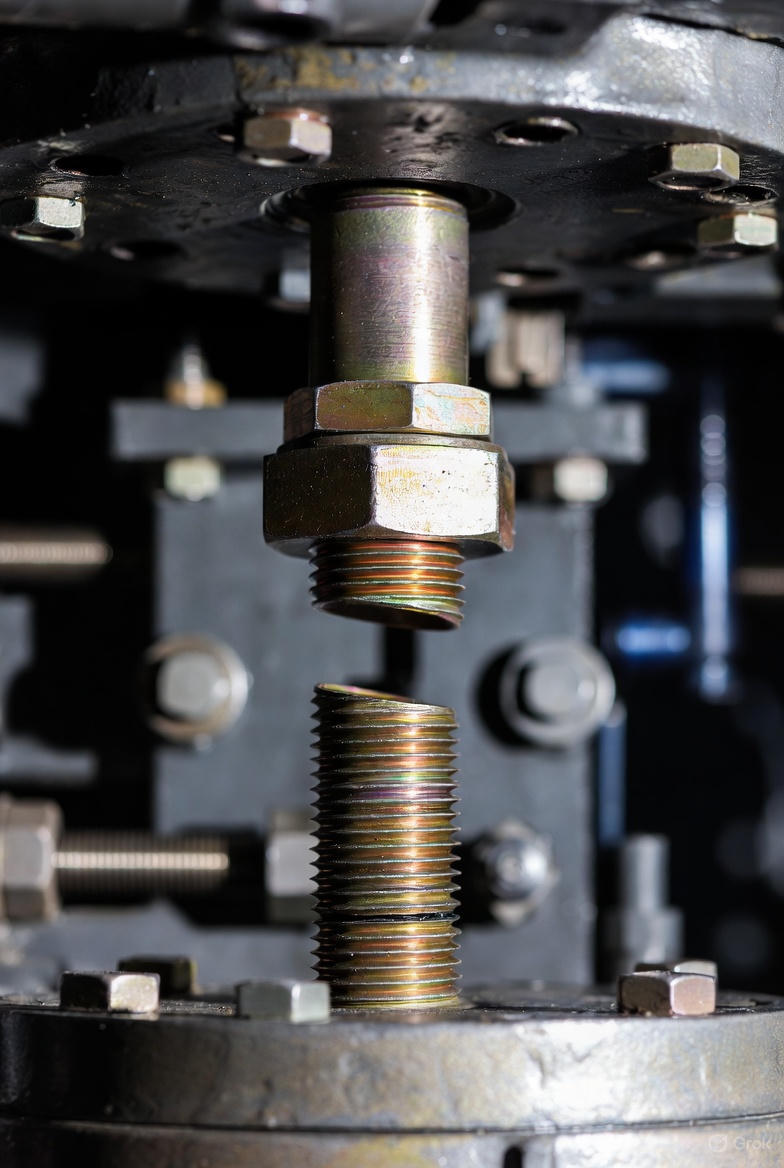
In contrast, incorrect or inconsistent torque application leads to fastener failure.
In fact, maintenance and reliability reports often cite incidents related to fastener failure as top causes of equipment failure. Sometimes, in a worst case scenario, these lead to fatalities and irreparable equipment damage.

A case study from WearCheck, published on Machinery Maintenance Matters, illustrates the effects of loose bolts. The root cause of abnormal vibrations in a critical boiler Induced Draft (ID) fan at a mine – initially misdiagnosed as unbalance – turned out to be missing and loose foundation bolts.
So, how can one achieve accurate torque for a safe, secure, and reliable equipment?
The reality is that it needs meticulous planning/precision, as reline advises: “Too little torque may cause the bolt to become loose. Too much torque, and the bolt may strip its threads or break. Incorrect tensioning of a bolt increases the potential for the bolt to fail.”
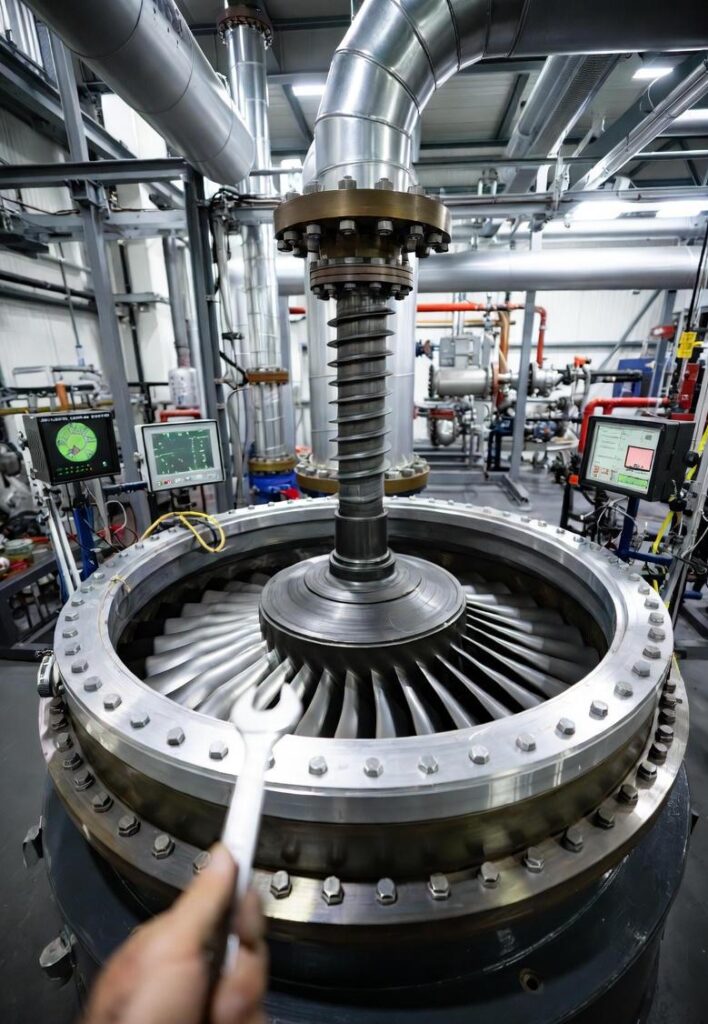
There is no margin for error in torquing accuracy on turbine components
Necessary accuracy
In its Technical Information Section (8.1 – How to tighten a bolt), SA Bolt Manufacturers Technical Information corroborates the need for operator unawareness: “Most tightening is sometimes performed without the necessary accuracy even when the most suitable tools are available simply because the operator is not fully aware of what is required to obtain the correct result.”
Learning from common mistakes in torque tensioning could inform the right approach.
The root cause of tension-related fastener failure
Recently, fastener manufacturers and suppliers of tensioning equipment shared information with Machinery Maintenance Matters. It indicates a common pattern in causes of fastener failure, both human- and equipment-related. Specifically, the following stand out:
1. Improper Tools or Equipment
Three cases of improper tools emerge.
The first one is the use of incorrect torque tools. For instance, this could be a regular wrench instead of a calibrated torque wrench.
The second one is using worn or uncalibrated torque wrenches that deliver inaccurate readings.
Worse still is the common tendency to employ pneumatic or power tools without torque control.
2. Operator Error
Most of the torquing oversights – a conservative estimate could be over 60 percent – stem from operator competence (rather incompetence). There are three scenarios.
First, where the operator has got inadequate training or lacks understanding of fundamentals of proper torquing.
Second, there is also the case of a supposedly knowledgeable operator who, due to sheer carelessness, fails to follow specified torque sequence, for instance, criss-cross or star pattern.
Third, over-torqueing or under-torqueing due to not monitoring the applied force. Assuming they have it all figured out.
As mundane as it may sound, the operator could be rushing the job or skipping final torque checks to grab a coffee, thinking she or he can get away without performing them.
3. Poor Joint Preparation
Effects of poor jobs preparation result in problems. Some cases of negligence include, or may not be isolated to:
- Dirty or damaged threads (rust, oil, debris, burrs) altering friction levels.
- Incorrect lubrication could be either none when really required, or even excessive application that drastically alters the torque-tension relationship.
- Sometimes, knowingly using mismatched fasteners or washers affects clamping load.
4. Incorrect Torque Specifications
The following are common causes of incorrect torque specifications:
- Picking up wrong torque values due to misreading manuals, outdated procedures, or incorrect bolt grade assumptions.
- Another one is the failure to account for joint conditions, temperature, or gasket compression factors.
5. Environmental and Operational Factors
There could be environmental and operational factors at play such as:
- Thermal expansion or contraction can change bolt tension after torquing.
- Vibration and dynamic loads can loosen bolts if proper locking methods – such as lock washers and thread lockers – are not used.
- Humidity or corrosion can lead to thread seizure and cause false torque readings.
6. Poor Maintenance and Documentation
One of the mistakes is poor maintenance and documentation mainly in the form of: lack of regular torque verification and re-tightening schedules, as well as no record-keeping on torque tool calibration or past tightening data.
There is no two ways about it – the critical factor is getting precision: the right torque. The torque is the means to an end, which is clamping (tensioning).
Tightening torque
In its Technical Information Section (8.1 How to tighten a bolt), SA Bolt Manufacturers explains that the strength of a bolted assembly depends on the torquing, the accuracy of the design, and the quality of the fastener. So, assuming the quality of the assembly is desired and the design is accurate, it would come down to torquing.
With regards to torquing, the Technical Information states: “It has been proven that insufficient or excessive torque can affect the quality of the assembly, with increasing effect under more severe conditions.”
Getting the right torque during tightening
Getting the right torque during tightening is the sum of many parts (involves a combination of many elements), the ultimate objective is precision. The following are the critical ones:
1. Using the Correct Tools
One can be the most accomplished technician in the fastening game. However, they still need to utilise the correct tools to tighten the bolt to a predetermined load.
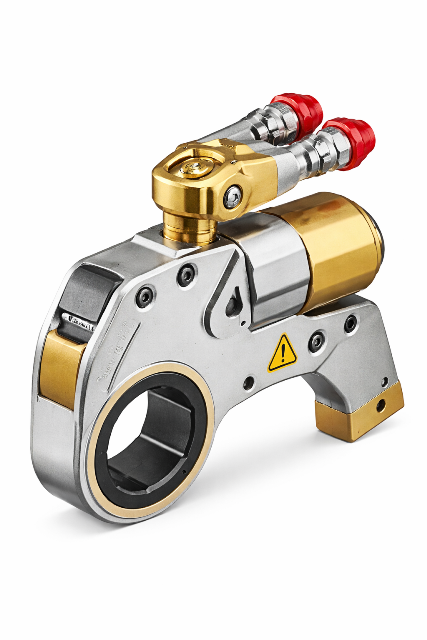
For convenience, there is a wide range of torque wrenches from different OEMs out there on the market. But the rule of thumb is: Always use a calibrated torque wrench or torque-controlled power tool suited to the application. In other words, most importantly, regularly calibrate torque tools to maintain accuracy.
2. Follow the Specified Torque Values
It is paramount to adhere to the specified torque values. Specifically, this implies applying the manufacturer’s recommended torque for the specific bolt size, grade, and material.
In instances where lubrication and special coatings are used, it is important to adjust torque values. This is because these affect friction and clamping force.
3. Prepare the Joint Properly
The most critical step in joint preparation is cleaning threads and contact surfaces to remove dirt, oil, rust, or debris. Two measures are essential.
To achieve consistent torque-tension relationships, where specified, lubricate threads and under-head surfaces. In addition, this should be a basic practice – before installation, inspect bolts and nuts for damage, wear, or corrosion.
4. Apply Torque Gradually and Evenly
Applying torque gradually and evenly is the way to go. This involves three steps: tightening bolts in a criss-cross or star pattern to distribute load evenly across the joint; using multiple passes, gradually increasing torque (for example, 30%, 60%, 100% of final value); and avoid sudden or jerky tightening, which can cause uneven stress.
5. Verify and Recheck
Don’t make assumptions that everything is perfect. For this reason, meticulously, to confirm correct values after initial torquing, perform a final check.
For higher accuracy, in critical applications, use torque-angle or tension control methods. Furthermore, if recommended, after equipment has run through a thermal or load cycle, re-torque bolts.
6. Maintain Records and Tools
Last but certainly not least, maintain records and tools. These practices should be followed thoroughly: keeping torque logs for maintenance audits and quality assurance, and storing torque wrenches properly and avoid dropping or overloading them.
Where torquing has huge implications on plant availability and reliability, best practices should be followed devotedly without any room for compromises. It takes meticulous planning and thorough execution. Every element contributes to achieve the correct torque. There is no margin for error. The rule of thumb is: don’t torque too much, don’t torque too little.