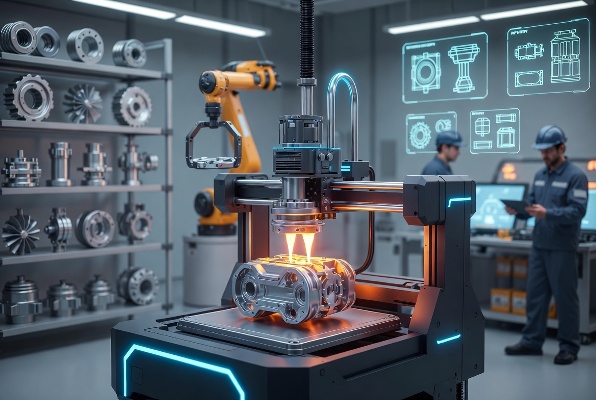

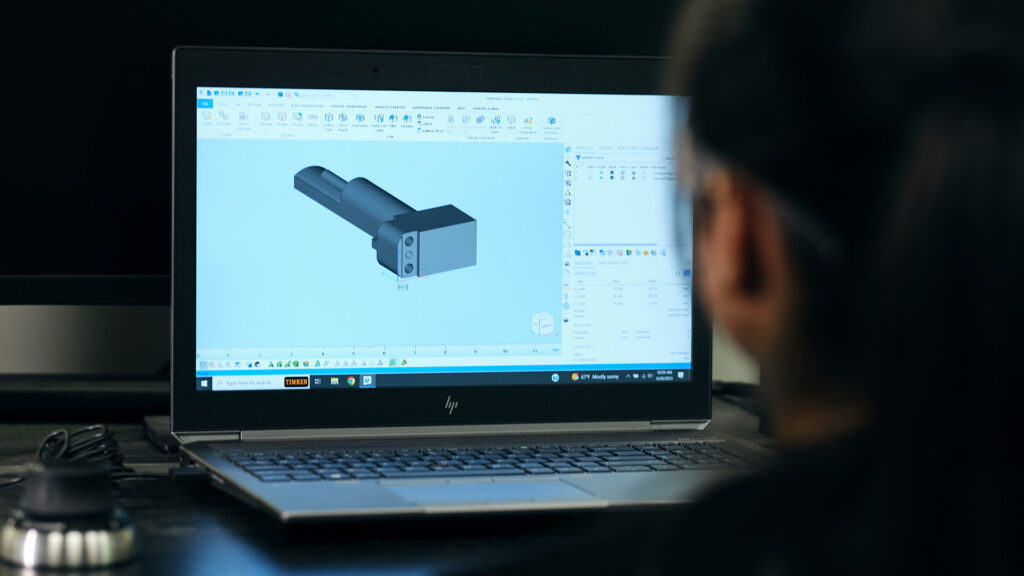

In traditional manufacturing facilities, processes like grinding remove layers of materials from a workpiece to create the final product. On the other hand, additive manufacturing does the opposite: a 3D printer gradually builds up material layers to create a product.
While the company has invested in building foundational additive manufacturing knowledge for several years, a team of Timken R&D experts are currently exploring opportunities in various additive manufacturing techniques. The company’s initiative how additive manufacturing can widen material and process selections for a broad range of engineered bearings and industrial motion solutions that can achieve the desired design at competitive costs.
Direct Energy Disposition (DED) and direct energy disposition
While there are several additive manufacturing techniques, the team’s efforts are focused on two, explains Mangesh Pantawane, Principal Materials Engineer. The first, laser powder bed fusion (L-PBF), uses a laser to melt metallic powder into layers to build three-dimensional parts. The second, direct energy disposition (DED), deposits molten metal allowing faster builds.
Timken has used both techniques to manufacture 3D-printed bearing components currently undergoing testing. The results will yield valuable insights into the impact of 3D printed elements on bearing performance.
“So far, our research has identified a viable alternative steel grade that enable the 3D printing of the components,” Pantawane says. “They deliver the same set of mechanical properties and vastly improve supply chain efficiency.”