

The mining industry faces demands of high output and efficiency on the one hand and, unavoidably, the high cost of downtime on the other.
One of the main challenges is heavy reliance on original equipment manufacturers (OEMs) to produce precision-engineered parts. Sometimes, this is at great cost, considering transportation, not least in an environment of volatility in global oil prices.
Furthermore, this is sometimes subject to the capability of manufacturers to supply the spare parts as and when needed.
Delays in spare parts delivery
Otherwise, delays in spare part delivery can be a huge risk to production, causing downtime to machinery at the most critical time, the worst possible scenario.
In light of this, industry leaders have to find alternative solutions that can help in reducing costs, optimising extraction of products, and eliminating unnecessary time barriers to the effective running of operations.
How can 3DP make a difference?
Mining companies can explore opportunities in 3DP, which based on recent projects shows a lot of potential. However, first things first – they have to gain confidence in the technology.

Understandably, as with all evolving technologies, 3DP will have to demonstrate that it offers an advantage over traditional manufacturing, specifically in two areas, states David Bullock, MD of Rapid 3D, a reseller of professional and industrial-grade 3D printers and Rapid 3D Parts, a full-service 3D printing bureau.
First, the capability to produce high-quality and precision-manufactured items out of multiple materials in order to withstand the rigorous demands of the mining industry.
Second, production will have to be done in situ in some remote and unforgiving environments if 3DP is to be chosen over traditional manufacturing. This is something technology observers believe to be attainable in the next five to ten years.
Counteracting traditional manufacturing
However, proposed adaptations of 3DP in the mining industry claim to counteract the problems associated with traditional manufacturing methods.
“Mining operators should not put off experimenting with various applications of 3DP in their facilities. Developing knowledge and skills, and testing the impact these technologies can have on their current operational strategies, will certainly stand them in good stead in the future,” advises Bullock, highlighting areas where 3DP is particularly useful, including:
i. On-site and on-demand production
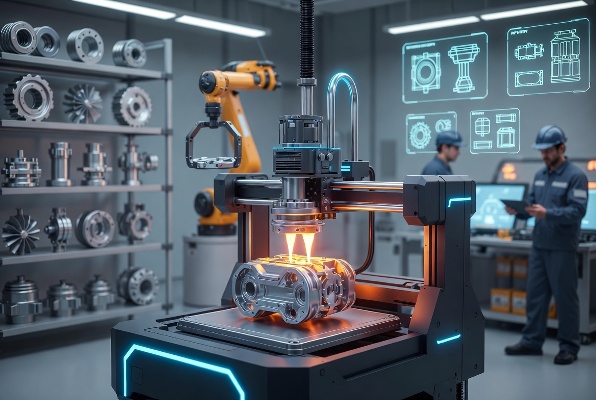
Where downtime is related to parts failures, 3DP offers the ability to produce parts on-site and on demand. In this way, there is effective in-sourcing of parts as and when they are needed, due to the technology’s convenience.
ii. Access to a digital spare parts library
Access to a digital spare parts library and the requisite printing technology becomes a strategic advantage. Consequently, the remoteness of a site becomes inconsequential and the high cost and environmental impact of transportation and warehousing of inventory is drastically reduced.
iii. Transportation and storage of raw materials
Furthermore, the raw materials used for 3DP are usually in powder form and are thus easier to transport and store. The operation itself can take responsibility for identifying equipment failures and printing the required solution.
iv. Customisable
3DP also allows designs to be customised to suit the needs of a particular operation. This feature is due to the ease with which digital models can be replicated on-site to suit the operation’s unique requirements.
v. Predictive maintenance
Further, predictive maintenance has been proposed whereby a printer could be attached to equipment to fix components, increasing the service life of that component and addressing wear and tear.
vi. Sustainability
Unlike traditional manufacturing where raw materials are subtracted, resulting in waste, the process of 3DP itself sees reduced waste in terms of energy used for production and raw materials. Furthermore, it is foreseen that used or faulty parts can be recycled, allowing for the re-use of their raw materials, further adding to the sustainability of 3DP.
Simplification across the supply chain
All in all, when adopted to diversify the source of spare parts, 3DP will mean significant changes across the supply chain operations of the mines, predicts Bullock.
“These changes include the point of manufacture, inventory, equipment, labour, transportation, and products. This will result in a far more efficient use of financial and material resources in the future.”
Conditions augur well for the development of the supply chain.
The supply chain complexity factor
The increasing complexity of existing supply chains justifies on-demand in-sourcing of parts. Accordingly, operations, strategies and policies would need to be adapted in order to ensure effectiveness.
This could meet the needs of the mining sector, where the focus is output and productivity, to drive efficiency.
In the mining industry, where the focus is output and productivity, the technology could drive efficiency and create mining-specific solutions sustainably