Critical Skills Are Leaving. Who Will Keep the Plants Running?
“There are simply not enough engineers to design, build, manage and maintain the systems on which the economy depends. The ECSA reports that there is only one engineer for every 3,166 people. This is far below international benchmarks and insufficient to meet the country’s infrastructure needs.”
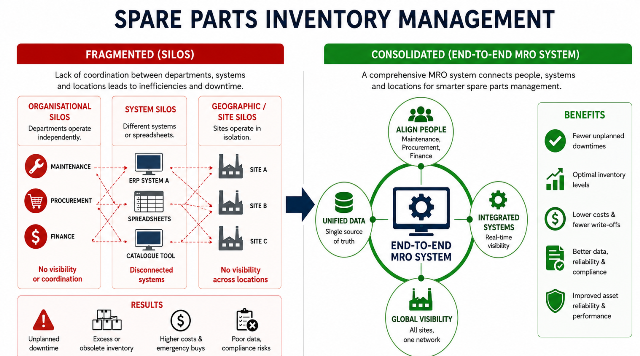
In some industrial operations, the management of spare parts inventory is fragmented.
There is a lack of coordination between critical departments, with procurement and maintenance teams sourcing their own products from OEMs or other accredited vendors.
In most cases, while well-intended, these management silos (or instances of mismanagement) result in overstocking or the procurement of parts with the wrong specifications. Eventually, they cause unplanned downtime, which affects equipment reliability.
Don’t Put All Your Spare Parts in One Supplier’s Basket
Desperate times call for desperate measures.
Sometimes, experiencing plant downtime while waiting for a spare part can seem like an eternity. It is at that point that maintenance managers may be tempted to use a third-party spare part as a stop-gap measure.
Unfortunately, while convenient, this creates a dilemma….
Strategic Data and People Skills Key to Operational and Maintenance Efficiency
Despite advances in automation and control technology, human expertise remains indispensable in the operation and maintenance of boilers in complex industrial environments.
Proactive Maintenance Maximises Sampler and Centrifuge Longevity
Mining and mineral processing operations rely on the uninterrupted operation of samplers and centrifuges to maintain product quality and process efficiency. Samplers collect representative samples that are accurate and reproducible, while centrifuges enable effective solid-liquid separation, dewatering, and classification within a process plant.
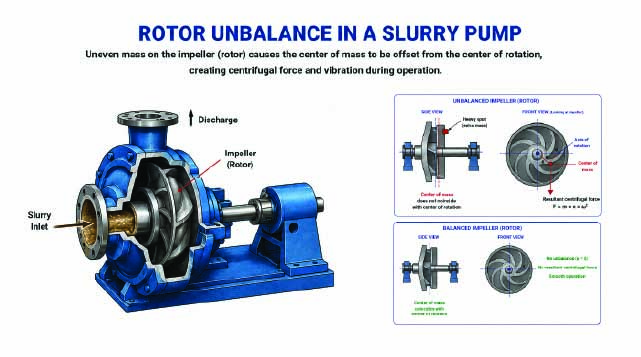
Balance Your Rotor, Improve Slurry Pump Energy Efficiency
In his duty, Kutsi Jaka, Product Manager: Condition Monitoring, SKF South Africa (Pty) Ltd, assists clients in the African mining address rotor unbalance in slurry pumps, the bane of maintenance and reliability teams. We ask him about the causes of, and solutions to, rotor unbalance-related energy losses in slurry pumps.
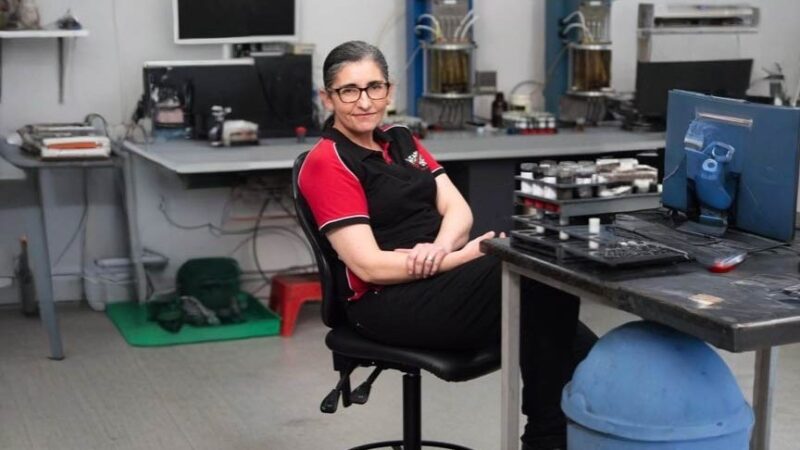
This is part two of “When Good Oils Go Bad ” by Steven Lumley, Technical Manager of WearCheck.
Oxidation – the focus of part 2 of WearCheck’s “When Good Oils Go Bad” series – is one of the most common chemical reactions we encounter in everyday life. It occurs when fuel burns, when steel rusts, when wounds are cleaned with hydrogen peroxide and even when a cut apple turns brown. In lubricating oils, oxidation is no less familiar and no less damaging.
Why Lubrication Fails in Mining, and What to Do About It
“People often think a grease is a grease. But greases vary significantly in viscosity, tackiness and the additives they contain. Using the wrong product for a mining application does not just reduce performance; it can actively accelerate wear.”
Mining is one of the harshest operating environments for any piece of machinery. Dust, shock loading, moisture and extreme mechanical demands place equipment in mining operations under near-constant stress.