

As pressure mounts on South African manufacturers to reduce energy consumption and manage carbon taxation, interest in waste heat recovery systems is increasing.
According to Dennis Williams, Commercial Director of specialist steam and boiler operations and maintenance service provider Associated Energy Services (AES), although economisers have not yet been widely adopted in South Africa’s low-pressure industrial steam sector, companies are now revisiting these technologies.
Economisers are pressure vessels that are external to the boiler circuit and are typically retrofitted to recover lower temperature, lower grade heat into heated water, which is then included in boiler feedwater.

Unlike economisers which focus specifically on recovering residual heat from boiler exhaust gases, waste heat recovery boilers capture energy from multiple sources for a variety of applications.
The coal conundrum
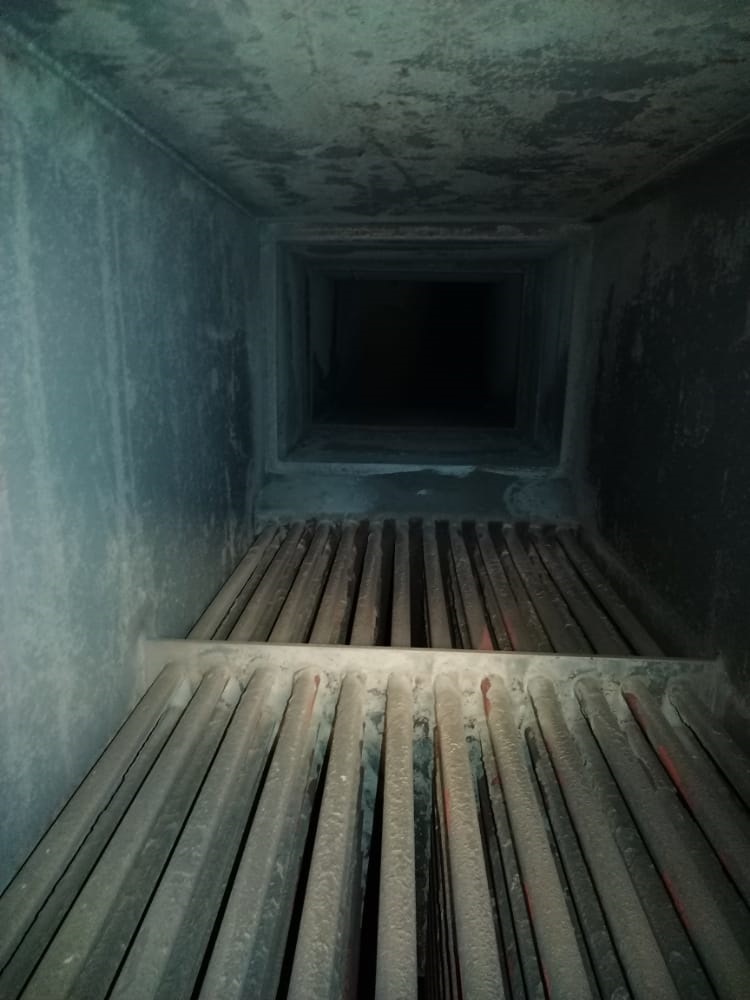
The suitability of an economiser depends on the boiler configuration, the fuel used and contaminants present in the flue gas stream, says Williams: “We are particularly concerned with the sulphur content which can result in sulphuric acid dew point corrosion. However, chlorine is also a concern, as is ash content. All can impact on longevity, flow rates and the fouling of an economiser.”
Coal remains the dominant fuel source at many local industrial facilities and recovering waste heat from coal-fired boilers presents unique technical challenges. The key limitation is maintaining flue gas temperatures above critical dew point thresholds, to avoid corrosive acid condensation.
Referring to a typical 10-bar boiler, Williams explains that flue gases leave the combustion zone at between 800°C and 900°C before transferring heat to the boiler water. Exhaust temperatures exiting the boiler are generally between 210°C and 230°C: “There is still useful energy in that. The water coming in may be 60°C or 70°C. We recover additional temperature in the feedwater, which then goes to the boiler.”
However, if flue gas temperatures fall into the 130°C to 160°C range, sulphur dew point corrosion can rapidly damage expensive equipment. Load fluctuations can further complicate operation: “If an economiser is taking that lower flue gas temperature, this results in lower economiser surface temperatures and increases the likelihood of dew point corrosion.”
Williams notes that poor water treatment and corrosion are the primary reasons for local economiser installations failing. Oxygen in untreated water can cause internal pitting of thin-walled tubes, while sulphur-related corrosion attacks external surfaces. Retubing damaged economisers is expensive, often leading to companies bypassing them to avoid costly repairs.
“This scenario can best be avoided by a combination of chemical water treatment and deaerator use, which effectively improves the efficacy of oxygen removal before the economiser circuit. However, this is a ‘catch-22’ situation – as hotter inlet water changes the dynamics of the economiser as a heat exchanger,” Williams adds.
The economics of economisers
AES approaches each potential installation by first determining whether it is technically viable and economically justified. Detailed assessment of clients’ specific plant operations and processes, available waste heat streams and potential energy savings are compared to the required capital investment.
“The economics are shifting. Currently, increasing fuel costs compounded by carbon tax are potentially impacting the cost-value associated with burning coal. To avoid paying a lot of carbon tax, you must reduce the amount of coal burnt. An economiser therefore becomes more economically justifiable.”
However, retrofitting an economiser often requires investment in modifications. Additional pressure drops may necessitate upgrades to induced-draft fans, motors and feedwater pumping systems.
Beyond economics
Successful implementation depends on aligning technology choices with long-term operational and sustainability goals, rather than focusing solely on short payback periods.
So, while financial returns remain important, Williams believes that sustainability objectives are increasingly influencing investment decisions: “Once you have made the people changes, got the equipment working effectively, combustion working well, water treatment up to specification and the boiler running optimally, you still lose energy up the stack – amounting to a financial cost.
That said, companies may not look at the impact purely from a financial perspective. Those on a drive for zero waste, complete water recycling and energy efficiency can view the installation of heat recovery systems as a step toward achieving their sustainability goals,” he points out.
However, Williams stresses that economisers should never be viewed as simple ‘bolted-on systems’: “It is easy just to view an economiser as an ancillary vessel – but one is dealing with liquid and gas flows that are hazardous, so it needs to be understood in terms of management, safety and compliance.”
As pressure equipment, economisers are subject to regulatory considerations including registration, permitting, inspection and ongoing maintenance obligations.
Equally important is the management of operational change: ”Trained personnel may understand the plant as it is. However, put an economiser on the back and water temperatures are running higher, presenting a material safety risk if operators are not fully aware of the revised system.”
Moving on from plug and play
Williams believes many economiser installations failed because companies underestimated the maintenance and technical management required to sustain performance:
“They took a ‘plug-and-play’ approach and assumed that they were getting the benefits – until it failed. Partnering with AES turns this around. We combine over 25 years of operational expertise in managing people, combustion and fuel sources with our maintenance experience and Remote Monitoring System (RMS). This holistic approach mitigates risk, ensuring that critical parameters including temperature, pressures, flows and boiler loads remain within safe operating limits,” he concludes.