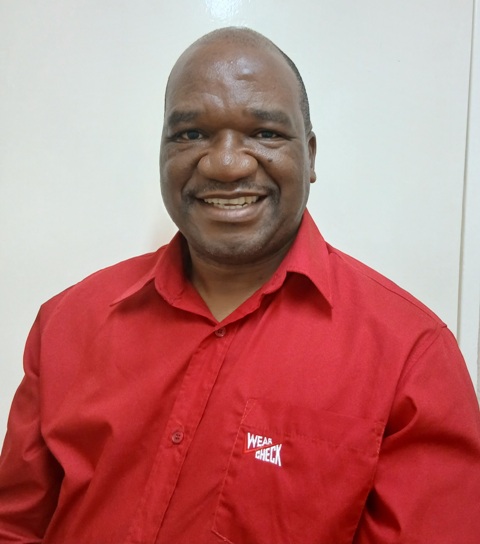



On-site laboratories are changing the reliability equation by placing advanced analytical capability closer to the machinery that generates the samples. Neil Robinson, managing director of WearCheck, says the commercial value of an on-site laboratory lies in shortening the time between sampling, diagnosis and maintenance response
Predictive maintenance is only as effective as the information on which maintenance decisions are based. The earlier an abnormal condition can be detected, correctly diagnosed and acted upon, the greater the opportunity to prevent secondary damage, avoid unplanned downtime and extend component life.
Yet for many operations, particularly mines, processing plants and other industrial sites in remote areas, the biggest obstacle is not the lack of condition monitoring technology. It is the logistical challenge of getting samples to a capable laboratory, and receiving reliable diagnostic guidance.
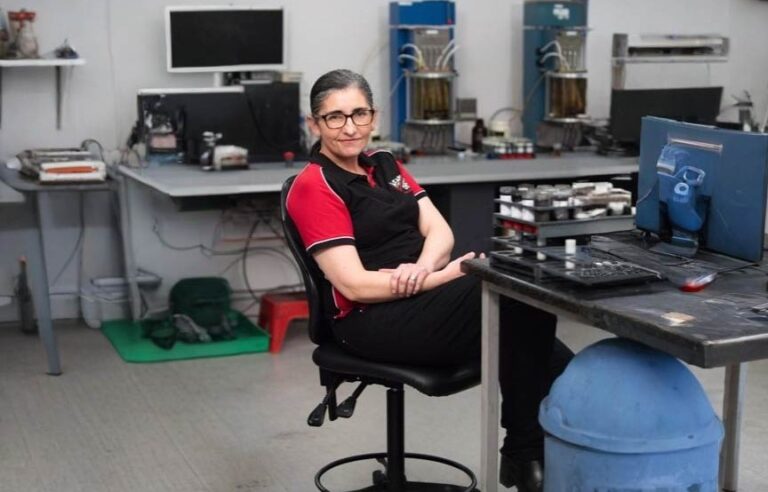
On-site laboratories are changing the reliability equation by placing advanced analytical capability closer to the machinery that generates the samples. Condition monitoring specialist company, WearCheck, has developed containerised laboratories specifically for this purpose, allowing sophisticated oil and fluid analysis to be conducted at or close to the point of use. These laboratories are designed and equipped in South Africa and then deployed into mining and industrial regions where distance, border crossings, limited infrastructure and transport delays can otherwise weaken a predictive maintenance programme.

On arrival at its destination, the instruments in the mobile laboratory are set up and calibrated by trained WearCheck technicians
Neil Robinson, managing director of WearCheck, says the commercial value of an on-site laboratory lies in shortening the time between sampling, diagnosis and maintenance response. ‘In a conventional off-site programme, a sample taken from an engine, gearbox, hydraulic system or other lubricated component may have to travel hundreds or even thousands of kilometres before it reaches a laboratory,’ he explains.
‘Remote roads, cross-border logistics, courier schedules and customs processes can add days to the turnaround. By the time the report reaches the maintenance team, the machine may have continued operating under a deteriorating condition. An on-site laboratory reduces that delay dramatically and makes the information far more actionable.’

Analytical data from WearCheck’s containerised laboratories is transmitted to the company’s central data infrastructure and managed through its Laboratory Information Management System (LIMS), to ensure consistency of test results.

WearCheck’s on-site facilities can typically deliver results within 24hours, giving maintenance teams faster access to the evidence they need to make informed decisions. This speed matters because oil and fluid analysis is not merely a lubricant check. It is a diagnostic tool that can reveal what is happening inside critical assets while they are still in service.
Used oil carries detailed information about machine condition. Laboratory analysis can identify wear metals, dirt, water, fuel dilution, soot, coolant contamination, viscosity changes, lubricant degradation and other indicators of developing faults. When interpreted by experienced diagnosticians, these results help maintenance teams distinguish between normal wear, abnormal wear, contamination and lubricant-related problems, allowing the underlying cause to be investigated before a failure becomes costly or affects production.
The value of the test, therefore, lies in the decision it enables. If a sample shows accelerating wear in a gearbox, the maintenance team can inspect the asset while it is still operating and plan work around production requirements. If coolant contamination is detected in engine oil, corrective action can be taken before major damage occurs. Where results confirm that a machine is operating normally, unnecessary intervention can be avoided. Predictive maintenance is not about doing more maintenance; rather, it is about doing the right work, at the right time, on the right asset.
Robinson says this model is particularly powerful for remote operations with large fleets, high sample volumes or critical production assets. ‘When laboratory capability is located on site, routine sampling becomes a much more immediate part of the maintenance process. Trends can be reviewed quickly, abnormal results can be escalated, and the effectiveness of corrective action can be verified through follow-up samples,’ he says.
‘This closes the gap between diagnosis and action, giving engineers a clearer view of how equipment condition is changing over time. Our containerised laboratories support oil analysis as well as coolant, diesel and other fluid diagnostics, providing insight into the condition of engines, gearboxes, hydraulic systems and other critical components.’
Deploying a laboratory to a remote site, however, requires far more than placing instruments in a container. WearCheck’s mobile units are designed for infrastructure-constrained environments and incorporate air conditioning, ventilation, extraction systems, fire-prevention measures, uninterrupted power supply, enhanced security and satellite connectivity where required. This enables laboratory-quality testing to be delivered in locations where reliable electricity, communications, security or even brick-and-mortar buildings may be limited.
Consistency is key
Consistency is just as important as proximity. WearCheck’s on-site laboratories are integrated into the company’s wider technical system so that instrumentation, testing methods, scope of work, calibration routines, process controls and reporting-control standards remain aligned with the broader WearCheck laboratory network, and finally, that the analytical data from the containerised laboratories is transmitted to the company’s central data infrastructure and managed through its Laboratory Information Management System (LIMS).
Diagnostic specialists apply standardised methodologies and review historical trends, helping to ensure that a sample tested at a remote site is interpreted with the same technical discipline as one processed at an established laboratory. If a local facility is temporarily unavailable, work can also be redirected within the WearCheck laboratory network, preserving continuity of service and protecting the value of historical data.
People remain central to the model. Containerised laboratories are supported by trained technicians and laboratory managers, with local personnel often developed through WearCheck’s established laboratory network. This builds technical capability at site level while retaining access to specialist diagnostic expertise when more complex interpretation is required.
Holistic view of a machine’s condition
The on-site laboratory can also become one element of a much broader reliability programme. WearCheck’s condition monitoring capabilities extend beyond oil and fluid analysis to Asset Reliability Care (ARC) techniques including vibration analysis, thermography, online remote monitoring and diagnostics, alignment and balancing, motion amplification, operational deflection shape analysis and other specialised field services. The company’s ARC technicians travel throughout Africa to conduction these services.
Used together, these technologies provide different views of machine health. Oil analysis may reveal what is happening internally through wear debris, contamination and lubricant condition, while vibration or thermography can identify mechanical or thermal symptoms pointing to the same developing fault. The objective is not simply to generate more data, but to combine relevant information so that maintenance teams can make a better-informed decision about what needs attention, how urgently action is required and whether an intervention has successfully corrected the problem.
For remote operations, this can be a significant commercial advantage. A laboratory located close to the asset makes condition monitoring more responsive and predictive maintenance more practical. It also allows maintenance teams to verify whether work performed on a machine has actually improved its condition, rather than assuming that a completed work order has eliminated the underlying defect.
In an environment where a single haul truck, mill, crusher, generator or hydraulic system can constrain production, the cost of waiting for diagnostic information can far exceed the cost of the test itself. On-site laboratories address this by placing high-quality analytical capability where operational decisions are made. The result is faster information, earlier fault detection, more targeted maintenance, better use of skilled resources and a stronger foundation for reliability and uptime.
For WearCheck, which has spent more than 50 years specialising in condition monitoring, the development of on-site and containerised laboratories is a logical extension of the principle on which predictive maintenance is built: know the condition of the machine, understand what the data is telling you and act before the fault becomes a failure.
Please visit www.wearcheck.co.za, contact WearCheck on marketing@wearcheck.co.za or call +27 (31) 700-5460.
T: +27 (31) 700-5460