


Can Africa industrialise?
The 2026 Manufacturing Indaba puts action on the table, challenging stakeholders – governments, the private sector, and advocacy bodies – to move from dialogue to delivery.
The Manufacturing Indaba 2026 is now more relevant than ever before. South Africa and many African economies are facing significant industrial challenges. In the main, these include declining manufacturing output, energy constraints, infrastructure bottlenecks, and increasing global competition.
A critical platform
Against this backdrop, the Indaba serves as a critical platform where industry leaders, policymakers, investors and innovators can engage on practical solutions to revitalise manufacturing and strengthen industrial capacity across the continent.
Action beyond dialogue
Importantly, the event is not only about candid dialogue. Beyond discussion,it facilitates collaboration, investment opportunities, market access and actionable partnerships that can support localisation, industrialisation and job creation.
Deliberate, pragmatic, government-driven policies
Countries like Vietnam and China have demonstrated that deliberate, pragmatic and government-driven industrial growth policies can result in unprecedented growth of the manufacturing sector within a relatively short time.
Clearly, African countries can emulate this “hands-on” approach, while considering their unique local market conditions. “Governments can play a major role in making the manufacturing sector more competitive through adopting a number of initiatives,” Liz Hart, MD of Manufacturing Indaba, suggests, stressing four vital areas.
a. Skills development and training
African governments must invest heavily in technical and vocational education attuned with industry needs. “There is an urgent need to bridge the gap between education systems and the practical skills required by manufacturers. Public-private collaboration in apprenticeships, artisan development, digital manufacturing skills and STEM education are critical in preparing the future workforce,” notes Hart.

b. Grassroots business incubation and SME support
SMEs are the backbone of industrial growth and job creation. Governments can play a more transformative role by supporting incubators, industrial hubs and supplier development programmes that help small businesses scale into sustainable manufacturing enterprises. Facilitating access to markets, mentorship and technology adoption is equally important.
c. Support mechanisms
Manufacturing requires long-term investment and patient capital. Governments should consider targeted incentives, blended finance mechanisms, tax incentives and export support programmes that encourage local production and industrial expansion. Strategic support for priority sectors can significantly improve competitiveness.
d. Quality assurance and standards enhancement
Improving standards and quality assurance is essential for African manufacturers to compete globally. Governments and industry bodies should strengthen certification systems, testing facilities and compliance support to ensure products meet international standards.
Encouraging private sector investment and PPPs
While governments can play a pivotal role, they can only create a fertile environment for business growth. Successful industrialisation depends on strong collaboration between the public and private sectors, Hart states, underlining the central role of PPPs. “PPPs can accelerate infrastructure development, industrial parks, logistics networks and innovation ecosystems. Policy certainty and a conducive business environment are essential to attract both local and foreign investment.”
Implementation of free trade policies
However, individual countries cannot achieve optimal manufacturing growth with an inward-looking mindset, she acknowledges, mentioning the need to promote intra-African trade, a key focus of the Indaba.
The successful implementation of the African Continental Free Trade Area (AfCFTA) is widely touted as one of the most important opportunities for intra-Africa industrial growth. However, Hart is aware of a sober reality: implementation must move beyond policy commitments into practical execution.
“First things first”
Hart touches on a critical point.
Sometimes, the AfCFTA is romanticised as a magic wand that will transform the continent’s manufacturing sector overnight. Success requires more than slogans. This is why Manufacturing Indaba consistently calls for the approach of “fixing first things first”, building the springboard to initiate growth in vital areas.
1. From competing to complementing
African countries need to improve border efficiency, harmonise standards and regulations, invest in transport and logistics infrastructure, and reduce non-tariff barriers that make intra-African trade costly and inefficient. Regional value chains should be prioritised so that African countries can complement each other’s industrial strengths instead of competing in isolation.
2. Identifying competitive advantages
The other way to achieve growth is for countries to identify areas where they have competitive advantages and focus on them. This is more feasible than trying to replicate what other countries are doing.
A case in point is that certain industries, such as semiconductor and chip manufacturing, are highly advanced, capital-intensive and skills-driven sectors requiring sophisticated technology. Some African countries may not have the edge in these niches.
South Africa must take charge
Hart firmly believes South Africa, as the continent’s most industrialised economy, must take charge in the continent’s quest by leveraging areas in which it has comparative advantages.
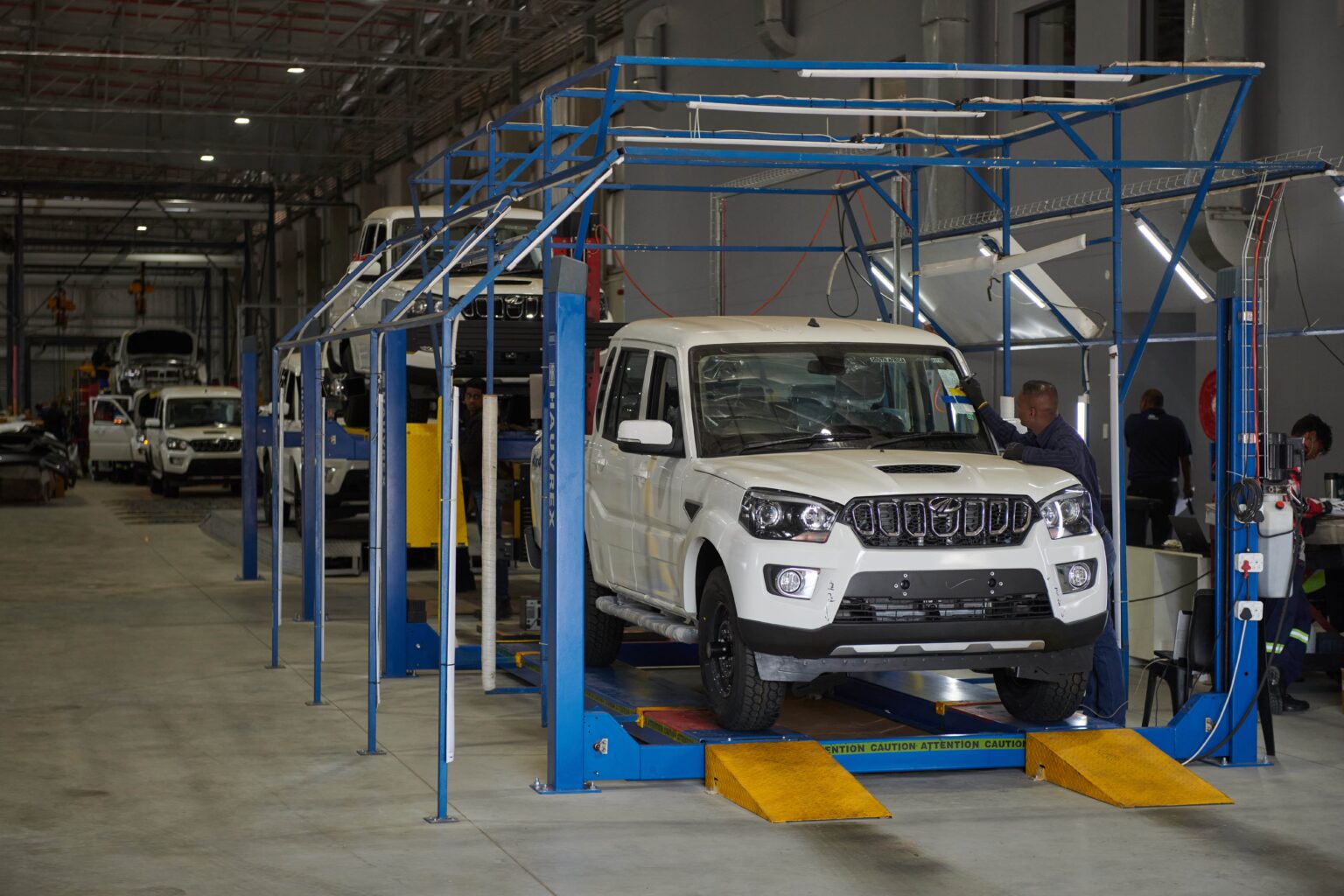
She explains: “Relatively speaking, South Africa has strong competitive advantages in several manufacturing sectors, particularly those linked to its natural resources, established industrial base and technical capabilities. These include agro-processing, automotive manufacturing, mining equipment and capital goods, green energy components, chemicals, pharmaceuticals and renewable energy-related manufacturing. Furthermore, there is growing opportunity in localisation linked to infrastructure development, rail, energy and defence industries.”
Coordinated national strategy and stronger localisation
Nonetheless, for this potential to be translated into tangible results, robust changes are needed.
Fundamentally, the starting point is a coordinated national industrial strategy supported by policy consistency, reliable infrastructure and decisive implementation.
The second is stronger localisation efforts, support for industrial innovation, faster adoption of digital technologies and stronger partnerships between government, industry and academia.
“Ultimately, industrialisation must become a national priority because manufacturing remains one of the most effective drivers of inclusive economic growth, employment and economic resilience,” Hart concludes.
Ushering in a new era
There is no doubt that rebooting South Africa’s manufacturing sector can usher the continent into a new era of industrialisation, but it must be stressed: first things first. The time is now to move from policy to production.
Underlining South Africa’s status on the continent, the Manufacturing Indaba takes place at The Sandton Convention Centre, Johannesburg in South Africa annually.